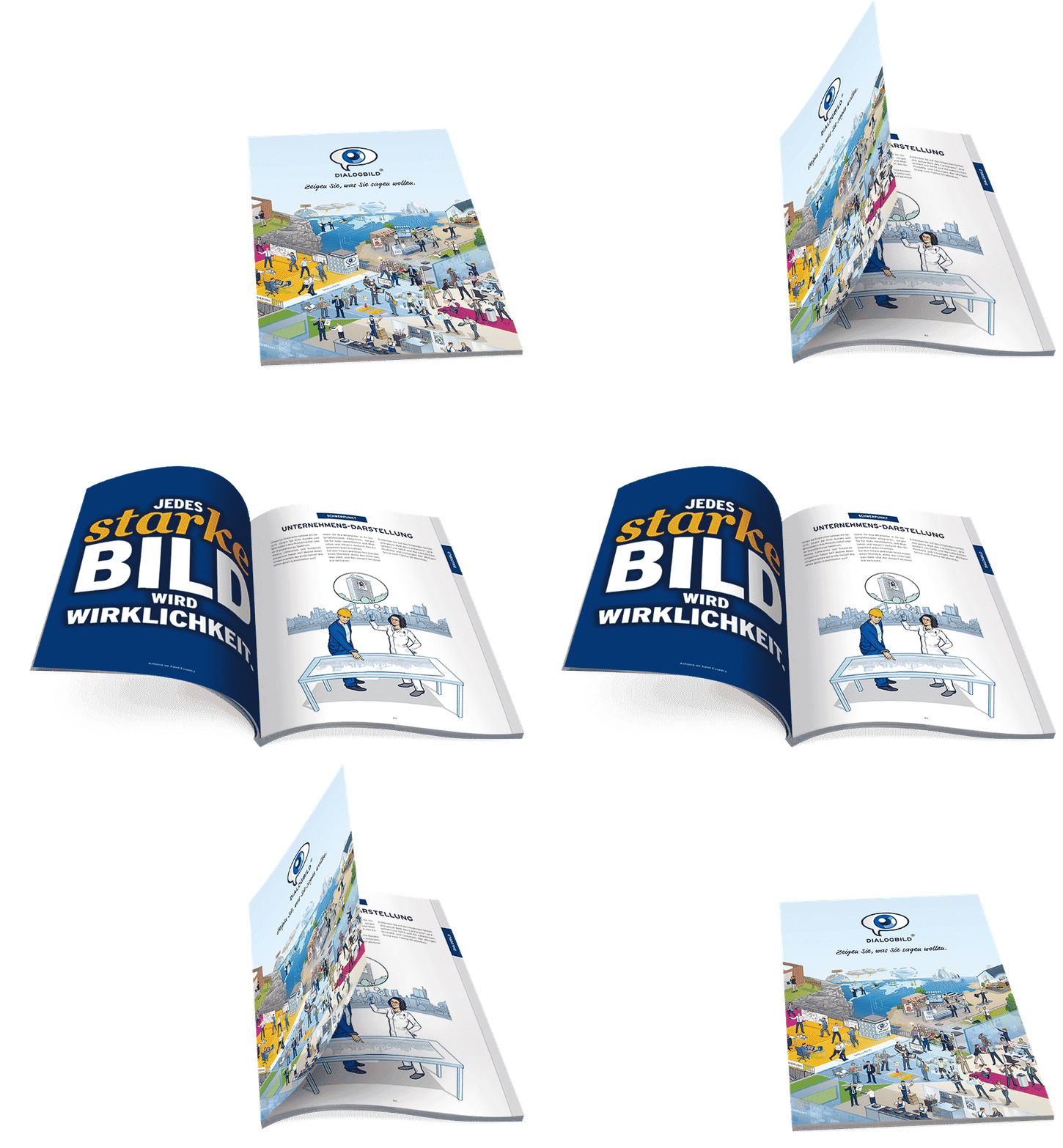
You know that a company mission statement is important. But how do you prevent the development process from becoming a lengthy, uninspired project whose final product no one reads? The key lies in employee participation. An effective mission statement isn’t dictated from above, but rather developed organically from within the company culture. As experts in […]
You know that a company mission statement is important. But how do you prevent the development process from becoming a lengthy, uninspired project whose final product no one reads? The key lies in employee participation. An effective mission statement isn't dictated from above, but rather developed organically from within the company culture.
As experts in visual communication, we know that the mission statement process must be inspiring, participatory, and clearly structured. We'll show you in five steps how to develop a mission statement that can deeply embed values within your company:
Step 1: Strategic Preparation and the "Why"
Before you begin, clarify the strategic necessity: Why now? Who absolutely needs to be involved (management, works council, key employees)? Create a project charter and appoint an interdisciplinary core team. This first step lays the foundation and secures the necessary management support.
Step 2: Analysis – What's Already Being Lived
Don't start by writing, start by listening. Conduct anonymous surveys, in-depth interviews, or, ideally, interactive workshops with employees at various levels. The key question is: Which values do we already live by? And which do we want to live by in the future? The authenticity of these values is crucial for their subsequent acceptance.
Step 3: The Essence and Formulation
The core team distills the collected insights into clear, concise statements about the vision, mission, and values. Use language that everyone understands. Avoid unnecessary jargon and highfalutin terms. Every statement must be comprehensible and directly applicable to daily work. Tip: Summarize the core values with a maximum of 3 to 5 key terms.
Step 4: Visualization – Communicating Your Mission Statement Made Easy
The most critical point: How do you get the often abstract formulation into the minds and hearts of your employees? This is where the power of visualization comes into play. A dialog picture translates the entire strategic essence into a single, easily understandable story. It shows how the values interlock in everyday work and thus becomes the central anchor for the entire company. It ensures that your mission statement doesn't remain a wall of text.
Step 5: Anchoring, Training, and Continuous Measurement
The completed mission statement is not an end point, but a starting point. First, train your managers so they can serve as role models. Integrate the values into the onboarding process, employee reviews, and performance appraisals. Regularly review (e.g., annually) whether the formulated values still reflect reality and whether they are achieving the desired effect (see also blog post 3 on the topic of measurement).
Conclusion:
An effective corporate mission statement is the result of a careful and, above all, participatory process. By actively involving your employees and using clear, visual language for communication, you create a foundation for long-term success
STRATEGY MAP: NEXT CHAPTER
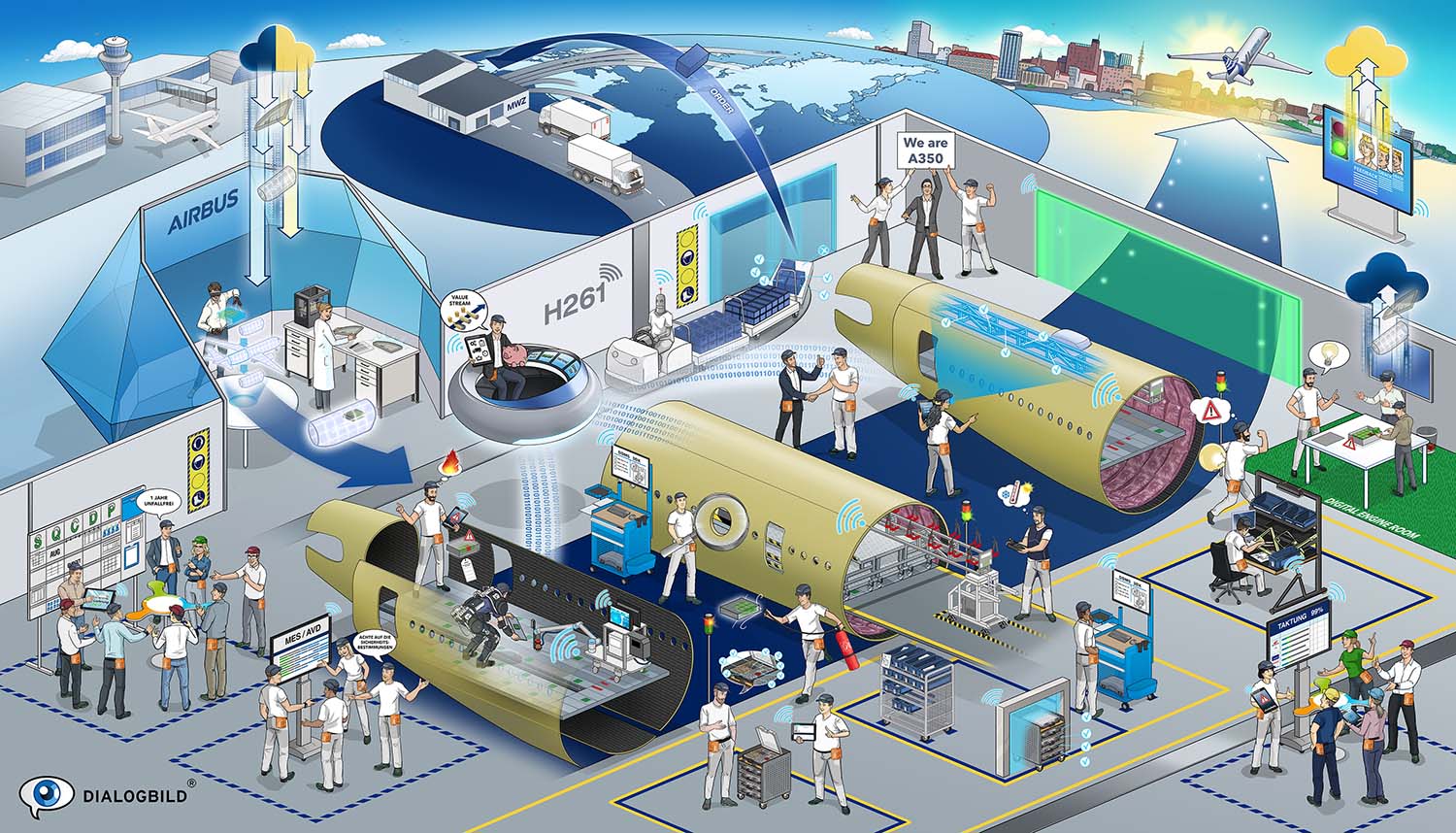
Hamburg is home to one of the largest Airbus plants in Europe. In addition to the production of other aircraft types, the structure and equipment assembly of the A350 passenger aircraft takes place in Hamburg-Finkenwerder.
In order to develop a common mission statement for the employees in the production of the A350, the department relied on the creation of a dialog picture. The dialog picture captures both the daily routines and the outstanding processes and technologies of production in the present and future. The ideas and suggestions of the workers from production and the indirect areas, which were requested in advance in various formats, were incorporated to a large extent into the dialog picture. ...
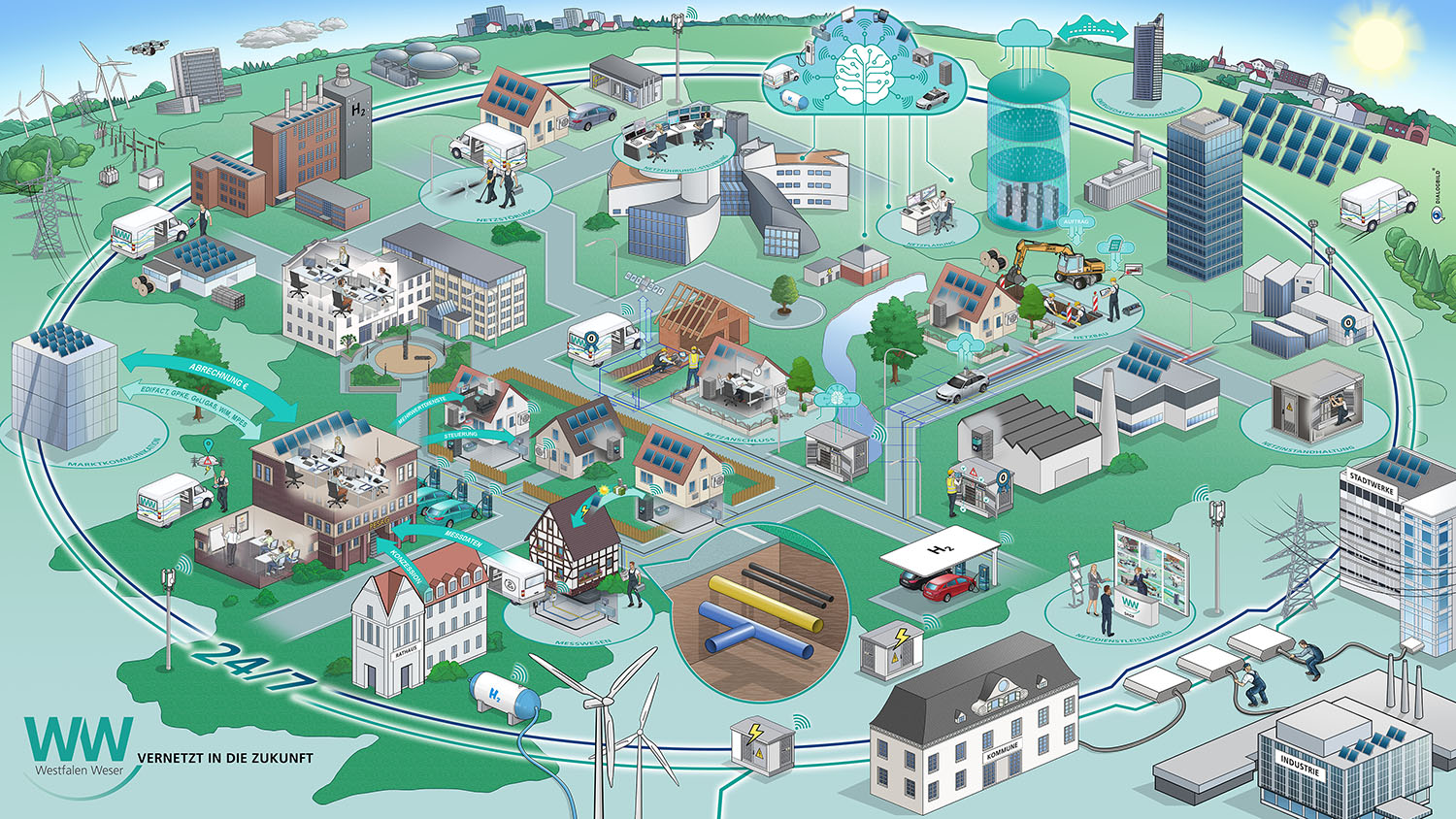
INTERCONNECTED INTO THE FUTURE
As a municipal infrastructure service provider, Westfalen Weser takes care of the provision of electricity, natural gas and water networks, which are constantly becoming faster, safer and more sustainable with increasing digitalization. Behind the success of the supply are efficiency and reliability, managed by a system of state-of-the-art network technology and competent employees.
In addition, Westfalen Weser is already working on innovative ideas for tomorrow's sustainable energy solutions in order to shape the energy transition together with municipalities and companies. ...
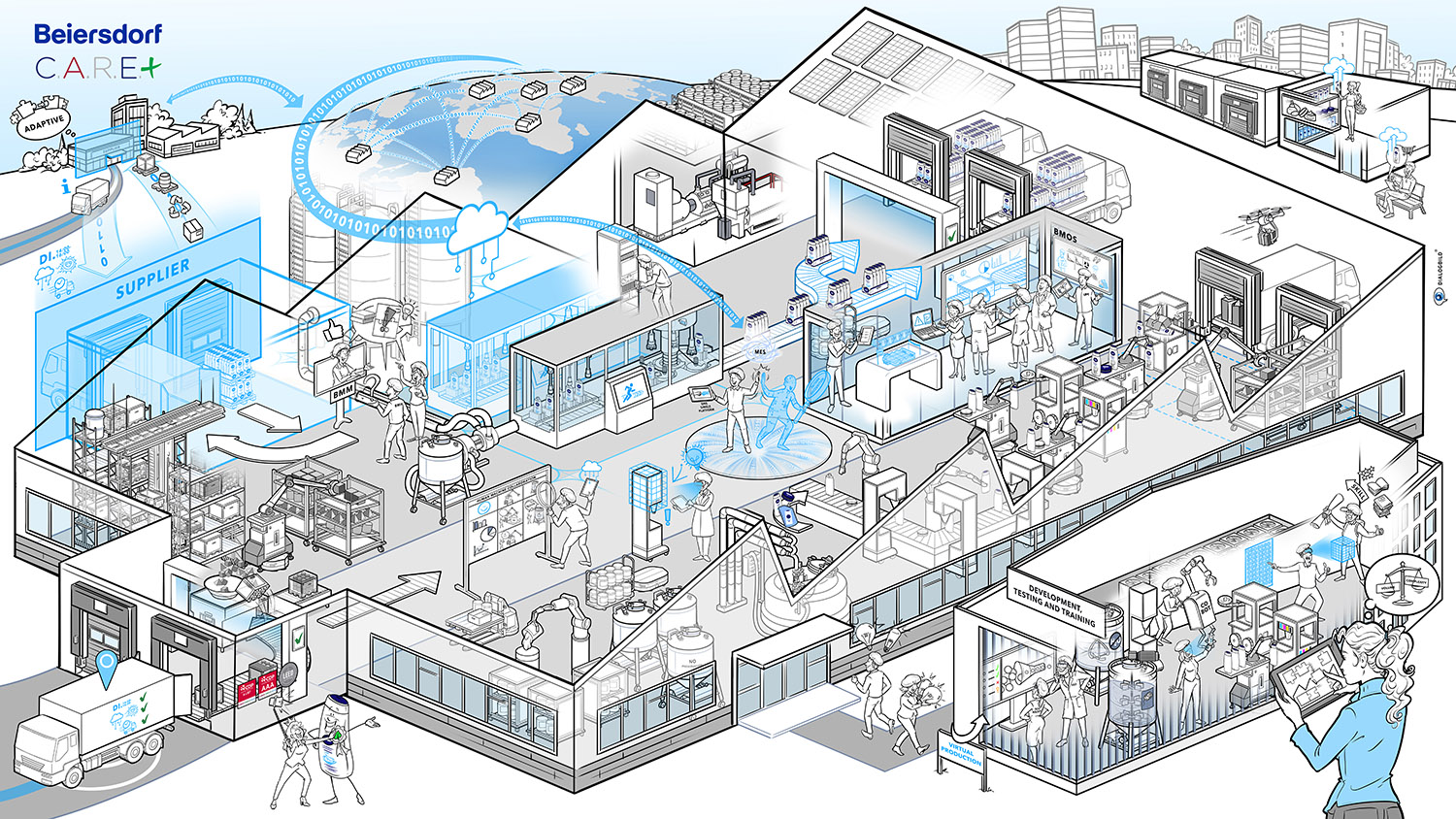
FACTORY OF THE FUTURE
Beiersdorf Digital Supply Chain Vision
For over 140 years the Beiersdorf AG has been standing for innovative, high-quality skin and body care, as well as leading skin research. The company convinces customers worldwide with its internationally leading brands and their consumer-needs oriented product portfolio. The supply chain, with its resilient and modern production network, significantly adds to this success.
The production processes find themselves in change during the fourth industrial revolution. They become more efficient and connected through the use of modern technologies, as well as artificial intelligence, the Internet of Things and automatization. The “Factory of the Future” relies on agility, sustainability, productivity and transparency, all of which is driven by digitalization. People and data play a central role in this. Our dialog picture shows exactly these important points and paints a picture of the future.
Get info package