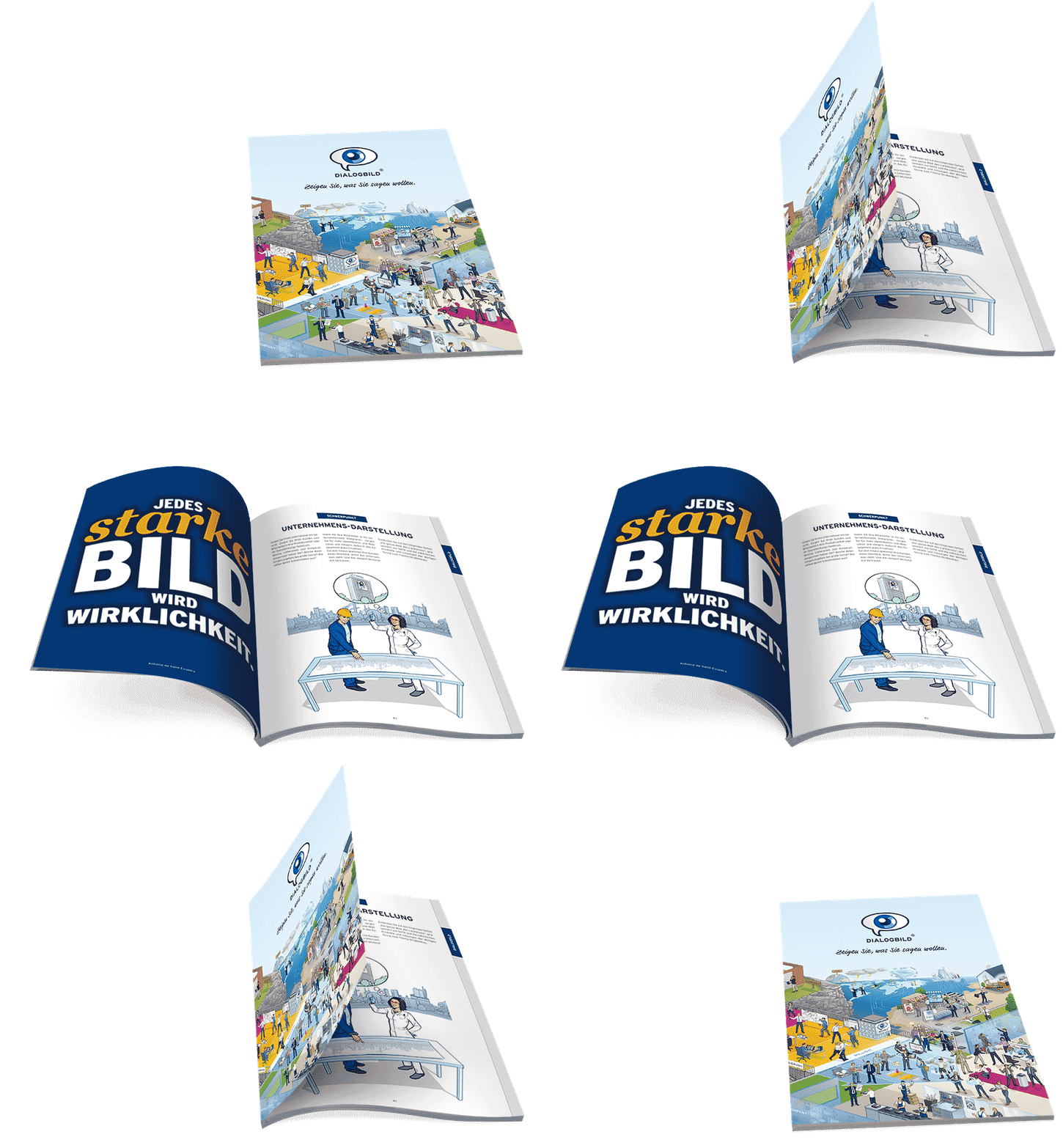
The invisible front: Anchoring the highest security standards through visual awareness

In no other industry worldwide are the demands on security, secrecy, and regulatory compliance as extremely high as in defense technology. Companies in this sector are constantly targeted by sophisticated threats: from classic sabotage attempts and physical espionage in production facilities to highly complex, state-sponsored cyberattacks (Advanced Persistent Threats) aimed at stealing critical intellectual property (IP).

At the same time, working in a defense plant — handling explosives, heavy armor plating, laser systems, or highly volatile chemical substances—requires the absolute maximum level of physical safety. A single mistake, a momentary lapse in attention regarding safety in a defense company, can have catastrophic consequences for the lives of employees and jeopardize national supply capabilities.

However, the biggest vulnerability in this dense security network is almost never the technical barrier or the firewall—it is human behavior. How do you manage to establish a safety culture that is deeply internalized and uncompromisingly practiced by every single employee in their daily work?

Why Dry Compliance Training Fails in the Defense Industry

The common practice in many companies looks like this: Employees have to click through standardized e-learning courses once a year or sign lengthy compliance guidelines. However, this form of knowledge transfer usually only creates purely formal, legal protection for the company ("tick-the-box compliance"), but no real change in behavior.

The situation becomes particularly critical when complex legal frameworks such as the War Weapons Control Act, the Foreign Trade and Payments Ordinance, or international guidelines like ITAR need to be understood. If employees don't clearly grasp why sharing a seemingly harmless technical drawing with a foreign colleague can already constitute a serious legal violation, unconscious but potentially devastating risks arise for your company.

To achieve a lasting impact, compliance training in the defense industry must rely on emotional visualization. Abstract law must be translated into concrete, everyday situations.

A Tailor-Made Security Awareness Campaign for the Defense Sector

A successful security awareness campaign in the defense sector must cover all dimensions of security and connect them. DIALOGBILD develops immersive visual experiences that make complex threat scenarios immediately understandable and tangible.

A central security dialog picture for your plant simultaneously illustrates the various hazard zones and the correct procedures:

  1. Physical Security & Counter-Espionage: How should I react if unauthorized individuals attempt to photograph sensitive areas on the premises? Why is the social engineering scenario at the local pub after work a real threat?
  2. Information Security & Cybersecurity: What happens if an infected USB drive is "accidentally" found in the parking lot and plugged into a workshop computer? How can I recognize spear-phishing emails that convincingly reference internal defense projects?
  3. Knowledge and Confidentiality Protection: How are sensitive project data (e.g., classified as "CONFIDENTIAL" or "VS – For Official Use Only") handled correctly, both physically and digitally?

By visually representing the consequences of misconduct – not as a threat, but as a logical chain of cause and effect – you foster a sense of responsibility among your employees. Safety transforms from a burdensome obligation into a shared mission.

Safety training in defense plants: Accident-free through visual guidance

In addition to digital security, physical protection is a key focus. Modern safety training in defense plants benefits significantly from our visual tools. Instead of confusing seas of warning signs, we develop an integrated visual representation of your specific hall layout.

This visual representation precisely depicts critical hazard areas (e.g., crane runways, test benches, welding gas systems). The corresponding rules of conduct (wearing PPE, cordoning off areas, emergency stop procedures) are visually presented directly at the site. The result: Accident rates demonstrably decrease because the visual cues can be immediately recalled by employees in an emergency.

Conclusion

Protect what makes your company unique: your technological expertise and the lives of your employees. Stop relying on ignored text-based guidelines. A visual security awareness campaign for the defense sector transforms your organization into an impregnable fortress – from the inside out.

Make your workforce your strongest shield! Let's work together to develop a security and compliance campaign that truly leaves a lasting impression. Contact our experts in sensitive industry visualization for a confidential initial consultation.

Kuehne + Nagel Logistik Dangerous Goods Gefahrenstoffe Arbeitsschutz Leitbild Dialogbild Agentur für Visualisierung von Prozessen, Veränderungen und Visionen.

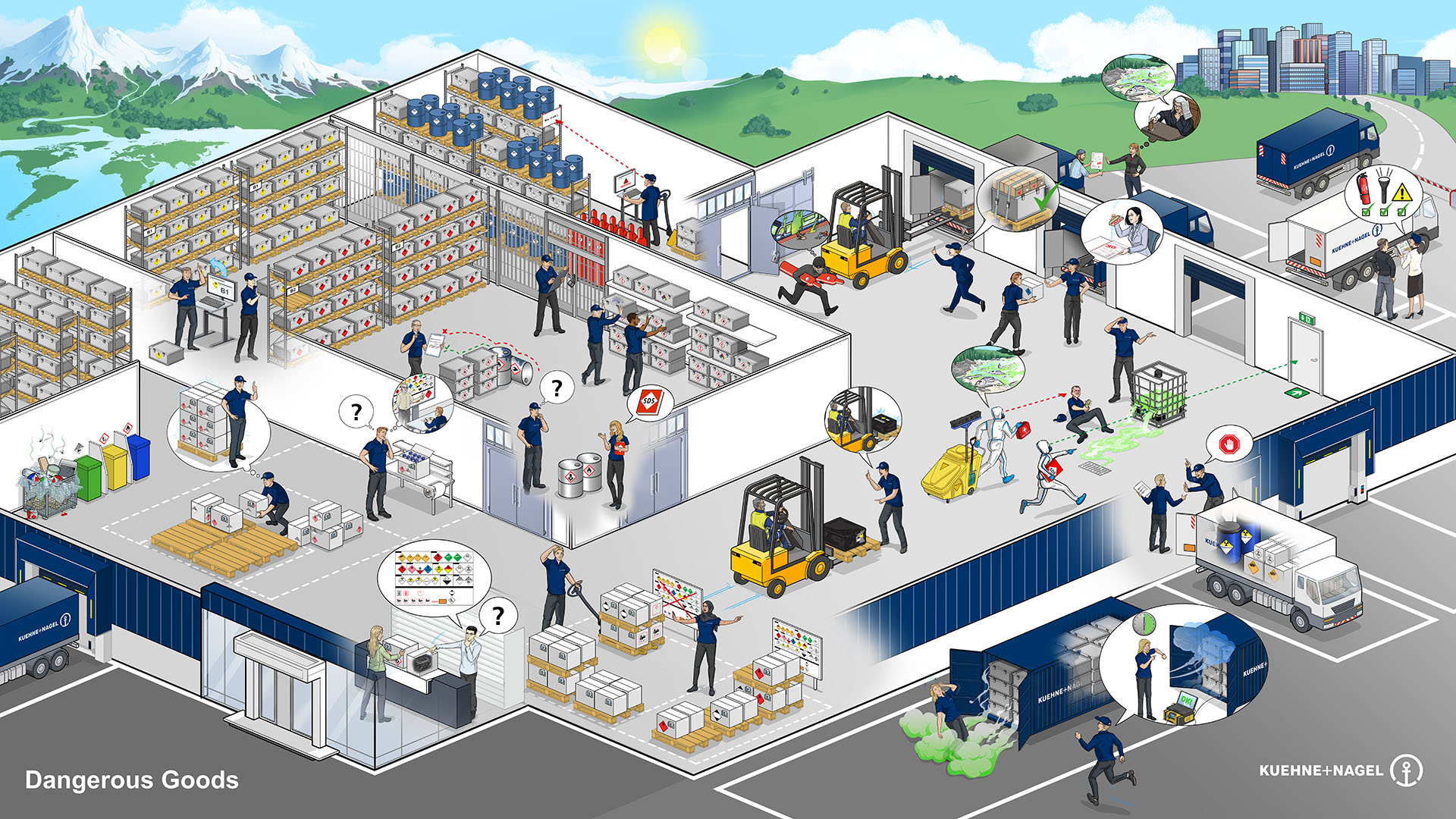
DANGEROUS GOODS


The international logistics and freight transportation company Kühne+Nagel, transports good globally, whether by sea and air freight, land transport or contract logistics. Approximately 79,000 employees at over 1,300 locations in more than 100 countries contribute to this success. The Dangerous Goods Management department plays a crucial role in this process.

Transporting dangerous cargo requires specialized knowledge and meticulous handling, as it involves the safety not only of employees but also of society and the environment. To comprehensively address broad topics while highlighting essential details, the Dangerous Goods Management and DIALOGBILD collaboratively developed the Dialog Picture for the safe handling of dangerous goods.
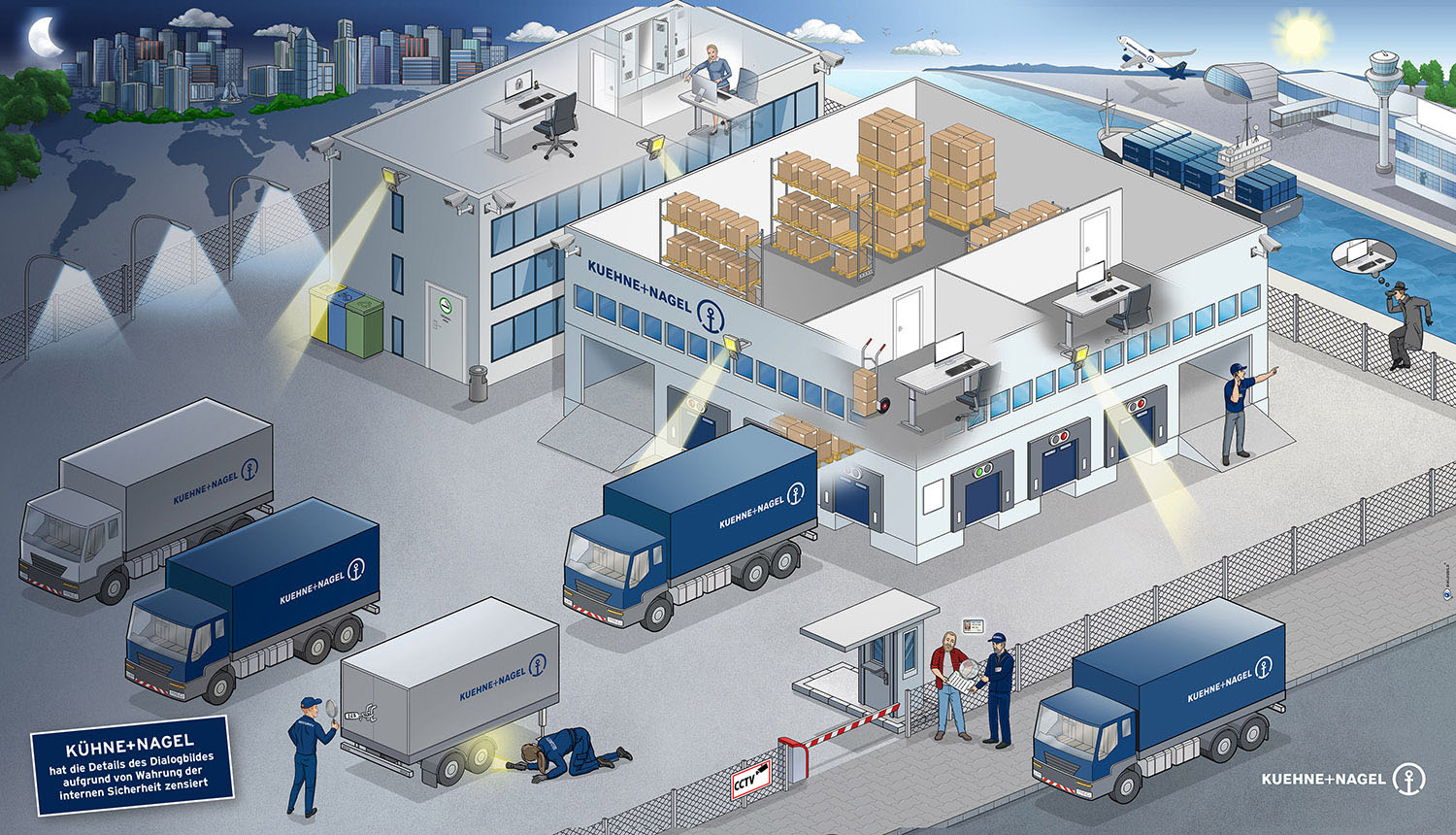
Kuehne + Nagel Logistik Daily Security Werkschutz Sicherheitsvorkehrungen Leitbild Dialogbild Agentur für Visualisierung von Prozessen, Veränderungen und Visionen.

DAILY SECURITY


The international logistics and freight transport company Kühne+Nagel (AG & Co.) KG works every day to transport goods around the world - whether by sea and air freight, land transport or in contract logistics. Around 15,000 employees at more than 130 locations are employed for this purpose. The topic of "daily security" plays a particularly important role in the logistics industry, as a lack of security precautions can, in the worst case, lead to supply chain disruptions.

As a result, Kühne+Nagel once again turned to DIALOGBILD to jointly design the Dialog Picture in the area of "Daily Security". The resulting dialog picture depicts the topic complexes of "Information" and "Physical Security" concretely and comprehensibly at a glance.
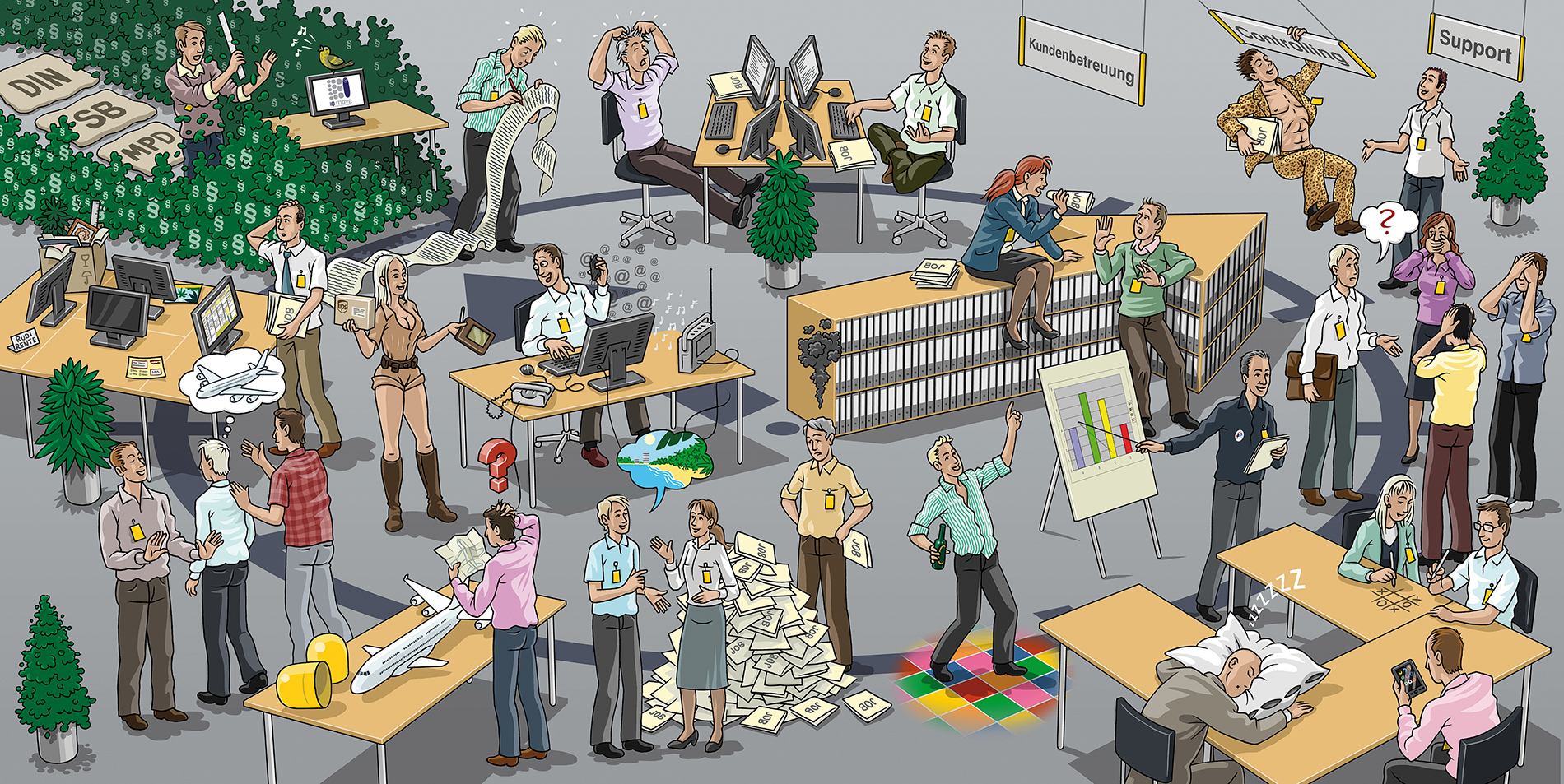
Lufthansa Technik Dirty Dozen Human Factors Leitbild Erklärbild Strategiebild Dialogbild Agentur für Visualisierung von Prozessen, Veränderungen und Visionen.

Lufthansa Technik

HUMAN FACTORS

Regarding human factors, the Dirty Dozen are often discussed as a frequent topic of the detrimental effects on work and possible sources of errors. For this the representation of the Dirty Dozen was redone to include administrative activities in the dialogue picture. A clock serves as the background with the number 12 pictorially representing how the 12 themes overlap one another and have no real hierarchy.

The 12 themes in summary

1. Pressure – Time pressure and psychological pressure
2. Complacency – “I can do everything and do not need anything or anyone to accomplish my tasks.“
3. Lack of Communication – listen, inquire, obtain
4. Lack of Attention
5. Exhaustion
6. Lack of Teamwork
7. Lack of Knowledge
8. Lack of Authority
9. Distractions – too many things at the work station
10. Lack of Resources
11. Regulations – clear allocation of tasks as processes by administration using all appropriate standards
12. Stress – external influences lead us toward one interpretation and one reaction

LGSO Lufthansa Group Security Operations Sicherheit Flughafensecurity Airportsicherheit Dialogbild Agentur für Visualisierung von Prozessen, Veränderungen und Visionen.

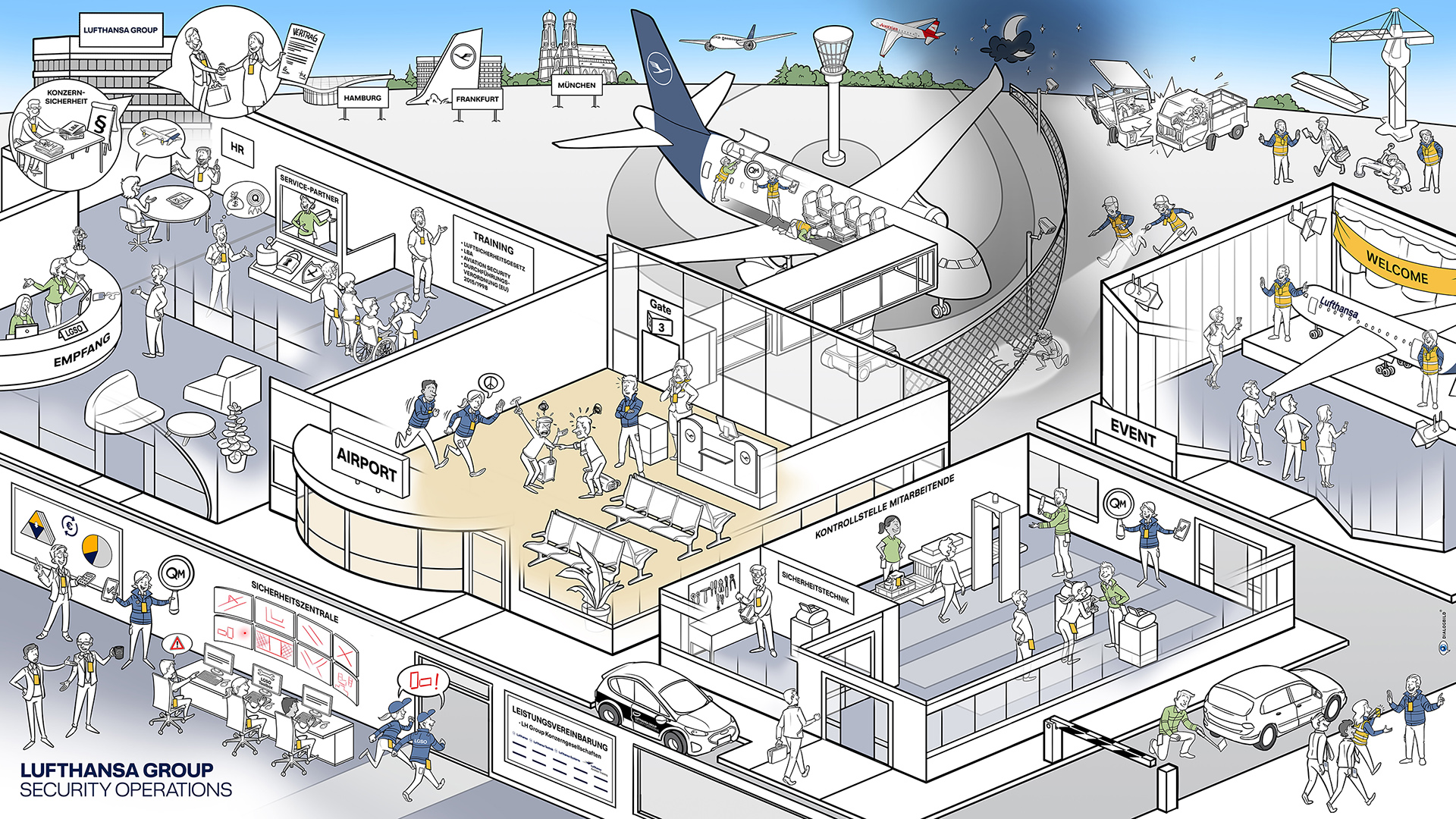
LUFTHANSA GROUP SECURITY OPERATIONS


Lufthansa Group Security Operations was founded as an independent subsidiary within the Lufthansa Group in the year 2019 and employs approximately 170 employees across Germany. Its highest priority is the guarantee of operational security standards and the continuous availability of the broad services within the Lufthansa Group.

Appropriate and according to whichever arising need, the LGSO takes care, among other things, of the organization of classic plant security activities, security offices, visitor reception, aircraft security search and the control stations for employees.

The dialog picture was conceptualized during multiple video conferences and finalized afterwards. In this way, LGSO could look at the first designs, discuss them internally and then generate feedback, which was then realized in detail by DIALOGBILD step by step.

Schaeffler Fabrik der Zukunft Zero Emission Company 3D Grafik Dialogbild Agentur für Visualisierung von Prozessen, Veränderungen und Visionen.

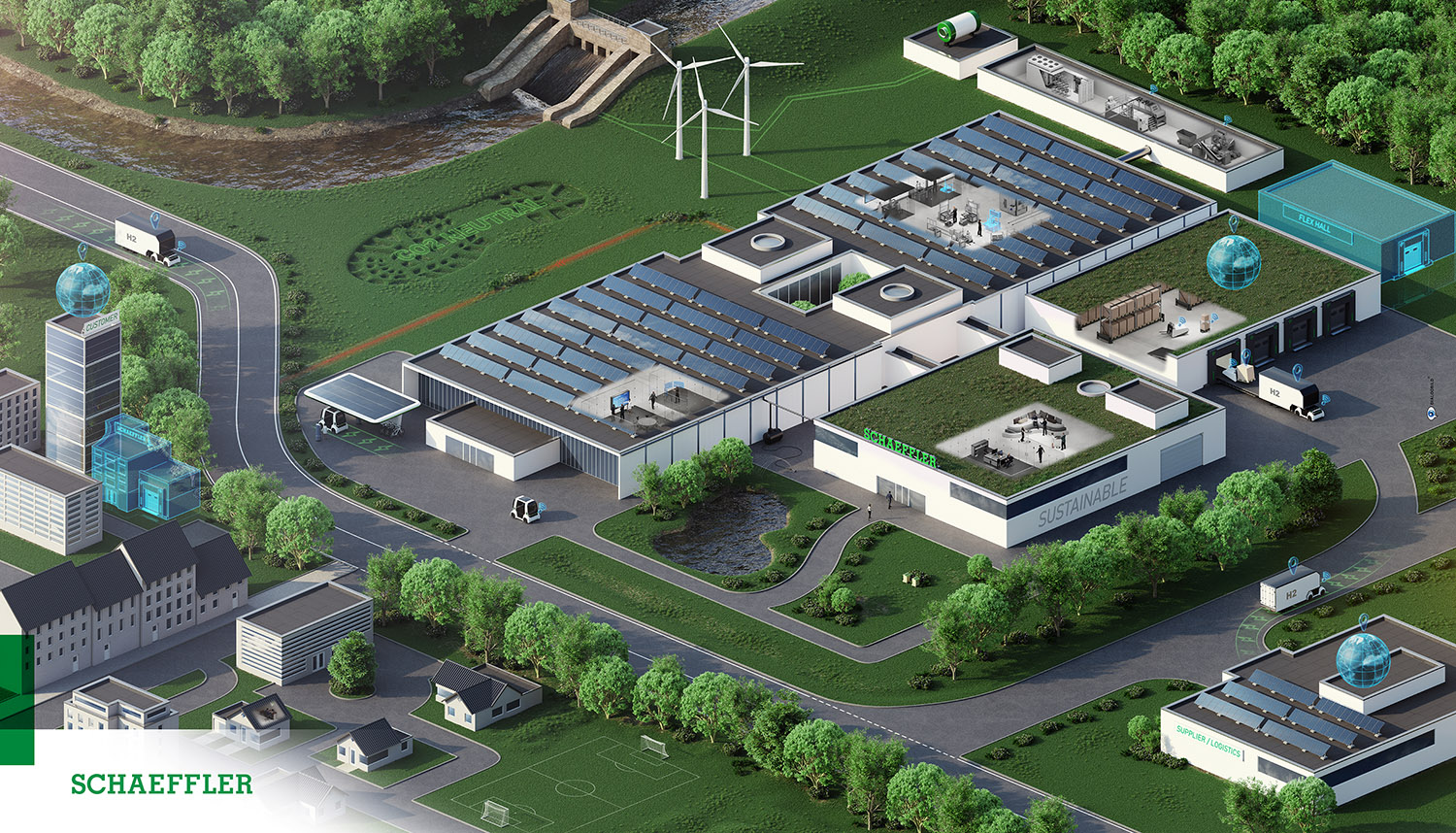
Schaeffler Fabrik der Zukunft Zero Emission Company 3D Grafik Dialogbild Agentur für Visualisierung von Prozessen, Veränderungen und Visionen.

SCHAEFFLER PRODUCTION

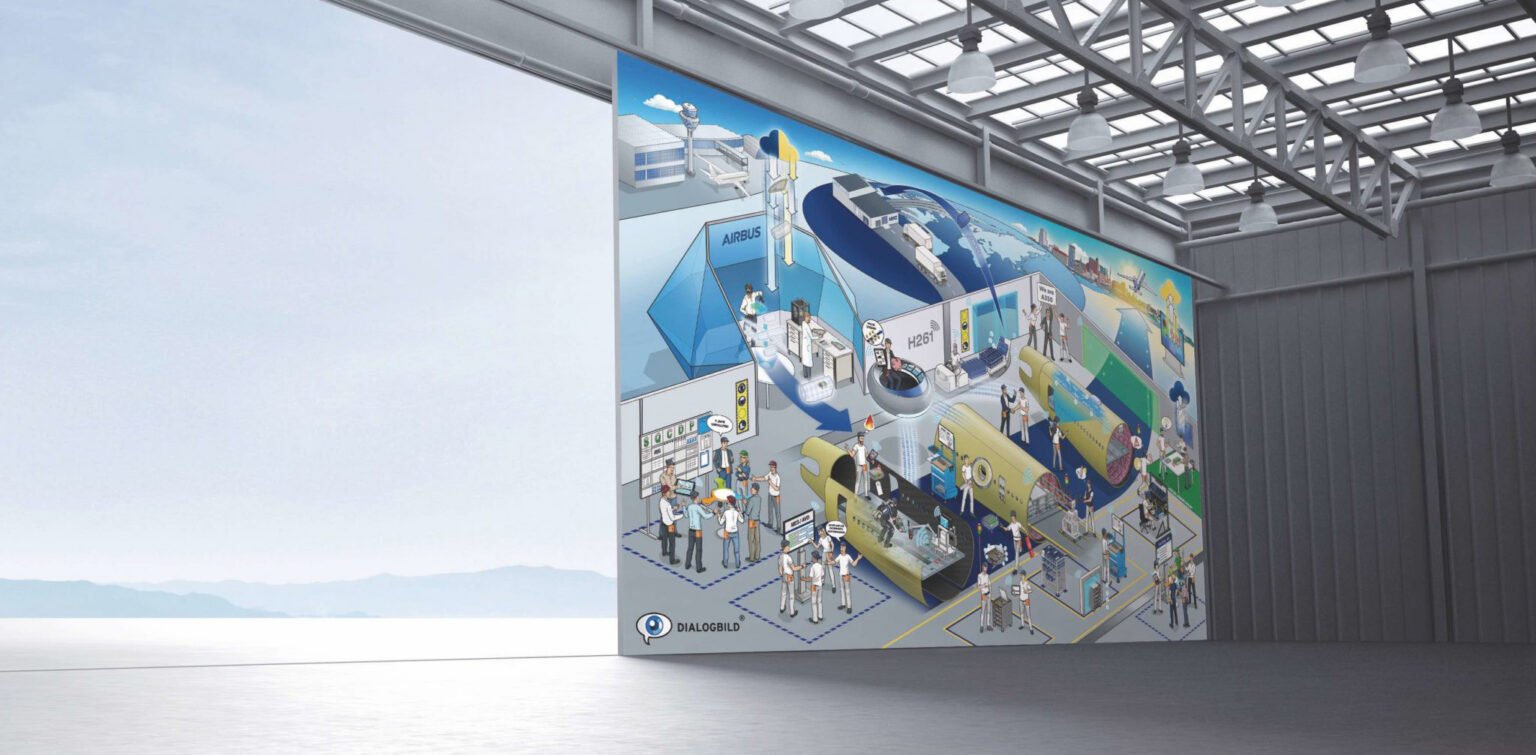
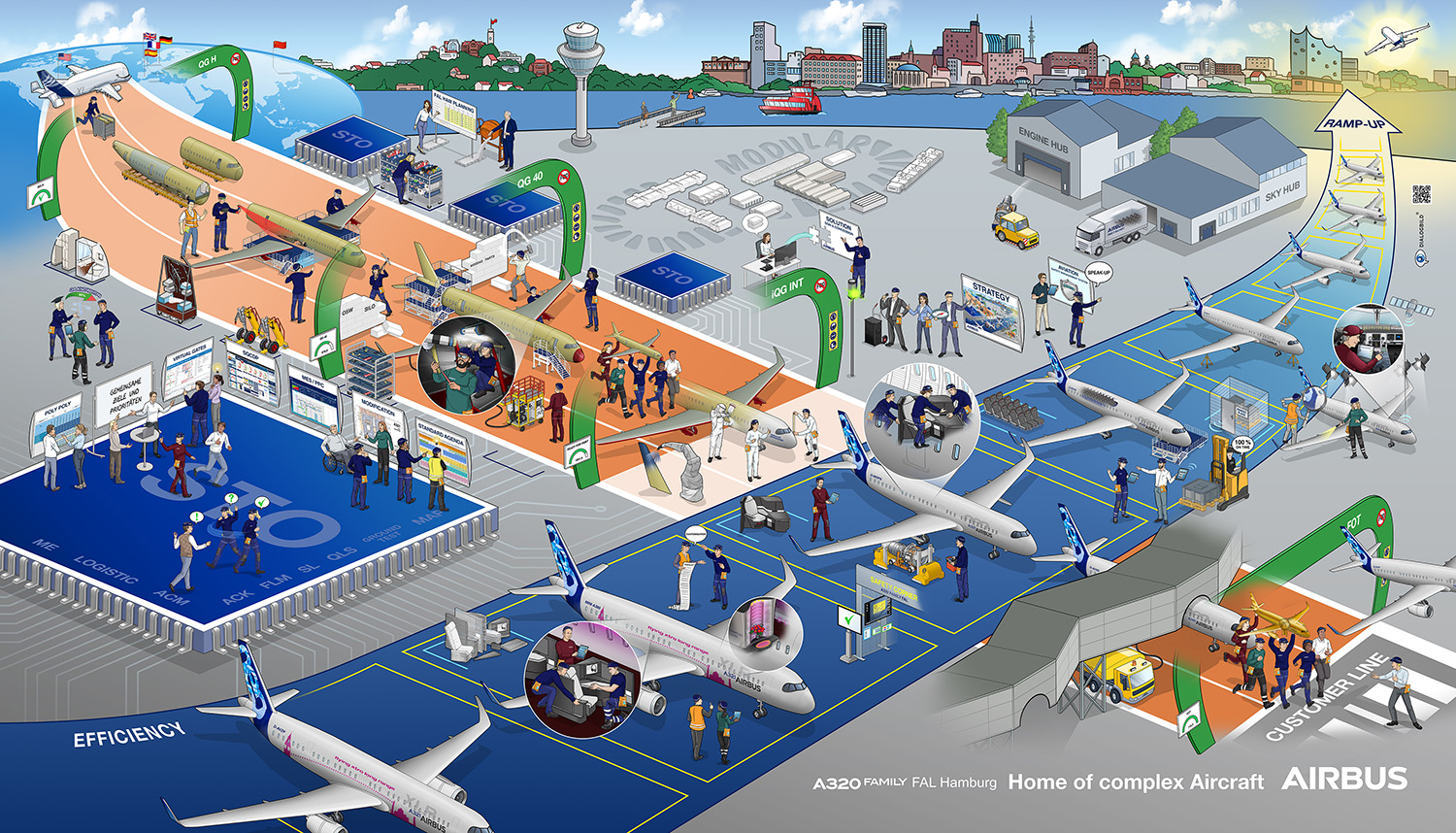
A DIALOG PICTURE FOR AIRBUS AND THEIR NEW MODULAR CONCEPT


The Airbus plant in Hamburg-Finkenwerder is the largest Airbus site in Germany. Among other things, this is where the final assembly of the well-known A320 family takes place. As part of an internal restructuring, sequential line production is being converted to a mixed production organization, with the first half of production taking place in a synchronized area and the second half at a modular station. This means that various activities per aircraft that currently take place at several stations will be carried out at a single station.

The new modular concept is to be made visually understandable to production employees with the aid of a dialog picture, and the advantages and opportunities for all those involved are to be highlighted.

During a comprehensive tour of the factory, the DIALOGBLD team had everything shown to them in detail and took photos so that the individual machines and production steps could be depicted as authentically as possible in the final dialog picture.

The finished dialog picture will be displayed prominently in the production halls for everyone to see and will be used for internal workshops. ...

Liebherr Erklärfilm Remote Electronic Unit Dialogfilm Dialogbild Agentur für Visualisierung von Prozessen, Veränderungen und Visionen.

Logo von Liebherr

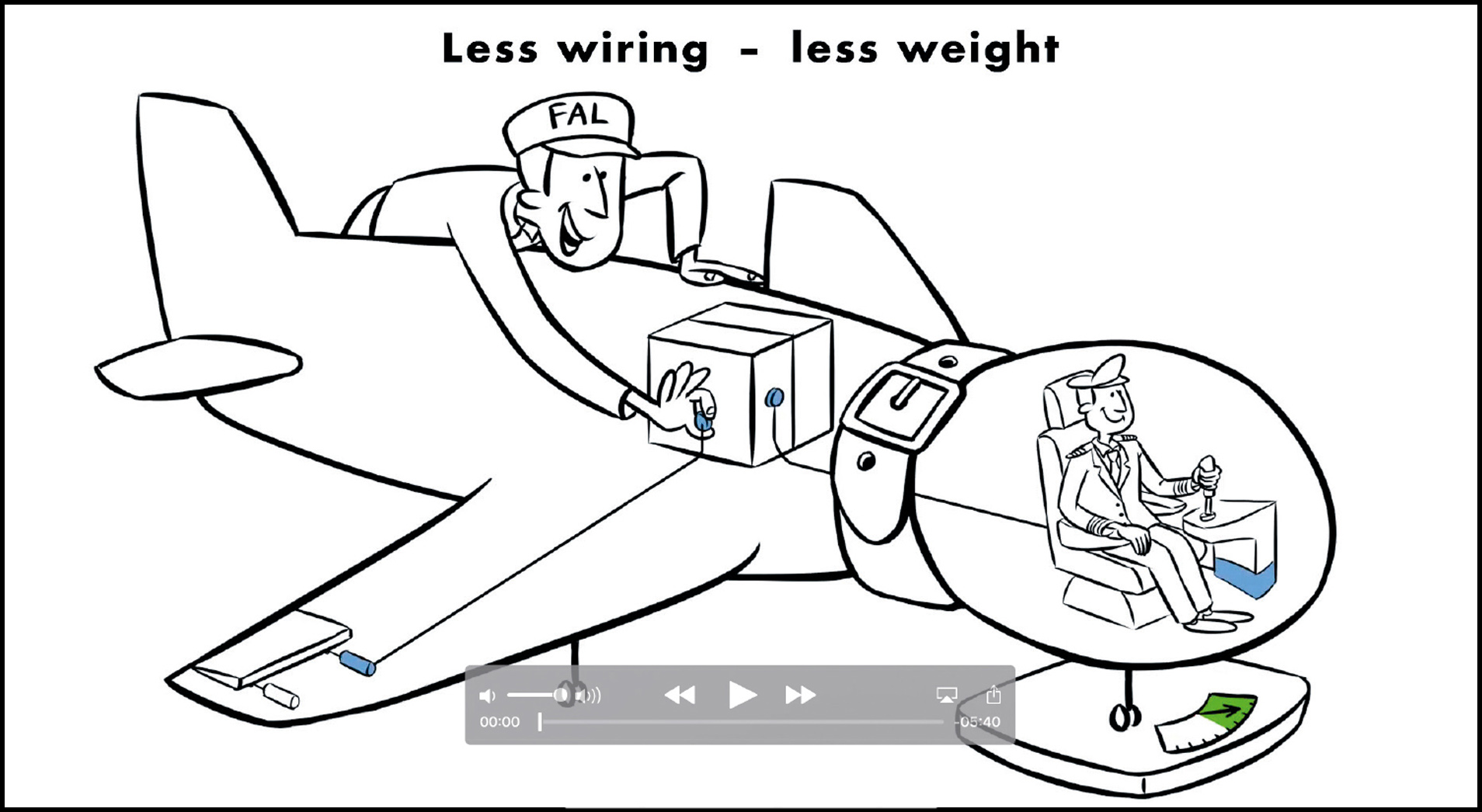
REMOTE ELECTRONIC UNIT

The Liebherr Group is a 100% family-run company.The group includes eleven independent operating divisions, including the aerospace and traffic engineering division.

The Liebherr-Aerospace Lindenberg GmbH team has received professional support and commissioned DIALOGBILD to develop a dialog film. The focus was on the extremely versatile control unit "Remote Electronic Unit" (REU) - from the field of electronics. Thanks to its modular design, the Remote Electronic Unit can be flexibly used in aerospace applications.

The goal was to present the complex product with all its applications and functionalities. Furthermore, the many advantages should be presented in an attractive and convincing way.

The storyboard was developed by Liebherr-Aerospace (Lindenberg) and DIALOGBILD within a one-day workshop. The final dialog film will now be shown both internally and externally, for example at exhibitions.

FAQ: Frequently asked questions about process visualization in the defense industry

How does a dialog picture differ from classic Lean Management or swimlane diagrams?

Classic process diagrams (such as BPMN, Visio, or swimlanes) are highly abstract and usually only readable by Lean experts or process engineers. While they show the logical sequence, they neglect the human factor and the context. A dialog picture translates these dry data graveyards into a vibrant, visual map. It not only shows what needs to be done but also depicts the real work environments, the interfaces between departments, potential sources of error, and emotional barriers. This makes the process understandable to every employee—from strategic purchasing to the assembly line—at a glance.

How does the dialog picture method specifically help improve supply chain resilience?

Resilience arises from transparency and rapid action in crisis situations. When supply chains break down or components are held up due to export restrictions (e.g., ITAR/EAR), alternative processes must be implemented immediately. In a resilient dialog picture, we visualize the entire ecosystem, including all single points of failure and buffer stocks. The workforce can see, visually anchored, which "Plan B routes" and emergency processes are defined. This sharpens proactive risk awareness and prevents costly production downtime because everyone understands their role in crisis management.

Can the dialog picture method also map complex government regulations, such as the procurement process of the German Armed Forces?

Yes, absolutely. The interfaces with government clients and the Federal Office of Bundeswehr Equipment, Information Technology and In-Service Support (BAAINBw) are highly formalized – for example, through Customer Product Management (CPM). The dialog picture acts as a translator here: We directly link the client's external, bureaucratic milestones and approval procedures with your internal milestones in development, logistics, and production. This allows project managers and engineers to immediately understand which documentation requirements and quality gates must be met at which point in time to avoid delaying the overall process.

How do we actively involve production staff in process optimization?

The greatest leverage for efficiency gains lies with the shop floor personnel. Ideally, a dialog picture is not just presented from above, but serves as an interactive tool. Large printouts in shop floor management or digital terminals encourage teams to discuss the current state. Employees can point directly to the image: "Material regularly backs up here" or "We often lack the approval documents at this interface." The dialog picture breaks down silo thinking and becomes a catalyst for the continuous improvement process (CIP), as all participants are discussing the same visual reality.

Our defense company has extremely specific and highly confidential value streams. How does the collaboration work?

As an experienced agency, we understand the stringent security requirements of defense technology. In our collaborative process, you don't need to disclose any secret technical design data or confidential production figures. We abstract your processes to a logical level and utilize functional metaphors and symbols. Collaboration takes place through structured, secure workshops. Our editors and illustrators are trained to visualize complex value streams in a way that perfectly conveys the process logic while maintaining 100% know-how protection.

What digital possibilities does interactive process visualization offer?

Beyond traditional large-format printing for shop floor boards, the method unfolds its full potential digitally. We create interactive process applications (HTML5) that you can integrate into your intranet or enterprise systems. Users can zoom in deeper into individual production steps with a single click. Furthermore, real-time data (such as key performance indicators for throughput time, material stock levels, or quality rates) can be directly integrated into the visual stations of the dialog picture via interfaces. This transforms the screen into an intuitive, visual control center for your processes.