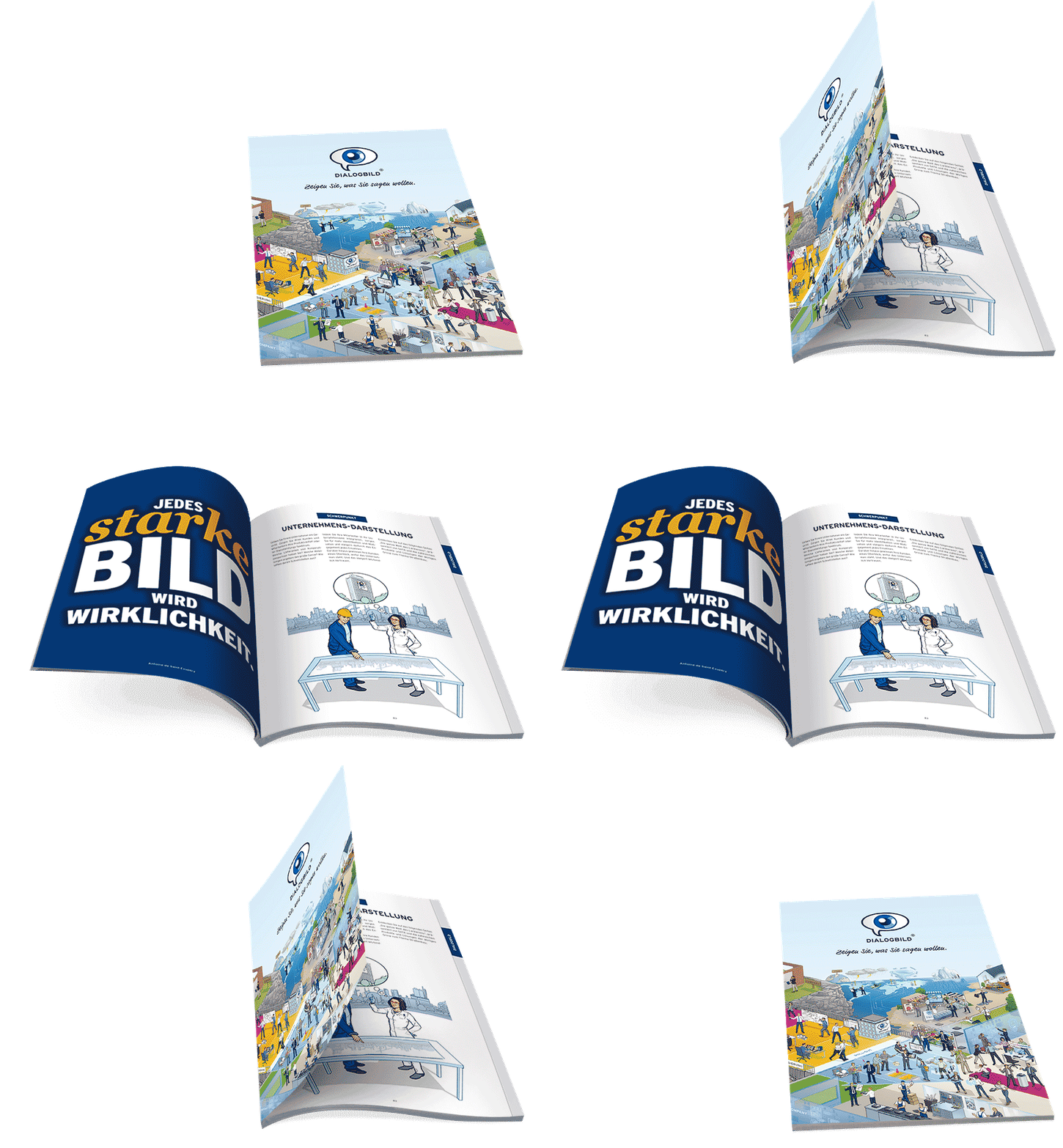
Leadership principles: The ultimate development guide

Imagine your company as a ship on the high seas. Strategy is the course, your employees the crew. But who ensures everyone rows in unison when the storm hits? The answer: your leaders. To prevent them from steering in different directions, they need a shared compass. This is precisely where a leadership principle comes in.

In today's dynamic work environment, relying on the gut feeling of individual managers is no longer sufficient. A strategically anchored leadership principle provides orientation, retains talent, and shapes the leadership culture for the long term. In this ultimate guide, you'll learn step by step how to develop a vision that doesn't just gather dust in a drawer, but is actively implemented in everyday practice.

1. What is a Leadership Principle?

Before embarking on the development process, it is crucial to establish a clear understanding of the term and its boundaries.

Definition of a Leadership Principle

A leadership principle is a binding framework that defines the shared values, principles, and expectations regarding the behavior of leaders within an organization. It describes the common understanding of "good leadership" and provides concrete guidelines on how leaders should interact with their teams, with each other, and with external stakeholders.

Significance in Corporate Management

In modern corporate management, the leadership principle fulfills an essential navigational function. It serves as a guide for decision-makers—especially during periods of change or crisis. When circumstances become unclear, the principle provides stability and ensures that decisions are made consistently and in the best interests of the organization. Furthermore, it functions as an objective benchmark for reflecting on one's own behavior and for selecting new leadership talent.

Differences from Corporate Mission Statements

These terms are often used interchangeably, but they serve different purposes:

  • Corporate Mission Statement: This is directed at the entire organization (often also externally) and encompasses the vision (Where do we want to go?), the mission (Why do we exist?), and the general core values.
  • Leadership Mission Statement: While derived from the corporate mission statement, it is specifically directed at managers. It translates the global values ​​into concrete leadership behavior and defines the leadership style practiced.

2. The Role of Corporate Values

A leadership mission statement can never exist in isolation. Its DNA consists largely of existing or aspired-to corporate values.

Definition of Corporate Values

Corporate values ​​are the moral and practical principles that form the foundation of the organizational culture. They define what is important to the company – be it innovation, trust, customer focus, or sustainability.

How Values ​​Influence Leadership

Corporate values ​​significantly shape leadership behavior. If, for example, "transparency" is a core company value, this must be reflected in the leadership style: The leader shares information early, communicates mistakes openly, and involves the team in processes. A mission statement ensures that these values ​​don't remain mere lip service on marketing brochures, but become measurable and tangible in everyday leadership practice.

Examples of company values ​​and their translation

Company value Translation into leadership style
Trust I delegate responsibility and avoid micromanagement.
Innovation I create a safe space for mistakes and encourage new ideas.
Appreciation I regularly give constructive feedback and celebrate successes within the team.

3. Developing a Leadership Principle

Creating a leadership principle is not a project that the HR department can complete in a quiet afternoon. Developing a leadership principle is a transformative process.

The Leadership Principle Development Process

Creating a leadership principle is not a project that the HR department can complete in a quiet afternoon. Developing a leadership principle is a transformative process.

1. Analysis & Status Quo: How is leadership currently practiced? What unwritten rules exist in our leadership culture?

2. Concept & Co-Creation: Development of the core principles in collaborative workshops.

3. Formulation: Precise, motivating, and understandable formulation of the guiding principles.

4. Roll-out & Anchoring: Implementation within the company and integration into daily operations.

Involving Stakeholder Groups

A top-down approach rarely works in leadership principle development. Stakeholders should be involved in the process early on. In addition to senior management, established executives, up-and-coming leaders, and ideally, employee representatives (e.g., the works council) must have their say. Only those who have helped shape the content will later activate the necessary leadership skills to embody the guiding principles.

Avoiding Common Mistakes

When developing the guiding principles, be sure to avoid the typical pitfalls:

  • Empty phrases instead of a clear message: Avoid meaningless platitudes like "We want to perform synergistically." Be specific.
  • Lack of consistency: If management doesn't adhere to the rules themselves, the mission statement is immediately ineffective.
  • Insufficient communication: A poster in the break room isn't enough. Implementation requires ongoing dialogue.

4. Leadership Skills for a Successful Mission Statement

A written document is just a piece of paper. To bring it to life, the appropriate leadership skills must be specifically fostered.

Key Leadership Skills at a Glance

Depending on the focus of your new mission statement, different skills will come into play:

  • Emotional Intelligence: Empathy and the ability to respond to the individual needs of employees.
  • Change Management Skills: Guiding teams confidently through transformations and agile processes.
  • Communication Skills: Clarity in expectations and the ability to actively model a positive leadership culture.

Training and Development of Leaders

Training is essential to develop leaders and empower them to implement the mission statement. Offer targeted workshops, coaching sessions, and peer case consultations. Link the new leadership mission statement directly to your existing leadership development programs.

Evaluating Leadership Performance

Evaluation helps to sustainably verify the effectiveness of the mission statement. Utilize tools such as 360-degree feedback, regular employee surveys, and performance review meetings. These processes not only assess whether economic goals have been achieved, but also how well this has been aligned with the company's mission statement.

5. The Importance of Leadership Culture

The best mission statement is of little use if it encounters a culture that rewards the opposite. There is a reciprocal dynamic between theory and practice.

What is Leadership Culture?

Leadership culture is the sum of the behaviors, habits, and values ​​actually practiced by all leaders within an organization. It is the "fertile ground" in which your teams operate.

       [Leadership Mission Statement]  <-- Guiding & Strategic
               │
               ▼
       [Leadership Culture]   <-- Everyday Behavior

Influence of the Leadership Mission Statement on Culture

Leadership culture significantly influences the implementation of the mission statement. At the same time, a strong, consistently practiced leadership mission statement can bring about positive cultural changes. It breaks down old, hierarchical patterns and establishes a modern, collaborative, and trust-based working environment.

Measuring Leadership Culture

To make the success of the transformation visible, you should make soft factors measurable. Proven measurement methods include:

  • Pulse Surveys: Short, regular mood barometers within the team.
  • Employee turnover rate & absenteeism: Often a direct indicator of leadership quality.
  • Qualitative Focus Groups: Moderated sessions in which cultural change is reflected upon.

6. Practical Examples of Successful Leadership Models

So what does all this look like in practice? Let's look at how different approaches work in reality.

Examples from various industries:

  • Technology corporation: Focus on agility and psychological safety. Guiding principle: "We encourage bold ideas and view mistakes as learning opportunities."
  • Traditional family-owned mechanical engineering company: Focus on responsibility and continuity. Guiding principle: "We lead with reliability and secure the future for the next generation."

Best Practices for Implementation

Successful companies rely on creative and interactive formats for anchoring their leadership principles. Instead of thick manuals, they use visual media: large-scale wall art in the office, interactive learning apps, or illustrated guides that humorously resolve complex situations. Visual anchors help bridge the gap between abstract text and daily action.

Lessons Learned from Successful Companies

The most important insights from practical experience show:

1. Less is more: Limit yourself to 4 to a maximum of 6 core principles.

2. Use visual language: People remember images and stories much better than walls of text.

3. Be patient: Cultural change doesn't happen overnight – plan for a period of 12 to 24 months for the first noticeable consolidation.

Conclusion: Your Path to a Strong Leadership Compass

A well-thought-out leadership philosophy is not an optional HR project, but a strategic success factor for your entire company. It retains your high performers, attracts new talent, and fosters a healthy, high-performing leadership culture. By harmoniously linking corporate values ​​and leadership competencies and shaping the mission statement development process in a participatory manner, you lay the foundation for sustainable success.

Leading with vision together: Make your mission statement visible!

A text alone cannot change a culture – only when it sticks in people's minds and evokes emotions does it unfold its full impact. This is precisely where we come in: As a visual communication agency, we translate your strategic leadership principles into tailor-made, visual experiences. We make abstract values ​​tangible, visualize complex change processes, and ensure that your new leadership philosophy is understood, shared, and enthusiastically embraced by all leaders in their daily work. Let's develop your very own visual compass together.

Contact us now and schedule your free initial consultation for developing a visual mission statement!

AOK Nord-Ost Führungsleitlinien Leitbild Erklärbild Strategiebild Dialogbild Agentur für Visualisierung von Prozessen, Veränderungen und Visionen.

LEADERSHIP PRINCIPLES


What does it mean: responsible leadership in a company? In order to answer this question the health insurer AOK North East developed 7 principles for its own senior management. With the help of a dialogue picture the principles were introduced and discussed at a management conference. Since then the dialogue picture has served as the basis for discussion on the topic of leadership at all three regional branches of AOK North East (Berlin, Brandenburg and Mecklenburg-Vorpommern).

„Health through passion“ - with these principles AOK North East, in existence since 01.01.2011, has put the topic of health into focus. For this reason, the health-tree, as seen on the AOK logo, stands in the centre of the dialogue picture. The roots of the tree symbolize the 7 principles growing and flourishing. In the picture a kind of fitness trail can be found. The trail outlines the map boundaries of three German states represented by traditional symbols such as the Berlin Bear.

On the trail, managers must master the 7 stations concerning the topic “Leading is responsible dealing.” Each station stands for a principle and shows a situation involving management and staff. The trail has no beginning and no end – all of the principles are equally important. The individual scenes were developed in small groups of managers. Over the course of a 1 day workshop, the ideas were sketched out by two illustrators and a moderator from DIALOGBILD, and later detailed illustrated.

vertbaudet c'est magique Unternehmenswerte Leitlinien Leitbild Dialogbild Agentur für Visualisierung von Prozessen, Veränderungen und Visionen.

vertbaudet c'est magique Unternehmenswerte Leitlinien Leitbild Dialogbild Agentur für Visualisierung von Prozessen, Veränderungen und Visionen.

CORPORATE VALUES AND GUIDELINES: VERTBAUDET – C‘EST MAGIQUE


Vertbaudet is a French commercial enterprise headquartered in Tourcoing. Aside from its central offers in childrens’ clothing, the enterprise offers maternity wear, baby products, toys and products for kids’ rooms through mail order. Vertbaudet has been running their own stores in France since 1996.

To communicate the company values and guidelines to their employee, Vertbaudet Germany decided to utilize a dialog picture. Further, topics such as golden circle, leadership principles and value matrix were to be integrated. At the same time the picture was to be illustrated in a magical way and, as a provider for baby/childrens’ clothing and equipment, express playfulness. As an analogy for the slogan “c’est magique” the customer chose the world of circuses.

Stute Logistics Führungsleitlinien Leitbild Strategiebild Dialogbild Agentur für Visualisierung von Prozessen, Veränderungen und Visionen.

Website_Logos_Stute.svg

LEADERSHIP PRINCIPLES


STUTE Logistics (AG & Co.) KG is a modern logistics service provider with a long tradition. The company was founded in Bremen in 1853. Nowadays the company is one of the leading European service providers in the areas of contract logistics, overland transport and ocean freight. Since 1996 STUTE Logistics (AG & Co.) KG has been a wholly-owned subsidiary of Kühne + Nagel-Group. Beside their corporate values of respect, customer orientation and self-responsibility, STUTE puts great emphasis on 10 leadership principles which shape working together on a daily basis.

The values should be understood, accepted and lived by all employees in order to establish them permanently in the company. DIALOGBILD was tasked with visualising these values. After the briefing discussion we started to design a background scenery which was used as a base for the following interdisciplinary live visualisation workshop consisting of one illustrator and one moderator available on site.

The workshop was used to fill the background scenery with life and to develop suitable drafts of scenes for the leadership principles. Key message, actors and image metaphors were considered as influencing factors among other things. Afterwards the Dialogbild was finedrawn and completed after a three-month project phase.

KIA Motors Leadership Competencies Führungsleitlinien Leitbild Dialogbild Agentur für Visualisierung von Prozessen, Veränderungen und Visionen.

Logo von KIA

LEADERSHIP SKILLS


Kia Motors is a car manufacturer from South Korea. Since 1998, it belongs to the Hyundai Motor Group, the fifth biggest automotive manufacturer in the world. The Hyundai Motor Group employees are a key factor of this success. To build on its success even further, a globally unified leadership competency model was developed.

In order for the model to be understood and accepted by the employees, they need to be well informed and convinced of its effectiveness. Hence, Kia Motors Europe, the European headquarters in Frankfurt, opted for a dialog picture method to explain the concept. Over a period of three months, a small task forced team created the new dialog picture “Leadership Competencies”.

Already at a first glance it is clear what makes this dialog picture unique: The picture world is located in the interior of a Kia Sportage, which our illustrator replicated true to life.
The message behind this picture world is both simple and strong. We know that our employees are capable of great things. And they need strong leadership to reach maximum speed. Only then will we zoom ahead to the right direction. The dialog picture was divided into five areas, each of them represents one of the five leadership competencies in the model. They are easily recognizable thanks to the different colors of the ties and scarfs worn by the managers. For each competency, four specific behavior attributes are illustrated as scenes.

Continental Leadership Principles Führungsleitlinien Management Meeting Leitbild Strategiebild Dialogbild Agentur für Visualisierung von Prozessen, Veränderungen und Visionen.

Logo von Continental

7 LEADERSHIP PRINCIPLES


We were tasked by Continental to create visualizations in a dialogue picture of guidelines for high-level personnel. At an international meeting of top managers, we provided them with a background. The managers described their ideas during several workshops, which we further developed with the help of two illustrators. Thus a large dialogue picture was created measuring 4 x 2 m over the course of a day.

The background developed first represents a modern test track. We used this as an creative starting point, since the second part of the high-level personnel meeting actually took place at this track. Each guideline point was assigned a particular location in the picture in which the appropriate scenes would be represented. In order to explain the goal of the workshops and to clarify to the participants the dialogue picture method, we developed an informational leaflet with possible results and an empty landscape. After the meeting further revision including colorizing was carried out on the individual scenes. From this the final dialogue picture was developed, which is now used world-wide for training purposes.

Lufthansa Technik Führungsguide Leitbild Erklärbild Strategiebild Dialogbild Agentur für Visualisierung von Prozessen, Veränderungen und Visionen.

Lufthansa Technik

LEADERSHIP GUIDE


Lufthansa Technik’s goal is clear: Employee-focused leadership is designed to achieve better cooperation among employees. To reach this goal, LHT has designed an icon in the form of a compass to offer orientation and transparency to the leaders.

The leadership compass contains the required leadership behavior, including not only professional and practical qualifications, but social competencies as well. To offer leaders a permanent guide, we developed a weekly leadership calendar based on the leadership compass. Each week a leader receives a new thought-provoking idea for their leadership style.

Frequently Asked Questions (FAQ) on the topic of leadership principles

In practice, a leadership mission statement raises many questions – from the initial idea to its final integration into the leadership culture. Here you will find the most important answers at a glance to bring clarity to your project.

What is the greatest benefit of a leadership mission statement for a company?

A leadership mission statement ensures company-wide standardization of leadership quality. It provides orientation, reduces conflicts through clear expectations, and strengthens employee retention, as a consistent, appreciative leadership style directly improves the work environment. It also facilitates the recruitment and targeted development of future leaders.

How does a leadership mission statement differ from company values?

Company values ​​form the general, moral foundation for all employees of the organization. The leadership mission statement builds on these values ​​but specifically tailors them to the role of managers. It translates abstract values ​​into concrete leadership competencies and behaviors for daily interactions with teams.

How long does the mission statement development process take?

A sustainable process for developing a guiding principle cannot be rushed. As a rule, you should plan for approximately 3 to 6 months for the analysis, co-creation workshops with stakeholders, and final formulation. The subsequent implementation and cultural change within the company are ongoing processes that often take 12 to 24 months.

Why do many leadership principles fail in practice?

The main reason for failure is a lack of consistency ("paper is patient"). If guiding principles are simply imposed top-down without involving managers, acceptance is lacking. Another critical factor is "leading by example": If management doesn't adhere to the defined values ​​themselves, the guiding principle immediately loses credibility.

How can a leadership principle be kept alive in everyday practice?

Integration is key. The guiding principle must become part of all HR processes – from employee reviews and 360-degree feedback to promotion criteria. Furthermore, use visual anchors such as interactive media or exemplary stories on your intranet to firmly establish the principles in people's minds.

Should employees without management responsibilities also be involved in the development process?

Yes, absolutely! It's advisable to gather feedback from the employee level, at least through surveys or representative focus groups. After all, they are the ones being managed on a daily basis. Their input will ruthlessly reveal where the current leadership culture has weaknesses and what changes are urgently needed.

Do you want to not only write down your leadership principles but also make them tangible for everyone in the company? Visual anchoring is our specialty. Contact us and let's visualize your leadership principles together!