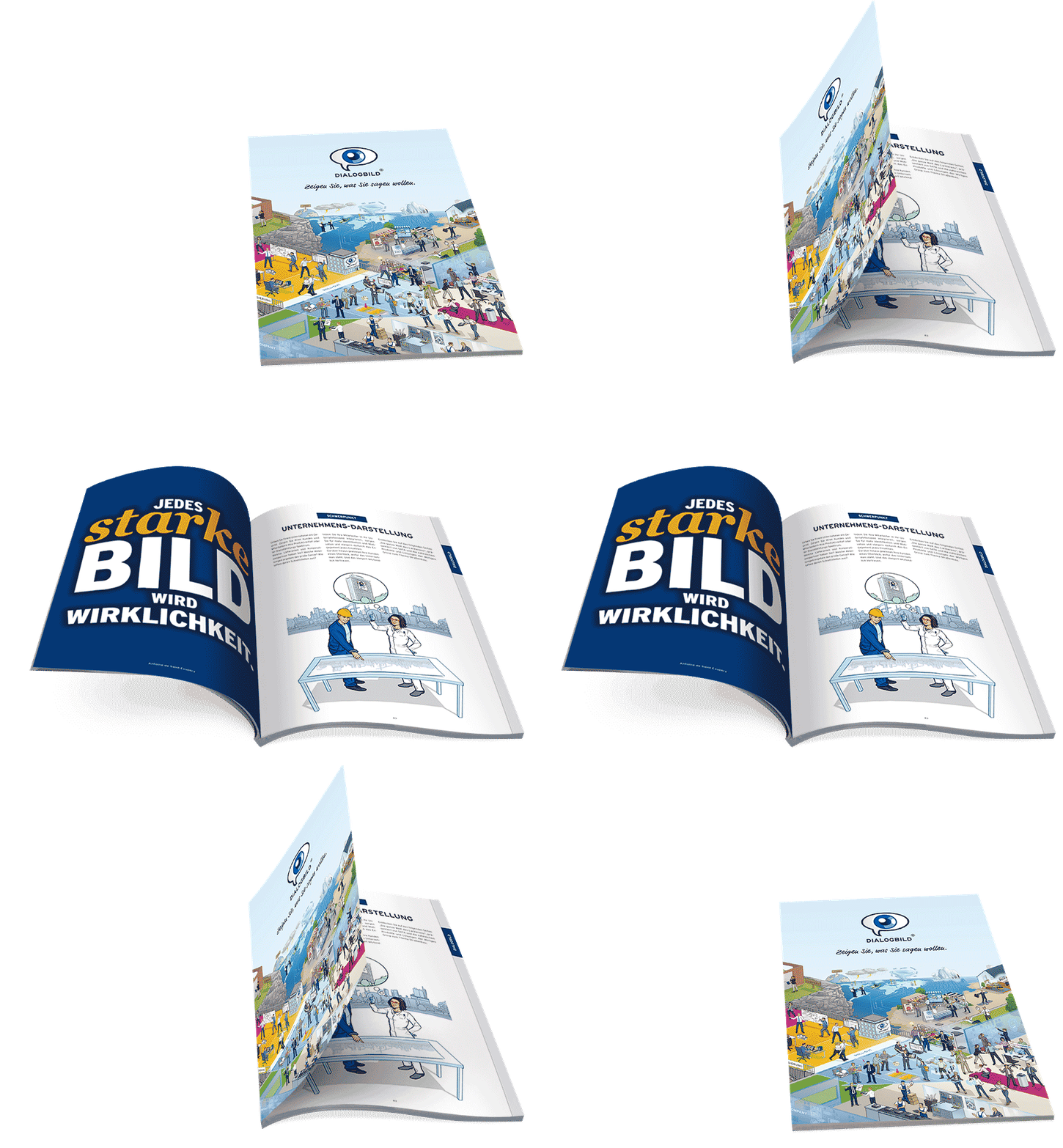
Visual Communication: The Comprehensive Guide
Definition of Visual Communication
Visual communication refers to the process of conveying ideas, information, instructions, and emotions through visual elements. At its core, it's about encoding a message so that the recipient can quickly and accurately decode it through sight. It's a discipline that combines psychology, design thinking, semiotics, and graphic design.
Significance in Modern Society
In today's fast-paced society, visual communication is gaining exponential importance. Studies show that visual content is processed up to 90% faster than text.
- Attention Economy: Visual content (images, videos, infographics) stands out in the digital overload.
- Globalization: Images overcome language barriers.
- Complexity Reduction: Complex issues, such as corporate strategies or data, become understandable through visualization.
Elements of Visual Communication
Visual communication comprises several key elements used by graphic design to convey a message:
- Images and illustrations: photos, drawings, graphics.
- Color: Creates emotions and associations (see 4.1).
- Typography: The art of typography (font, size, spacing).
- Layout and composition: The arrangement of elements in space.
- Shapes and symbols: logos, icons, and pictograms.
History of Visual Communication
Visual communication is not an invention of the digital age. Its roots reach back to the very beginnings of humankind.
Early Forms of Visual Communication
- Cave paintings: The oldest forms of visual communication served to document hunting successes and religious beliefs.
- Hieroglyphs and pictograms: Early writing systems were based on pictorial representations that directly conveyed ideas and objects.
- Cartography: Maps were crucial for trade and navigation and are an early example of data visualization.
Developments in the 20th Century
The 20th century saw the establishment of modern graphic design as a professional discipline:
-
Modernism: Artists and designers (e.g., Bauhaus) revolutionized design through functionality and minimalism.
-
Advertising: With the rise of mass media (television, posters), visual communication became a powerful tool in advertising.
Influence of Technology on Graphic Design
Digitalization has transformed graphic design. Desktop publishing and software like Adobe Creative Suite democratized design. Current technologies such as augmented reality (AR) and artificial intelligence (AI) offer new avenues for interactive visual communication and expand the boundaries of what is possible.
Examples of Effective Visual Communication
Practical examples of visual communication demonstrate how strategically used visuals can achieve objectives.
Visual Communication in Advertising
Excellent visual communication in advertising uses images to instantly create an emotional connection:
-
Brand logos: A simple symbol conveys the entire brand identity and its values (e.g., Apple's bitten apple).
-
Storytelling in ads: Posters or short video clips that tell a complete story in a fraction of a second spark curiosity and leave a lasting impression.
Successful infographics
Creating infographics is a discipline of visual communication that makes complex data understandable. They combine text, graphics, and illustrations to efficiently convey knowledge.
-
Benefits: They increase shareability on social media, improve search engine ranking, and increase user engagement.
Interactive visual elements
Interactive tools, such as sliders, animated maps, or interactive dialog pictures (see section 6.1), actively engage the user and enhance the learning experience. They transform passive viewers into active participants.
Techniques for Improving Visual Communication
Effective visual communication follows established design principles and utilizes psychological insights.
Colors and Emotions
The psychology of color is fundamental to graphic design. Colors influence our mood and directly impact brand perception.
| Color | Associations (positive) |
Associations (negative)
|
| Blue | trust, competence, calmness | cold, distance |
| Red | passion, energy, urgency |
danger, aggression
|
| Green | nature, growth, health |
envy, inexperience
|
The choice of colors should always match the message and the brand identity.
Typography in Visual Communication
Choosing the right typeface (serif, sans-serif, display) and using it correctly (contrast, line spacing) is crucial for readability and the tone of the message. Typography plays a significant role in how professional or approachable your visual communication is perceived.
Design Thinking as a Method
Design Thinking is a creative approach to problem-solving that is also applied in visual communication.
- Empathy: Understanding the needs of the target audience.
- Definition: Formulating the communication challenge.
- Ideation: Developing creative visual concepts.
- Prototyping: Creating rapid designs (mock-ups).
- Testing: Evaluating the visual impact on the target audience.
This iterative process ensures that the visual communication is truly user-centered.
Current Trends in Visual Communication
Visual communication is constantly evolving, driven by technology and cultural preferences.
Minimalism and its Impact
The trend toward minimalism (often called "flat design") focuses on the essentials. It utilizes white space, clean typography, and a reduced color palette to ensure elegance, clarity, and rapid information processing.
Data Visualization as a Trend
The amount of available data is constantly growing. The ability to present this data in a visually appealing and easily interpretable way is a sought-after skill in graphic design. Interactive dashboards and narrative data visualizations are current examples of visual communication.
Use of Animations and Videos
Moving images dominate the digital space. Short, engaging animations and videos are ideal for explaining complex processes (explainer videos) and quickly conveying emotional messages. They maximize viewing time and engagement.
The Role of Visual Communication in Business
The strategic use of visuals is crucial for business success.
Brand Identity and Visual Communication
Visual communication is the cornerstone of brand identity. The entire corporate design (logo, colors, imagery, fonts) sends signals about the company's values, quality, and personality. A consistent visual language builds trust and brand recognition.
Improving Customer Experience Through Visuals
A clear user interface (UI) and intuitive visual communication on websites and in apps directly improve the customer experience (CX/UX). Visually guided navigation reduces frustration and leads to higher conversion rates.
Visual Communication in the Marketing Mix
Whether in advertising, social media, or content marketing, visuals significantly increase reach and interaction with content. Visual content is prioritized and shared across all channels.
Dialogbild: Making Complex Things Visually Simple
At DIALOGBILD, we specialize in the visual communication of strategic content. We help companies communicate complex strategic topics such as their future state, change processes, or IT architectures.
This is how DIALOGBILD helps with target vision communication:
-
Target Vision Visualization: We transform the abstract, text-based target vision into a single, large-format dialog picture (strategy map).
-
Narrative Structure: The image uses metaphors and storytelling to make the target vision emotionally accessible and immediately understandable.
-
Engagement: The visualization fosters dialogue and acceptance among all stakeholders by creating clarity about the path and the goal – a crucial factor that determines the success of the strategy.
Conclusion: The Power of Visual Language
Visual communication is more than just aesthetic graphic design. It is a strategic necessity for success in today's information overload. Those who understand and utilize the elements of visual language – from color psychology to interactive visualizations of complex topics like the target vision – can effectively convey their messages, manage brand perception, and ultimately increase business success.
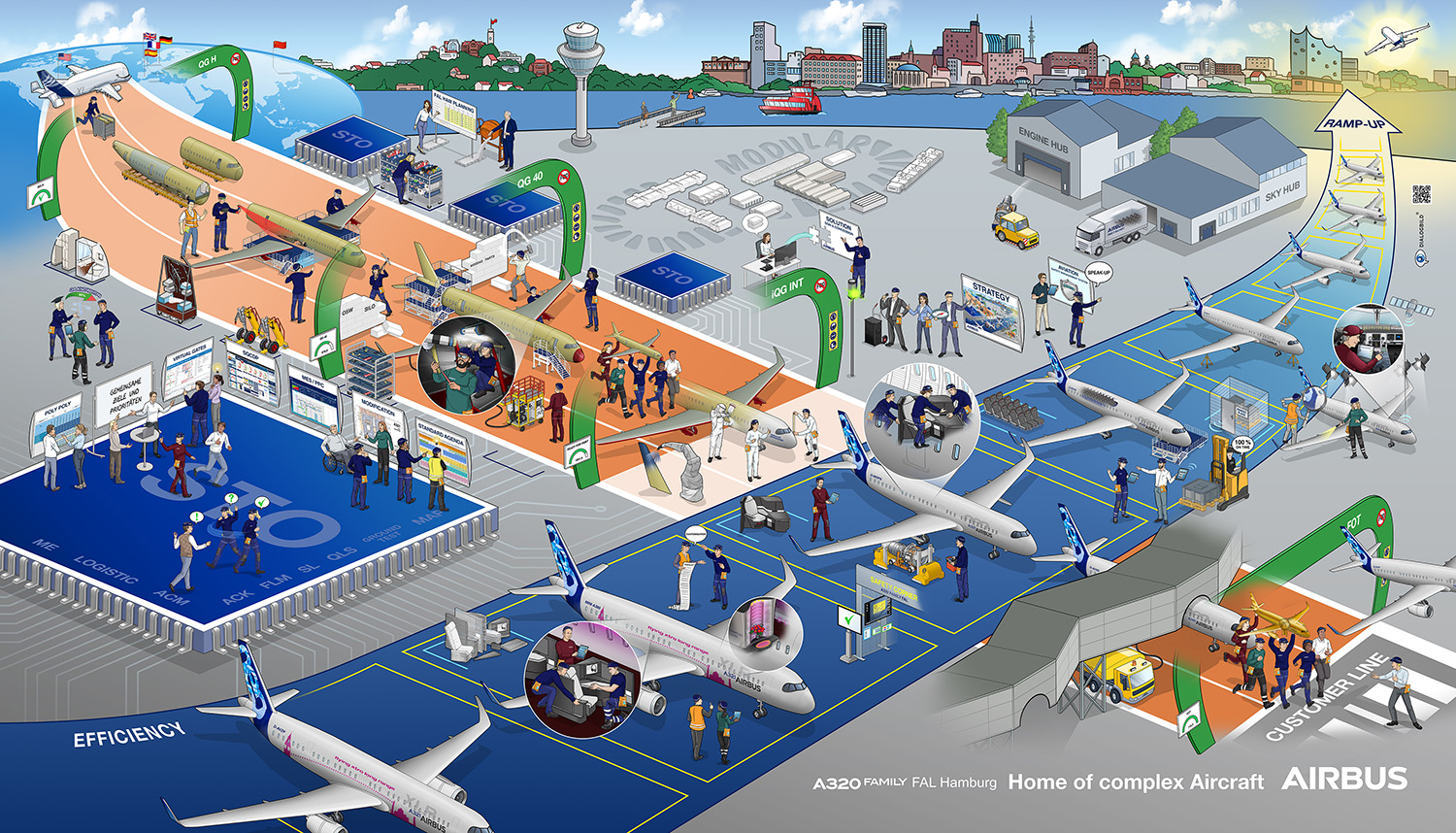
A DIALOG PICTURE FOR AIRBUS AND THEIR NEW MODULAR CONCEPT
The Airbus plant in Hamburg-Finkenwerder is the largest Airbus site in Germany. Among other things, this is where the final assembly of the well-known A320 family takes place. As part of an internal restructuring, sequential line production is being converted to a mixed production organization, with the first half of production taking place in a synchronized area and the second half at a modular station. This means that various activities per aircraft that currently take place at several stations will be carried out at a single station.
The new modular concept is to be made visually understandable to production employees with the aid of a dialog picture, and the advantages and opportunities for all those involved are to be highlighted.
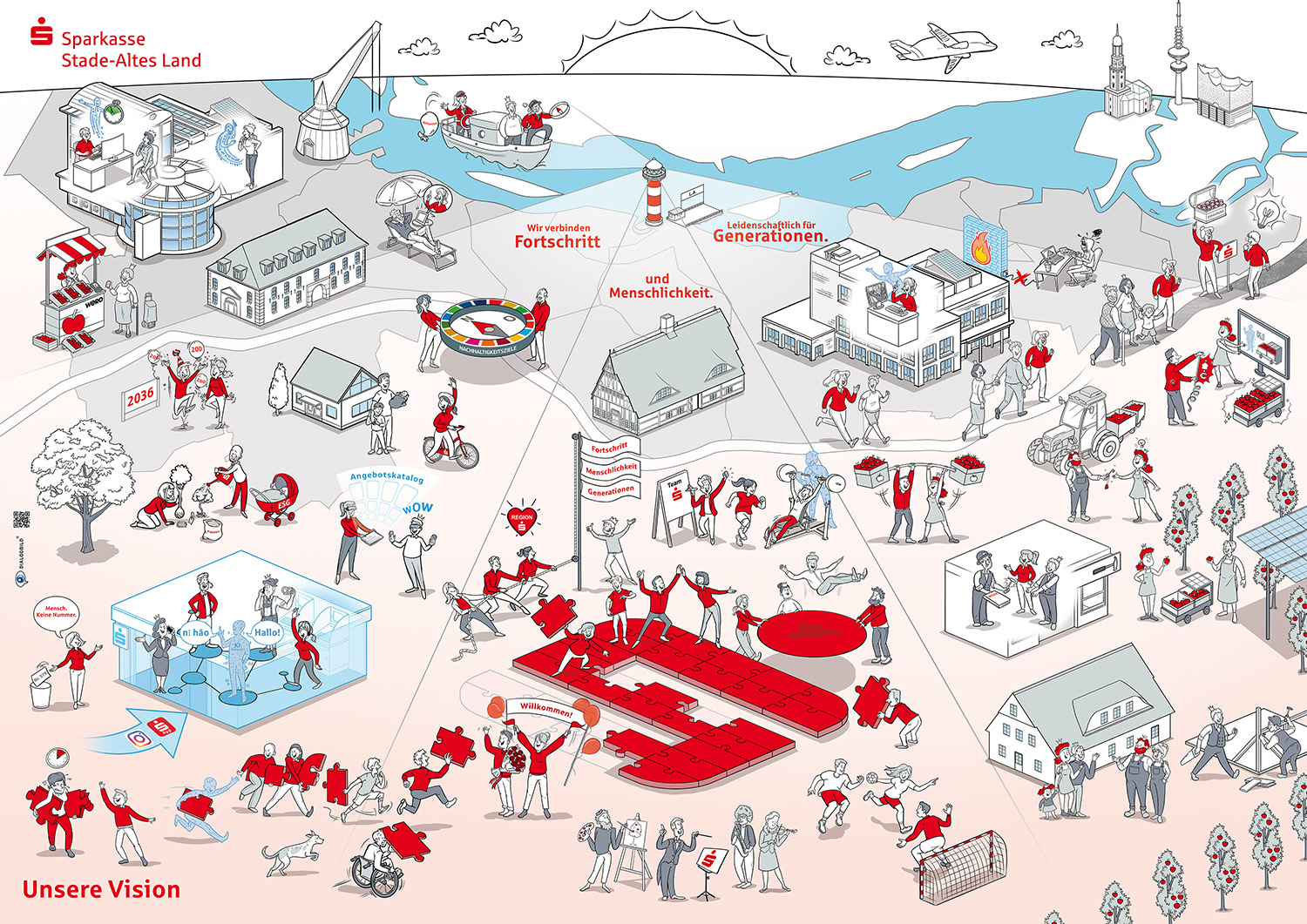
OUR VISION
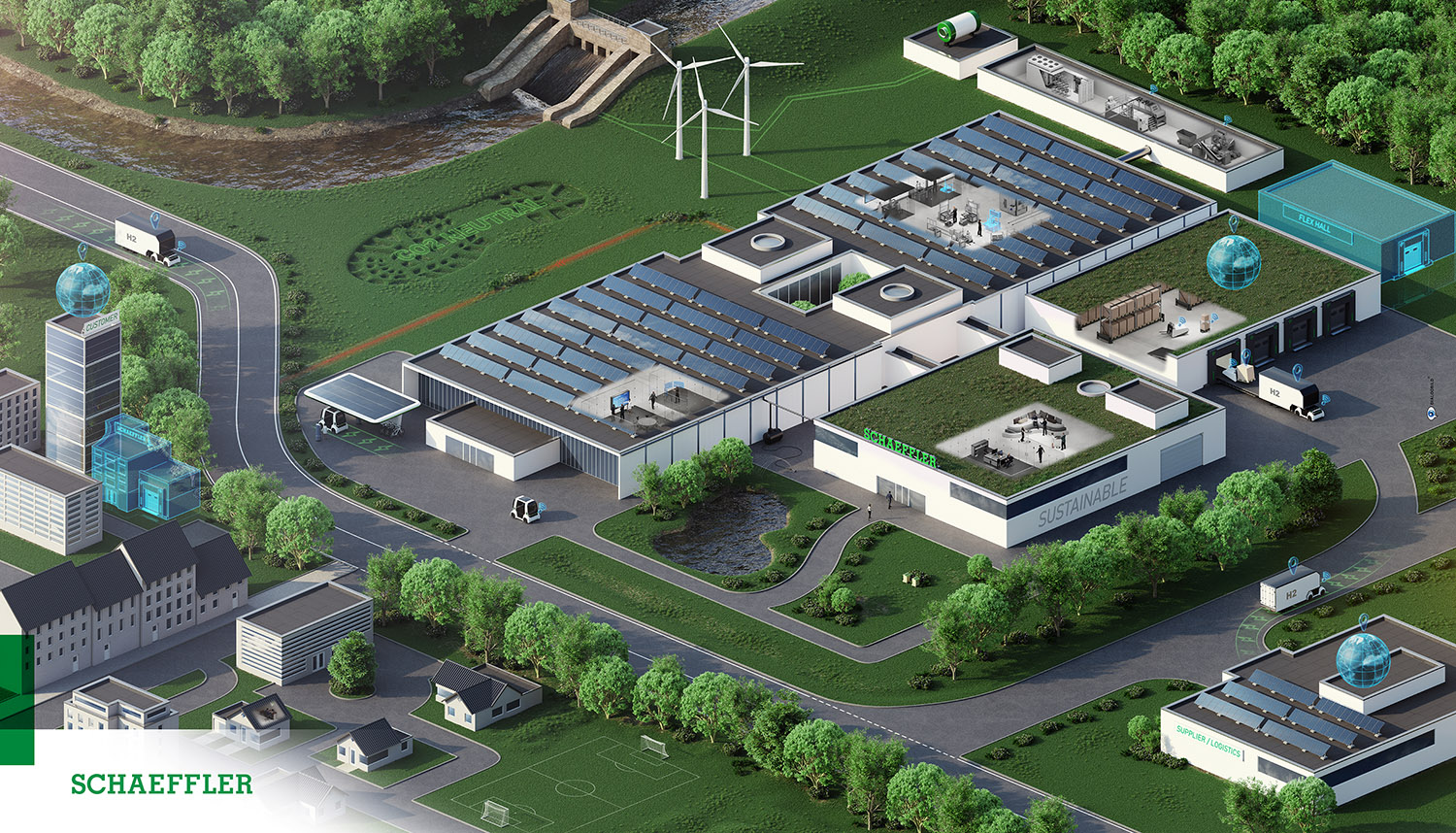
Sparkasse Stade-Altes Land is a public savings bank based in Lower Saxony. Its business area covers the Hanseatic city of Stade and the Alte Land region in the district of Stade, as well as the Hamburg districts of Finkenwerder and Neuenfelde.
To visualize its vision for the future, “We combine progress and humanity. Passionate for generations,” Sparkasse Stade-Altes Land turned to DIALOGBILD.
FIT FOR FUTURE
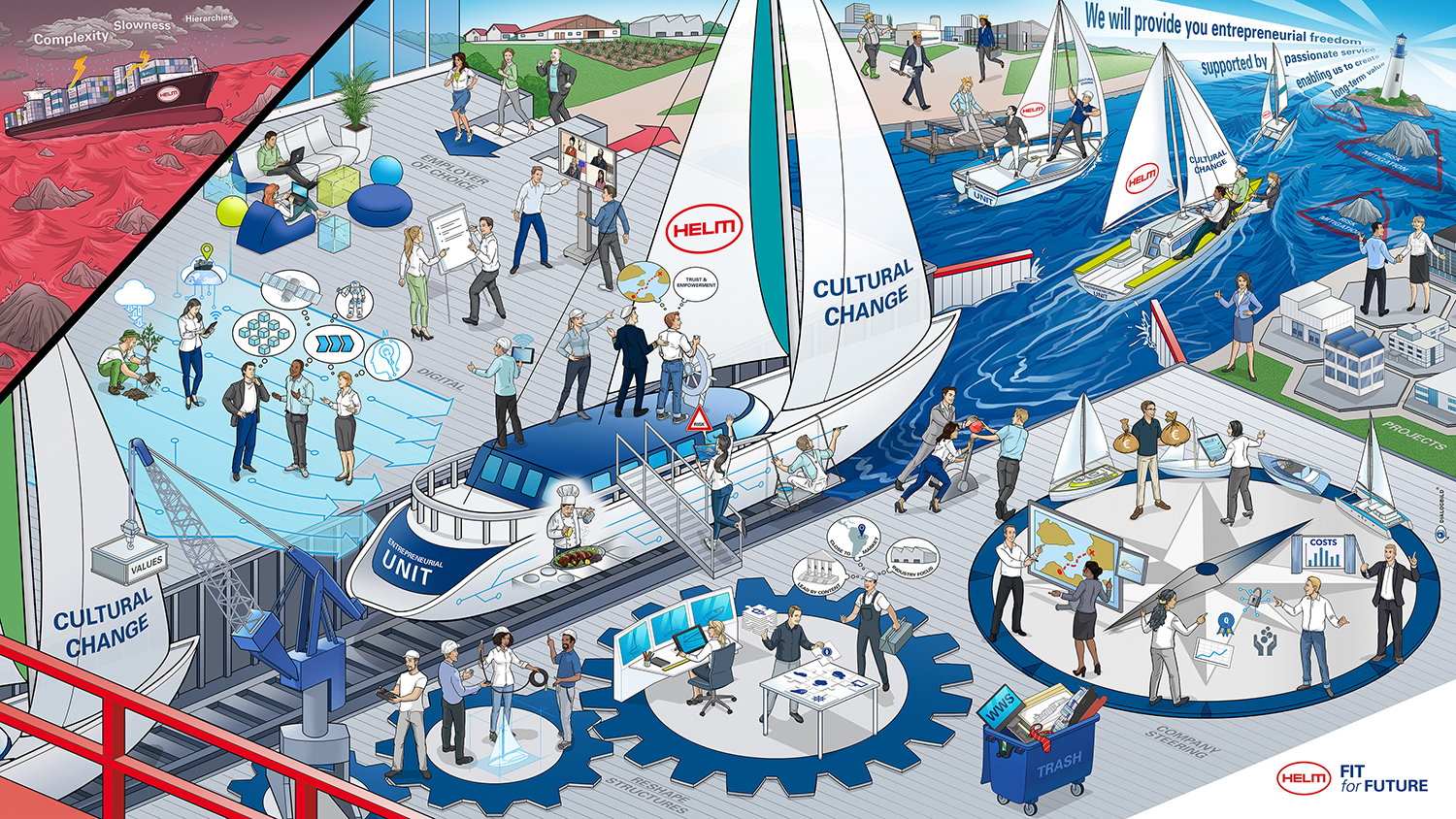
Helm is a globally active family-owned company headquartered in Hamburg, Germany. The fields of activity are the business units Chemicals, Fertilizer, Coop Protection and Pharma, which our company with its 1,500 employees takes care of.
In the course of the transformation process, we decided to use a dialog picture in order to communicate the different aspects and areas to our employees in an understandable and easy-to-remember way. For this purpose, each employee also received his or her own picture after the company meeting.
FUTURE OF WORK
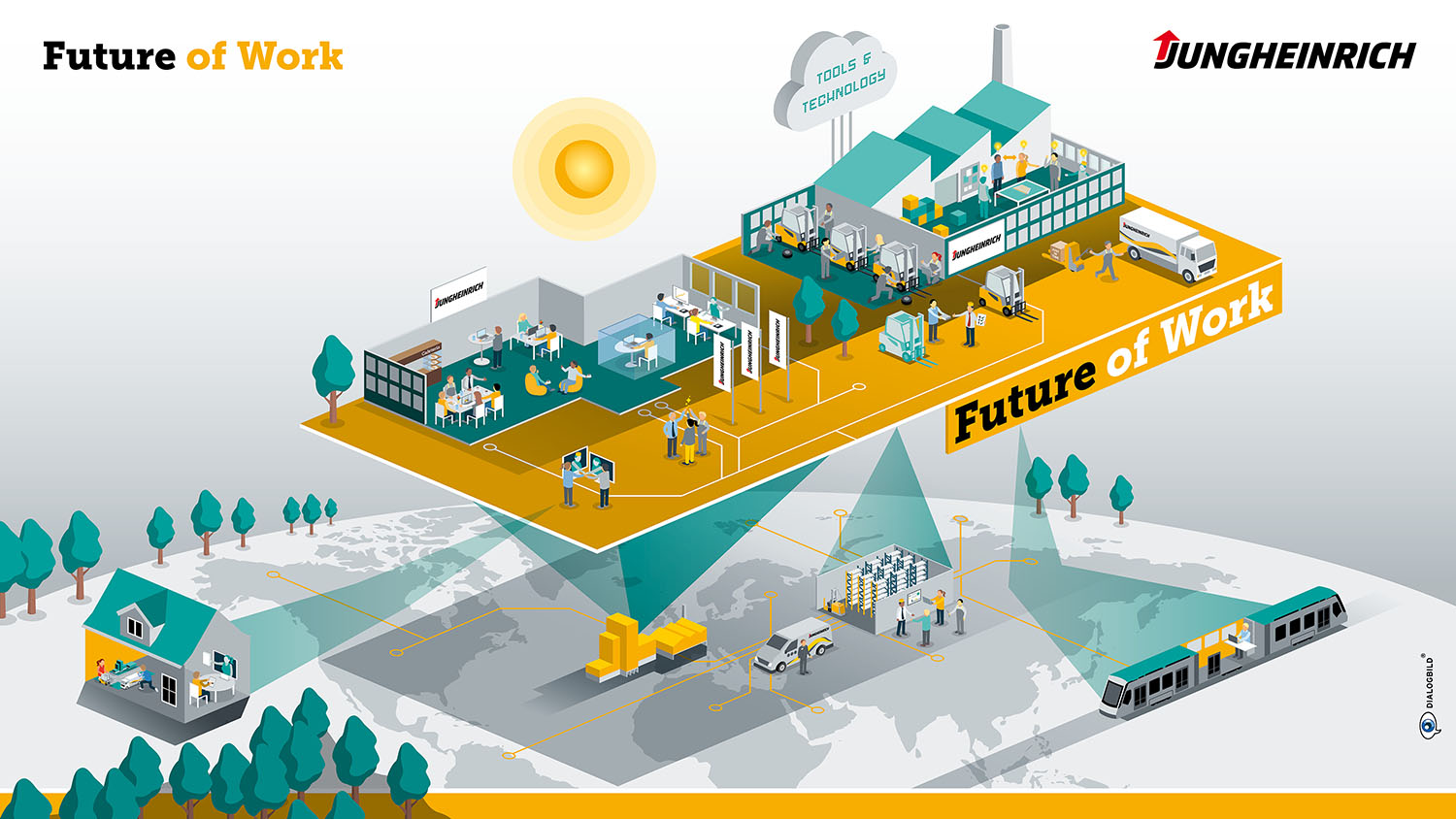
Jungheinrich, founded in 1953, is one of the world's leading intralogistics solution providers with €3.8 billion in sales and more than 18,000 employees. With a comprehensive portfolio of material handling equipment, automated systems and services, the company offers its customers tailor-made solutions for the challenges of Industry 4.0 from a single source. Jungheinrich has energy expertise that is unparalleled in the industry and is a pioneer in lithium-ion technology. Jungheinrich's goal is to be the world's first choice in intralogistics. With its Group Strategy 2025+, the company is committed to creating sustainable value-for its customers, employees, shareholders and business partners as well as for society as a whole.
THE TARGET PICTURE
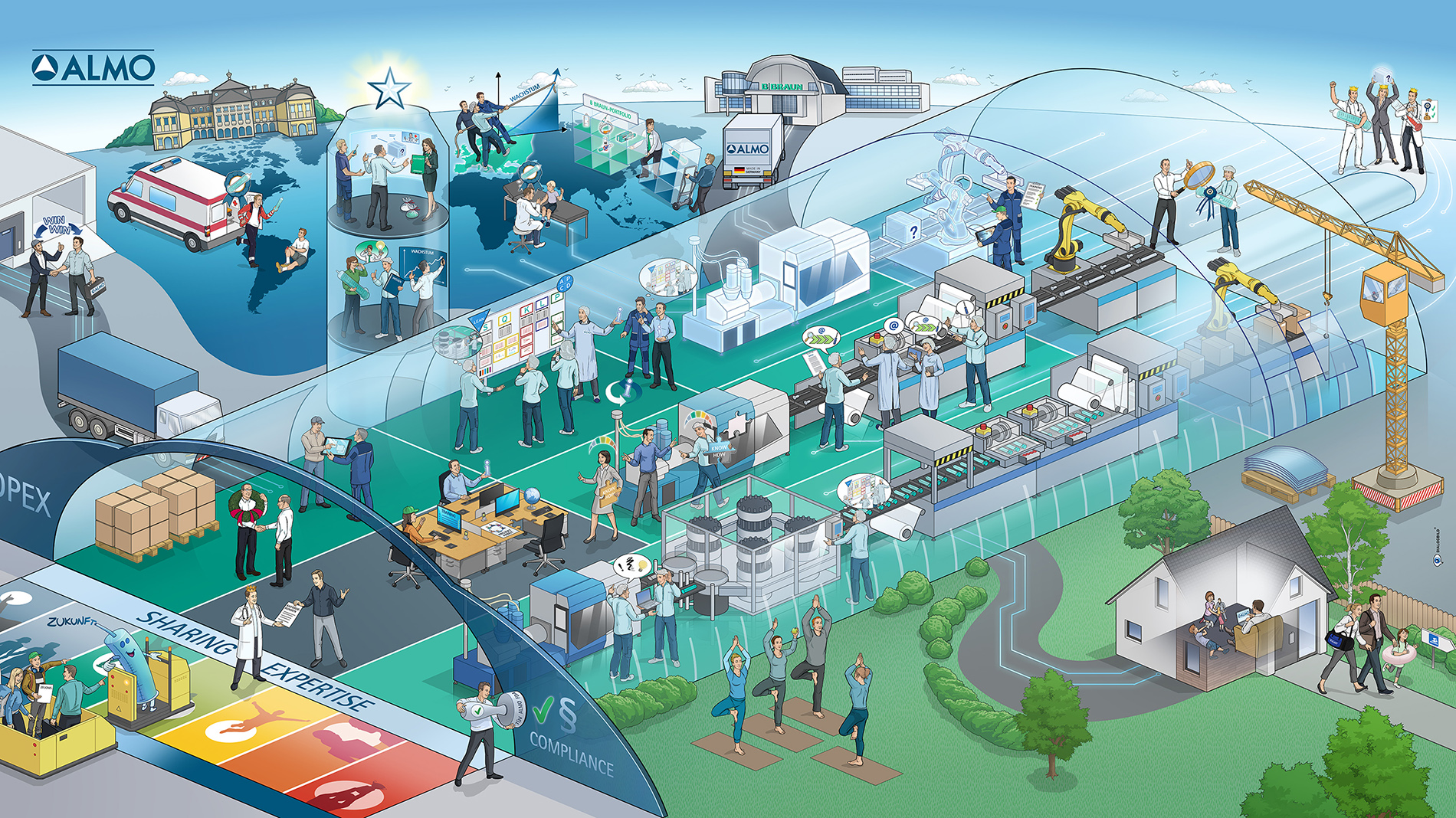
Creating transparency about the target system, making it understandable and easy to communicate to all employees, providing the opportunity for personal identification and describing the way into the future to ultimately provide a higher-level orientation for the entire company - these were the reasons why ALMO decided to create a dialog picture.
OUR VISION
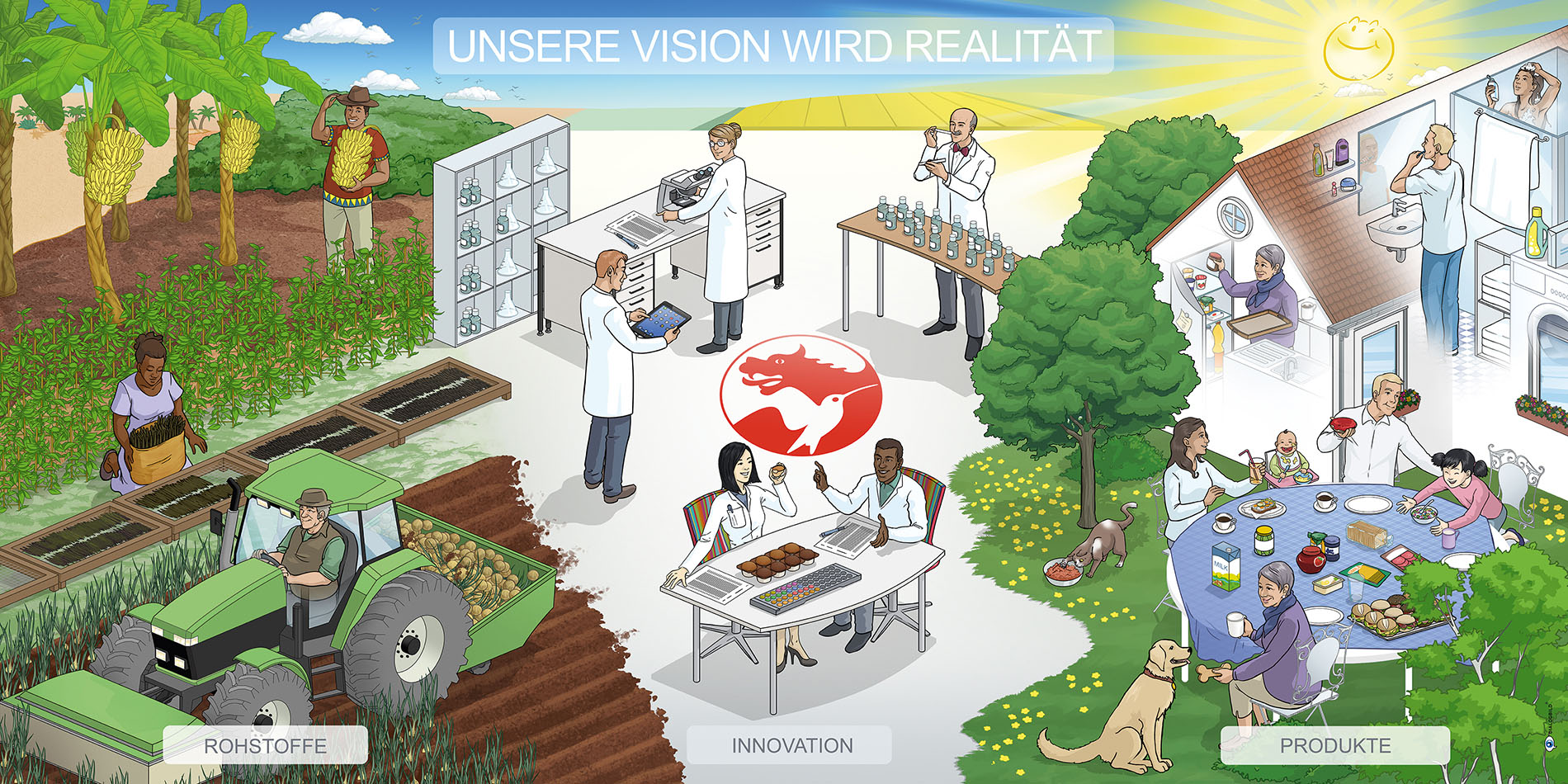
Symrise AG is a global supplier of fragrances and flavors, basic and active ingredients, functional ingredients and product solutions for improved sensor technology and nutrition. With a share of approximately 12 percent, Symrise ranks third in the global market for fragrances and aromas and employs more than 10 thousand employees worldwide. Symrise is a reliable business partner and guarantees a high product quality. In the supply chain, quality consciousness, know-how and creativity perfectly interlock.
Frequently Asked Questions (FAQ) about Visual Communication
What exactly does the term "visual communication" encompass?
Visual communication includes all processes in which messages are conveyed using visual elements such as images, graphics, symbols, colors, and typography. It is the strategic application of graphic design to convey information not only beautifully, but above all quickly, clearly, and memorably. The goal is to promote understanding, evoke emotions, and trigger a response.
What makes visual communication more effective than text alone?
The effectiveness of visual communication is based on human perception:
- Faster processing: The brain processes images significantly faster than text.
- Reduced complexity: Complex information, numbers, or strategies can be grasped immediately through data visualization or graphics, instead of having to be laboriously read.
- Higher retention rate: Visual content is remembered much longer than purely written information.
What are the most important elements of graphic design in this context?
The most important design elements for successful visual communication are:
- Typography: The selection and arrangement of the typeface, which determines the tone of the message.
- Color scheme: The targeted use of the psychology of color to guide emotions and create a brand identity.
- Composition and layout: The arrangement of elements that guides the viewer's eye and creates a clear hierarchy.
- Visual language: The type of photos or illustrations used, which must be appropriate for the target audience.
How can DIALOGBILD help visualize my corporate strategy?
DIALOGBILD specializes in optimizing visual communication within a strategic context. We help you deconstruct complex, text-heavy strategies (such as the target image) and translate them into a single, accessible dialog picture.
- Clarity: We create a clear visual metaphor for your strategy.
- Engagement: The dialog picture fosters dialogue and acceptance among your employees, as the connections become intuitively understandable.
- Consistency: We ensure that the dialog picture consistently conveys the messages of your corporate communications.
What role does Design Thinking play in visual communication?
Design Thinking is a user-centered method that ensures visual communication is truly tailored to the needs of the target audience. Instead of simply creating an image, the steps of Design Thinking are followed:
1.) Understanding the target audience (Who needs to understand the message?).
2.) Developing prototypes (sketches/drafts).
3.) Testing the visual impact (Is the message understood correctly?).
This minimizes the risk of the created visuals missing their mark.
What current trends should I consider in visual communication?
Current trends focus on clarity and efficiency:
- Data visualization: The ability to present large amounts of data in easily understandable graphics.
- Minimalism/Flat Design: Reduced designs for quick comprehension and adaptation to mobile devices.
- Moving images and interaction: Short videos, animations, and interactive graphics increase engagement and dwell time.
Get info package