Change management examples: How to make change work in your company
Change is the only constant in the modern business world. But while the term ‘change management’ is on everyone's lips, putting it into practice is often difficult. Statistics regularly show that the majority of change processes fail – often not because of the strategy, but because of the human component.
In this guide, you will learn how renowned companies such as Netflix and LEGO have turned crises into opportunities, using concrete change management examples. We will show you the strategies behind successful change management and how you can apply these insights to your own organisation.
What exactly is change management?
Before we dive into the practical aspects, it is important to briefly define the term. Change management encompasses all tasks, measures and activities that are intended to bring about far-reaching change in an organisation. The aim is to establish new strategies, structures, systems or behaviours within a company.
The focus is on the human factor: how do you get your employees on board? How do you overcome resistance? Successful change management examples are characterised by the fact that they not only prescribe change, but also exemplify and communicate it.
Why practical examples are so valuable
Theoretical models such as Lewin's 3-phase model or Kotter's 8 steps provide a stable framework. But only when applied in reality do the stumbling blocks become apparent. Seeing how global corporations have dealt with radical market changes helps you recognise patterns and avoid mistakes.
Change management example: Netflix – radical reinvention as corporate culture
Probably the best-known recent example of change management is the streaming giant Netflix. Hardly any other company has transformed its business model so consistently and successfully.
From DVDs to streaming
Netflix originally started as a DVD rental service by post. As the internet became faster, founder Reed Hastings recognised early on that the future lay in streaming. This change required not only technical adjustments, but also a completely new way of thinking.
The ‘Culture of Freedom and Responsibility’
A decisive factor in Netflix's change management was its corporate culture. Netflix dispensed with rigid control mechanisms and instead focused on:
- Radical transparency: Information is shared with all employees.
- High talent density: Only the best minds are retained.
- Context, not control: Managers set the framework, but employees make their own operational decisions.
What you can learn from this:
Don't wait until your business model is outdated. Netflix initiated change while the DVD business was still flourishing. The courage to disrupt yourself is a key feature of excellent change management.
Lego Change Management: From near bankruptcy to toy giant
Another impressive example is Lego Change Management. In the early 2000s, the LEGO Group was on the brink of collapse. The company had lost its way in too many side projects (such as video games and theme parks) and lost focus on its core product – the brick.
The rescue strategy
Under Jørgen Vig Knudstorp, LEGO initiated a radical turnaround. The most important steps were:
- Focus on the core: Unprofitable divisions were sold or closed.
- Involvement of the community: LEGO opened up to its fans (AFOLs – Adult Fans of LEGO) and involved them in product development.
- Cost control: The complexity of the components was massively reduced in order to make production more efficient
Cultural change
LEGO understood that change management means redefining the company's identity without cutting off its roots. By involving employees and fans, a dusty toy manufacturer was transformed into a modern global brand.
What you can learn from this:
Sometimes change means focusing on the essentials. Analyse exactly what your company is all about and consistently get rid of any dead weight.
The psychology of change: Why resistance is normal
In each of the change management examples mentioned, there was internal resistance. People love routines because they provide security. Change initially means uncertainty and potential loss of status.
The 4 phases of change
When you moderate change processes in your company, you will usually observe the following phases among your employees:
- Shock/denial: ‘We don't need that, things have been going well so far.’
- Resistance: Emotional defensive reaction.
- Discovery/learning: Initial successes become visible, curiosity wins out.
- Integration: The change becomes the new standard.
Practical tip: Communicate a lot during the resistance phase. Listen, take fears seriously, but remain consistent in your approach.
Success factors for your change management
Universal success factors can be derived from the change management examples of Netflix and LEGO:
1. A clear vision
Do your employees know why change is necessary? ‘We need to cut costs’ is not a motivating vision. ‘We want to revolutionise the way people play’ is.
2. Active sponsorship by management
Change management cannot be “delegated” to the HR department. Senior management must lead by example. If the boss doesn't use the new tools, neither will the employees.
3. Communication at eye level
Avoid top-down announcements. Use dialogue images, workshops and interactive formats to get employees involved.
4. Celebrate quick wins
Major changes take years. To keep motivation high, you need to highlight and celebrate small interim successes (quick wins).
The role of visual communication in change management
Why do we at DIALOGBILD work so intensively with visual elements? Because the human brain processes images 60,000 times faster than text. In complex change processes, graphics help to:
- Make the vision understandable at a glance.
- Highlight connections between departments.
- Arouse emotions that remain hidden in purely textual instructions.
| Element |
Benefits in change management
|
| Dialogbild |
Shows the ‘where from’ and ‘where to’ of the entire organisation.
|
| Infographics |
Explain new processes or structures simply and clearly.
|
| Explanatory videos |
Motivate and inform about the reasons behind the change.
|
Checklist: Is your company ready for change?
Use these questions to assess how stable your foundation is for the next change project:
- [ ] Is there a valid reason for the change (sense of urgency)?
- [ ] Is the management team 100% committed?
- [ ] Are the communication channels open in all directions?
- [ ] Have we allocated resources (time, budget, personnel) for the change process?
- [ ] How do we deal with mistakes during the transition phase?
Conclusion: Change management is not a project, but an attitude
The change management examples from Netflix and LEGO impressively demonstrate that those who do not move forward will fall behind. However, change can only succeed if it is approached in a structured manner and people are placed at the centre. Utilise the power of communication and visualisation to turn your employees into participants.
In summary, it can be said that
change management requires courage, perseverance and an excellent strategy. Be inspired by the big players, but find your own authentic path.
Would you like to visualise change in your company?
A complex change process is often difficult to put into words. At DIALOGBILD, we help you transform your strategy and vision into a comprehensible overall picture.
Would you like to find out how we can develop a customised dialog picture for your change strategy? Contact us for a no-obligation initial consultation.
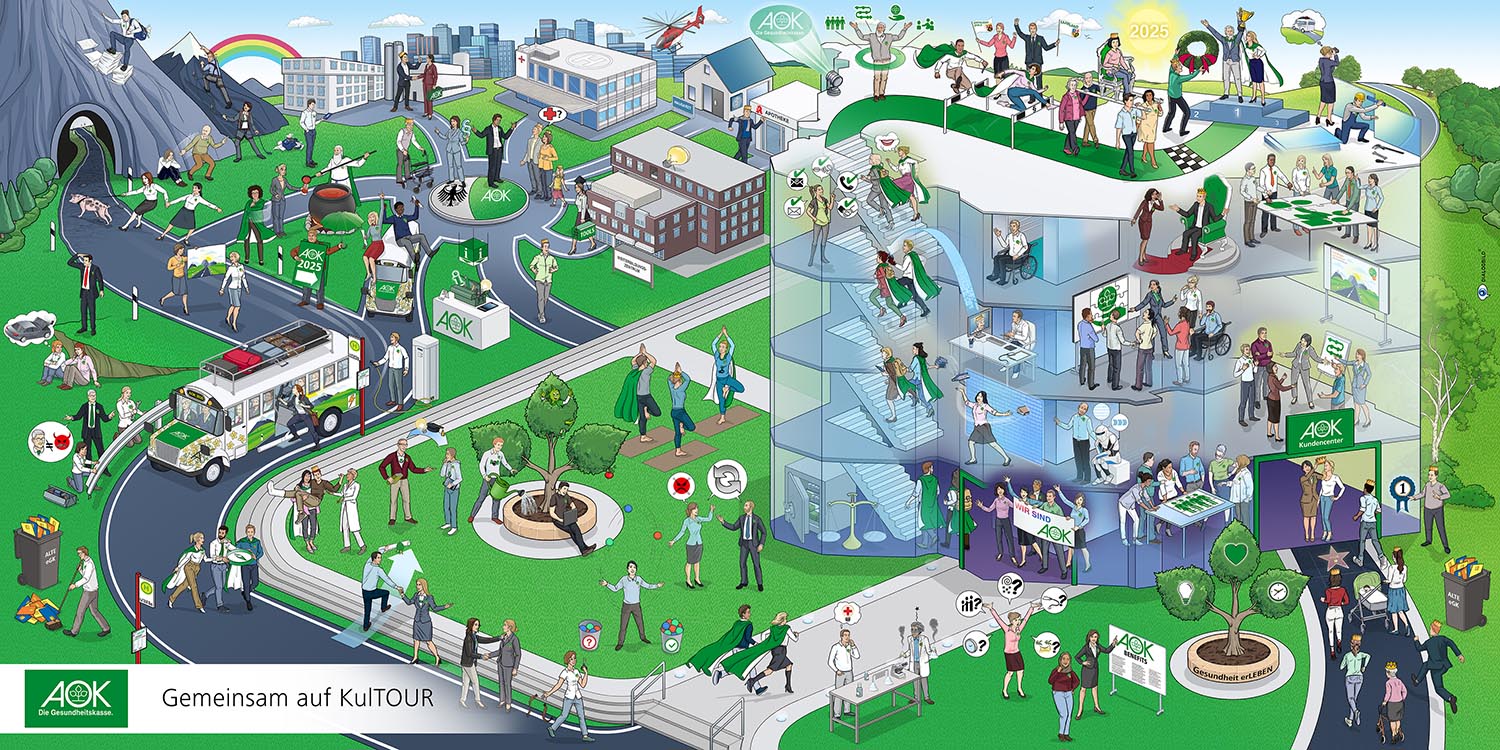
OUR CULTOUR CHANGE
WHO WE ARE. HOW WE ARE. WHERE WE WANT TO BE.
AOK Rheinland-Pfalz/Saarland - The health insurance company is the largest health insurance company in the two federal states of Rhineland-Palatinate and Saarland, with over 1. 2 million insured persons and 85,000 supervised employers as well as around 3,500 employees. The health insurance fund maintains business relationships with more than 100 hospitals, 10,000 doctors, psychotherapists and dentists, around 1,300 pharmacies and many hundreds of other contract partners. It offers high-quality care for the population and tailor-made concepts in the regions. For this, modern, future-oriented structures are also essential in the corporate culture.
In the framework of the"Together on CulTOUR" programme, develops a vision of the future and principles for leadership and cooperation. The existing brand mission statement of the AOK-community was adapted. ...
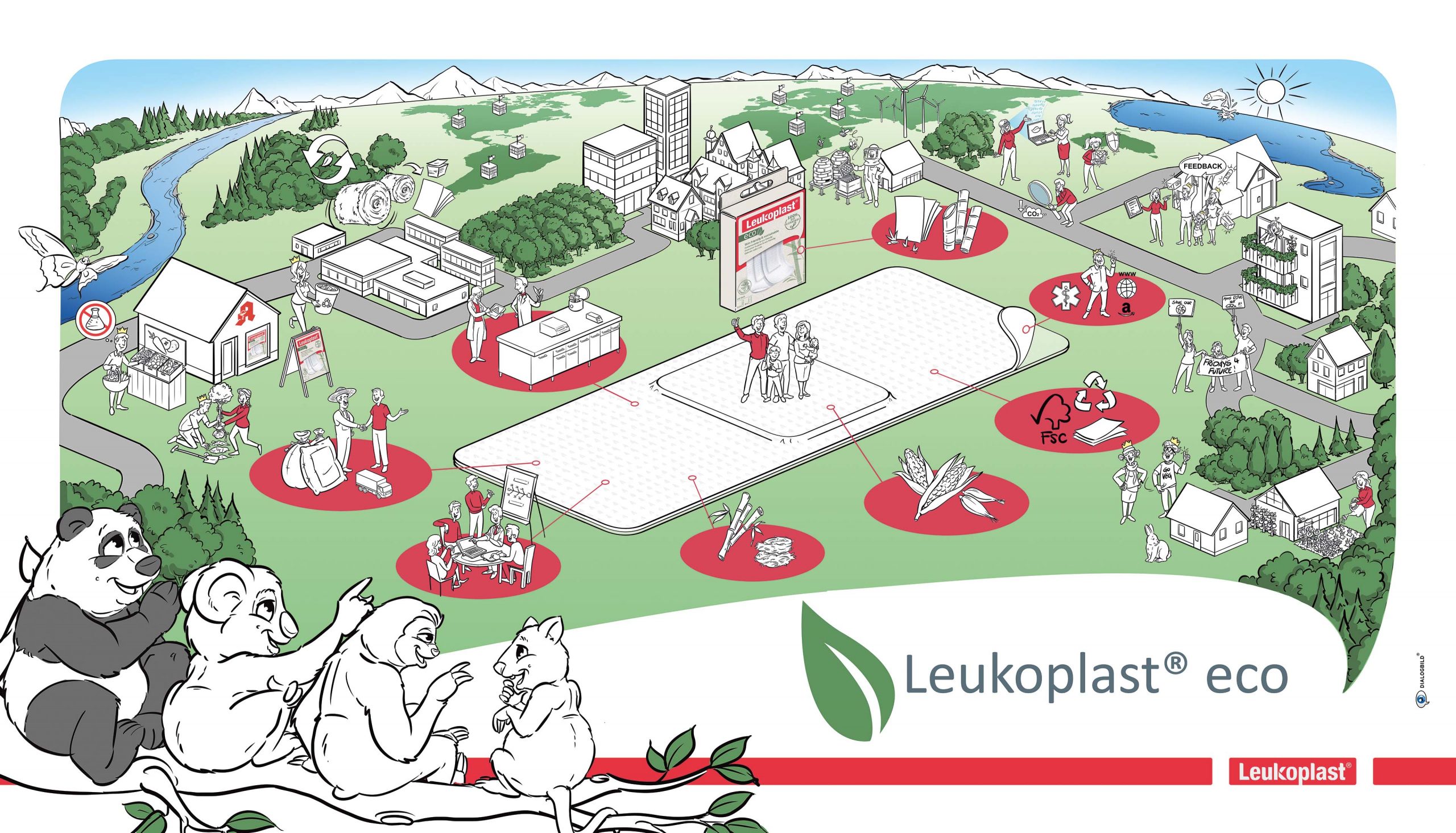
FOR THE SAKE OF THE ENVIRONMENT
Essity works with more than 48,000 employees to adapt its own brands to the demands and developments of the zeitgeist while maintaining its own high quality standards. The variance of the product range in the Health and Medical Solutions segment extends across five brands, which are based on the common focus on pleasant applications and successful therapies for patients and users. ...
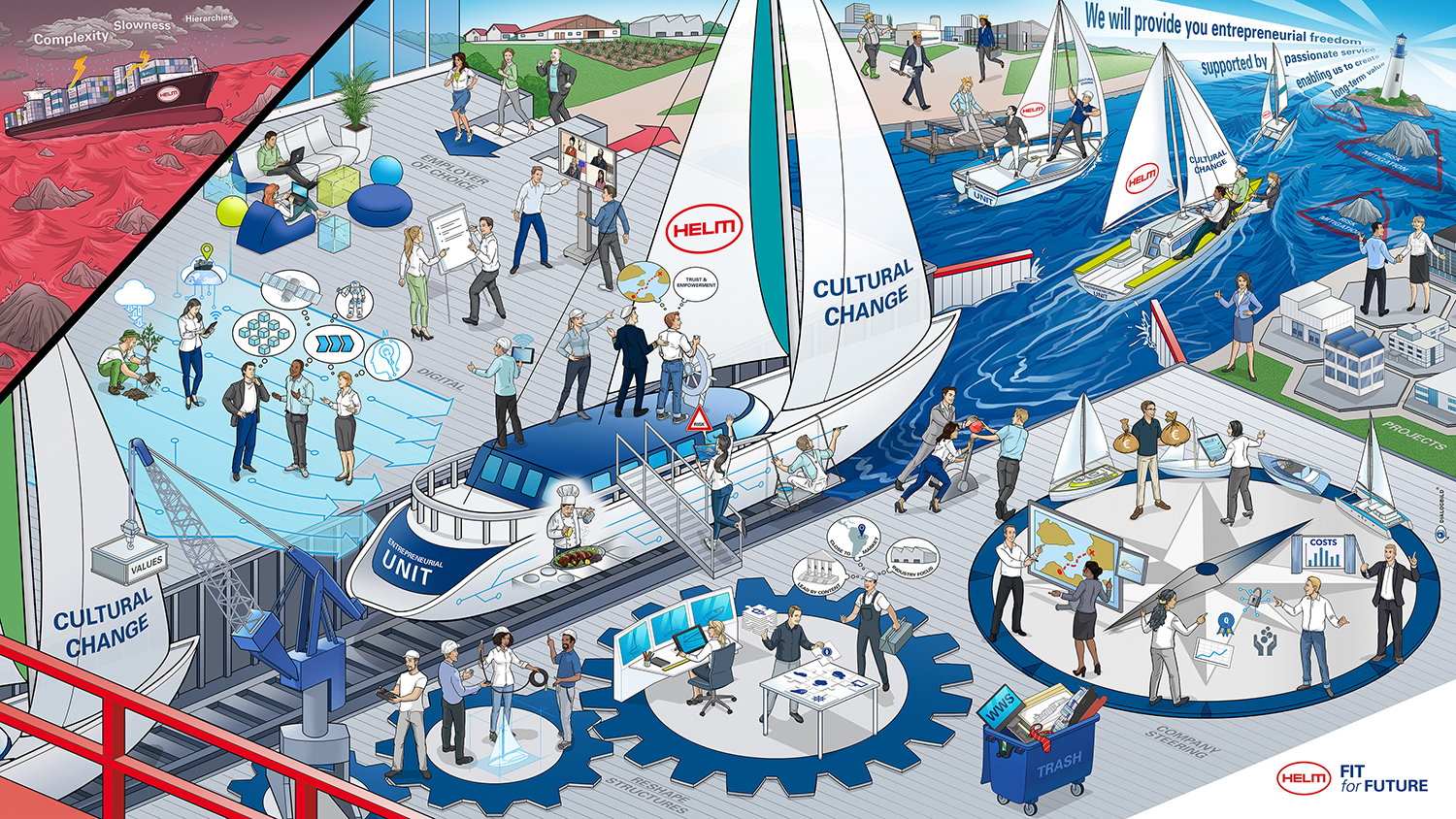
FIT FOR FUTURE
Helm is a globally active family-owned company headquartered in Hamburg, Germany. The fields of activity are the business units Chemicals, Fertilizer, Coop Protection and Pharma, which our company with its 1,500 employees takes care of.
In the course of the transformation process, we decided to use a dialog picture in order to communicate the different aspects and areas to our employees in an understandable and easy-to-remember way. For this purpose, each employee also received his or her own picture after the company meeting.
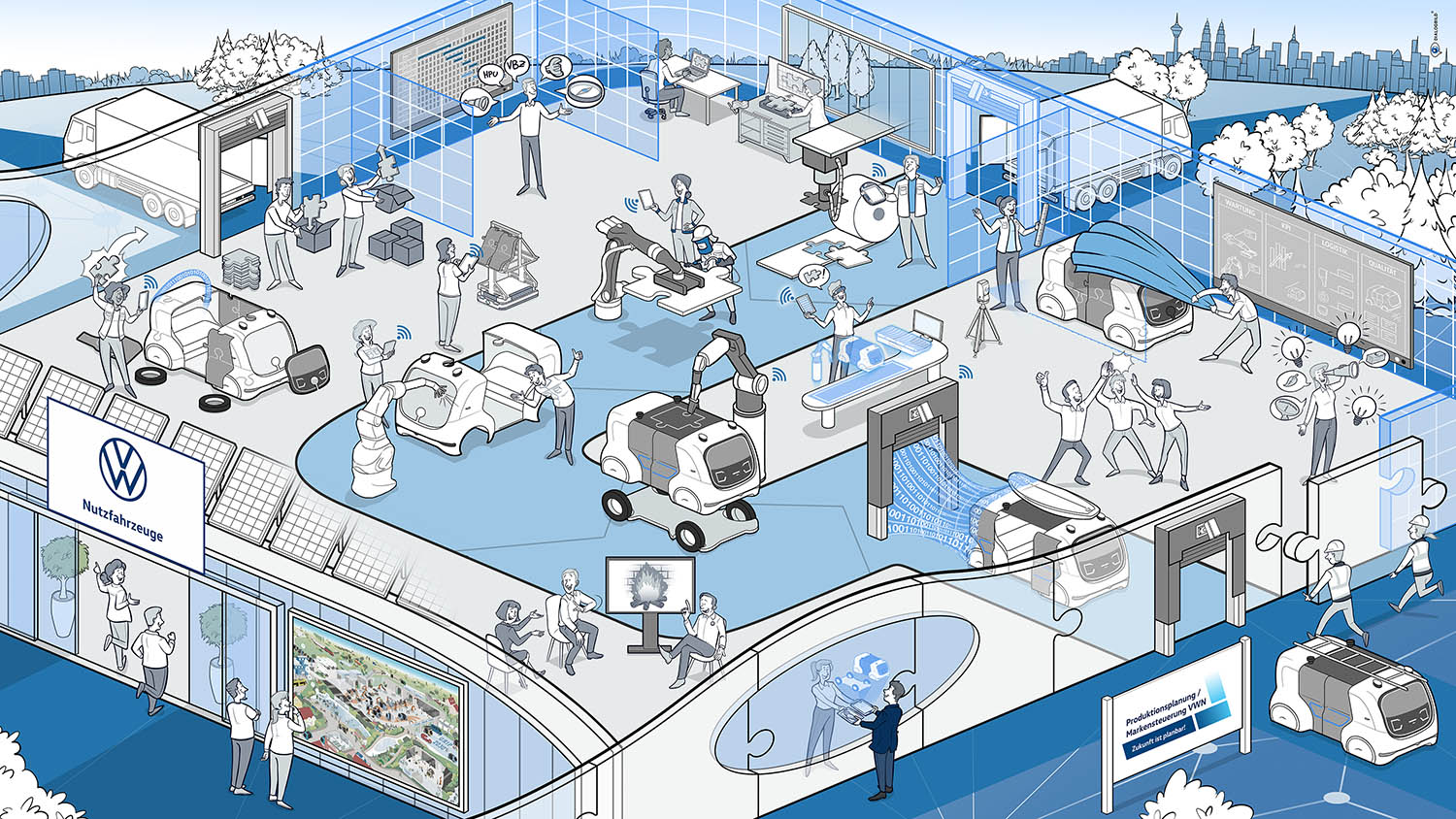
STRATEGY MAP: SMART PLANNING
- THE FACTORY OF THE FUTURE
With over 1,000 employees, Production Planning / Brand Management VWN makes a decisive contribution to the long-term corporate success of the Volkswagen Commercial Vehicles brand.
The department is responsible for shaping the production of tomorrow. Interdisciplinary teams develop concepts for the implementation of new vehicle projects. In addition to influencing products towards a production-oriented product design, the department also focuses on the production and on-time provision of systems and components.
As part of the strategy work, a visual world was developed in collaboration with DIALOGBILD that focuses on the interaction of the individual departments and the common goal of a SMART PLANNING factory. ...
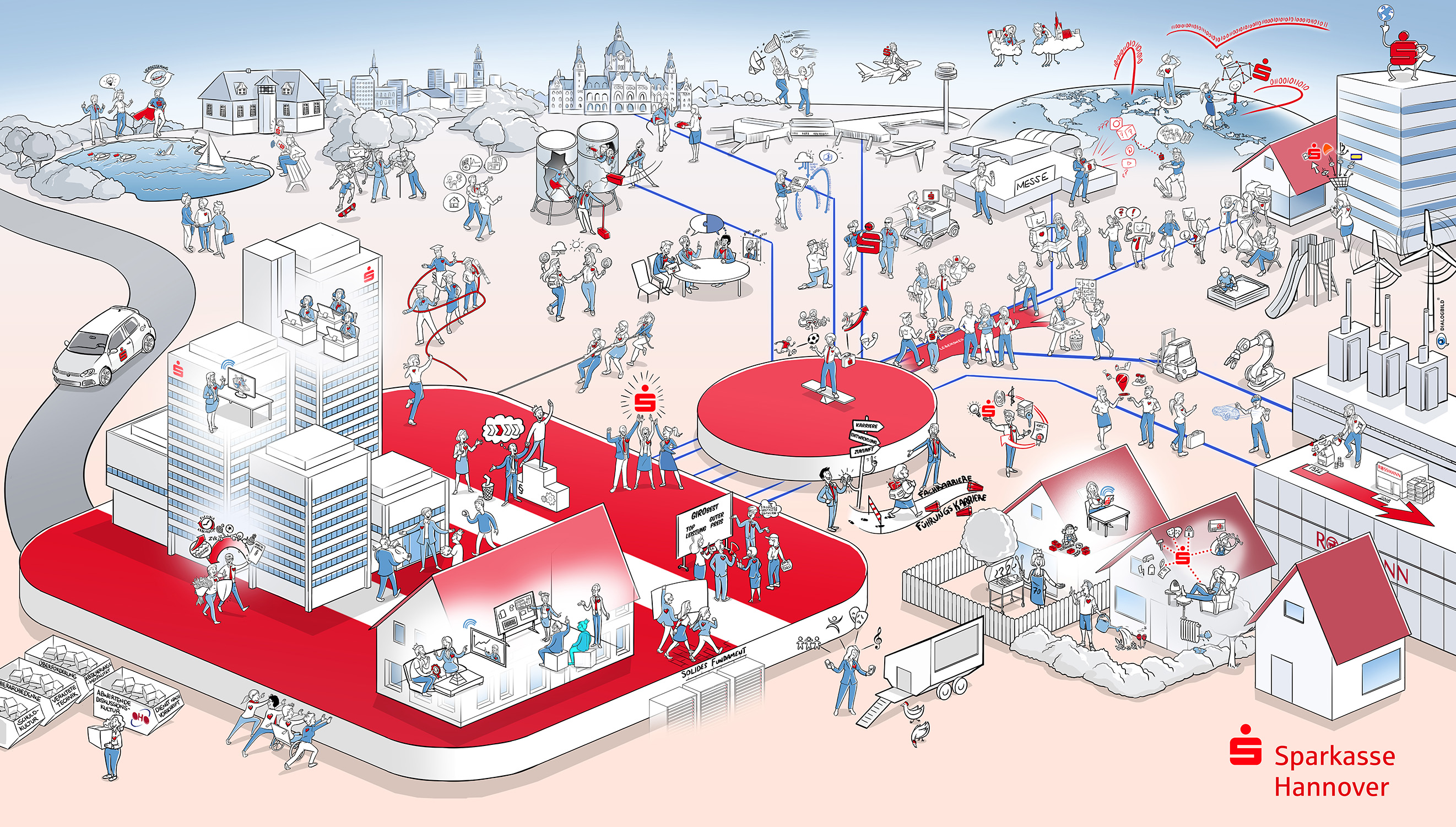
STRATEGY MAP: CULTURE CHANGE
AN IMAGE THAT STIMULATES DIALOG ABOUT THE FUTURE
Sparkasse Hannover, one of the largest savings banks in Germany, began to address the process of cultural change as early as the beginning of 2017. In several workshops, the questions "how is digital change changing Sparkasse Hannover?", "what does Sparkasse Hannover stand for in the future?" and "what common goals do we have?" were discussed from both employee and customer perspectives and then visually translated.
Low interest rate environment, stricter regulation, high competitive pressure from banks and non-banks - this situation is the new reality in the banking business. It is not the circumstances that will change, but the institutions that will have to adapt to the new circumstances. Without strategic and operational adjustments, interest-based business models will not work in the low interest rate environment. ...
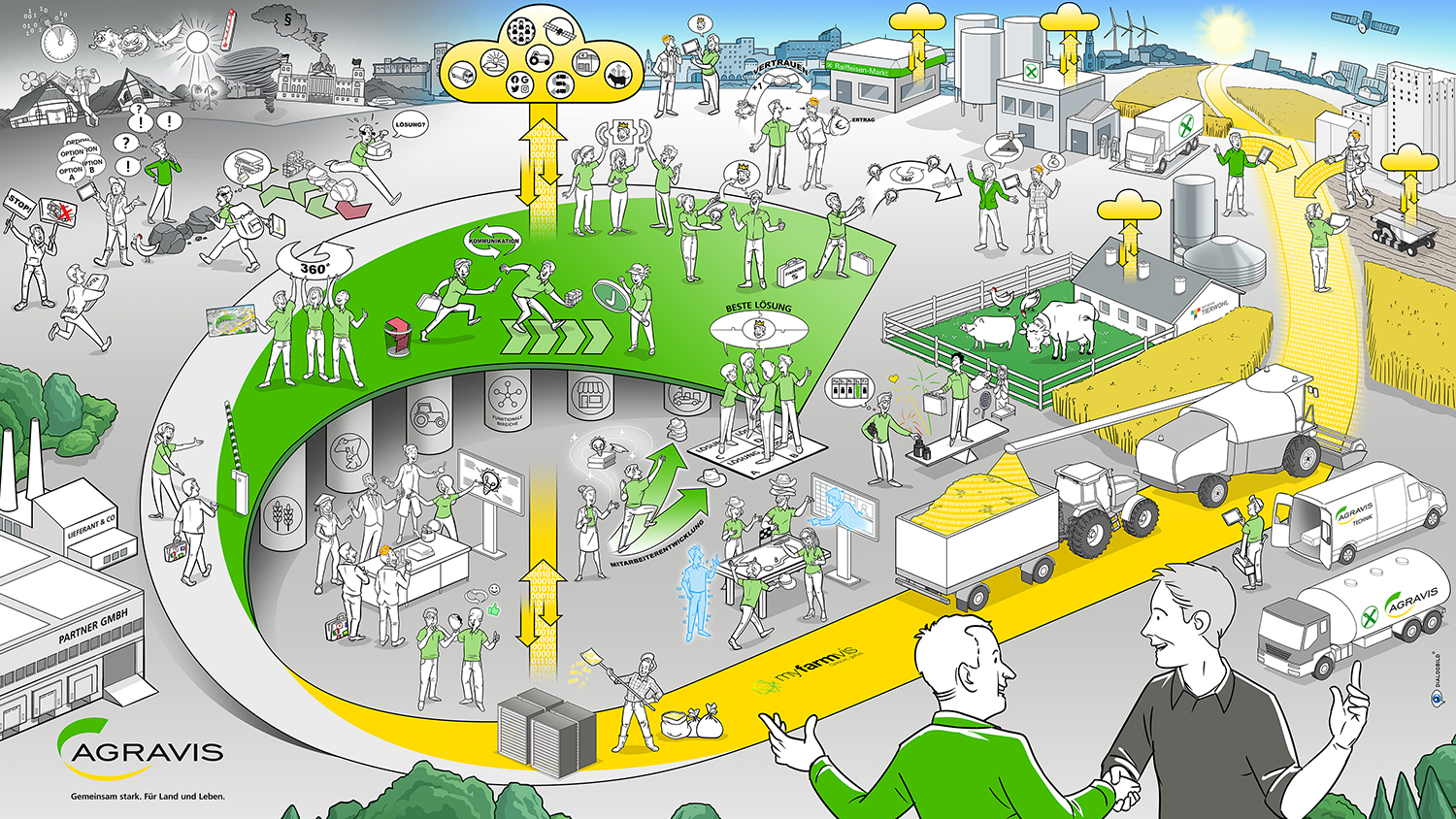
STRATEGY MAP: CHANGE COMMUNICATION
AGRAVIS Raiffeisen AG is a modern agricultural trading company operating in the agricultural products, animal nutrition, crop production, and agricultural technology sectors. It also operates in the energy and Raiffeisen market sectors.
To prepare the entire company for the future, the AGRAVIS Executive Board initiated a process in 2020 that addresses current challenges and future requirements in a positive, productive, and dialogue-oriented manner. The goal is to raise awareness among managers and employees about these topics and to foster an evolving corporate culture, enabling them to shape this change process together. A key objective was, and remains, to involve all employees as much as possible in developing the framework for continued success. For this reason, AGRAVIS chose the "Dialog Picture" as a supporting tool to reach all employees and encourage them to engage in a dialogue about the future of AGRAVIS.
Frequently asked questions (FAQ) about strategy communication
What is the main difference between strategic communication and general corporate communication?
Corporate communication encompasses all communication activities (PR, marketing, internal information) of a company. Strategy communication is a specific, targeted part of this. Its main purpose is to communicate the strategic goals and vision of the organisation. It is proactive and aimed at achieving acceptance, understanding and behavioural change among stakeholders in order to support the strategy.
What role does the target vision play in strategy communication?
The target vision is the central communication asset in strategy communication. It provides the ‘where’ and ‘why’ of the entire strategy. Since it describes the desired future state of the company in detail, it forms the basis for all messages. Effective strategy communication ensures that this target vision is not only known, but also internalised and emotionally charged.
Why do strategies often fail due to communication?
Strategies usually fail due to implementation, and implementation fails due to communication. Common mistakes are:
- Complexity: Strategies are too complicated, abstract or are only presented in text form (PowerPoint graveyards).
- Lack of relevance: Employees do not understand what the strategy means for their daily work (‘What's in it for me?’).
- One-way communication: Information is only sent out, but no dialogue or feedback is allowed.
How does visualisation (e.g. a dialog picture) help with strategy communication?
Visualisation is a key accelerator in strategy communication. The human brain processes images around 60,000 times faster than text. A dialog picture (strategy map) from the DIALOGBILD agency helps by:
- Reducing complexity: It bundles all strategic elements and interrelationships at a glance.
- Promoting understanding: It creates a common mental map for all employees.
- Creating motivation: It embeds the abstract target image in an emotional story.
Which stakeholders are most important for strategy communication?
In principle, all stakeholders are important. However, strategy communication focuses heavily on internal stakeholders (employees and managers). They must not only understand the strategy, but also actively support and implement it. External stakeholders (investors, customers) need information about the strategic direction in order to have confidence in the future viability of the company.
How often should the strategy be communicated?
Strategy communication is not a one-off event (kick-off), but a continuous process.
1.) Initial: Extensive communication at the start (launch).
2.) Regular: Quarterly or monthly updates on progress, successes and challenges.
3.) Occasional: Communication at important milestones or adjustments to the strategy.
The frequency must be high enough to keep the target image present, but not so high that it leads to information overload.
Get info package