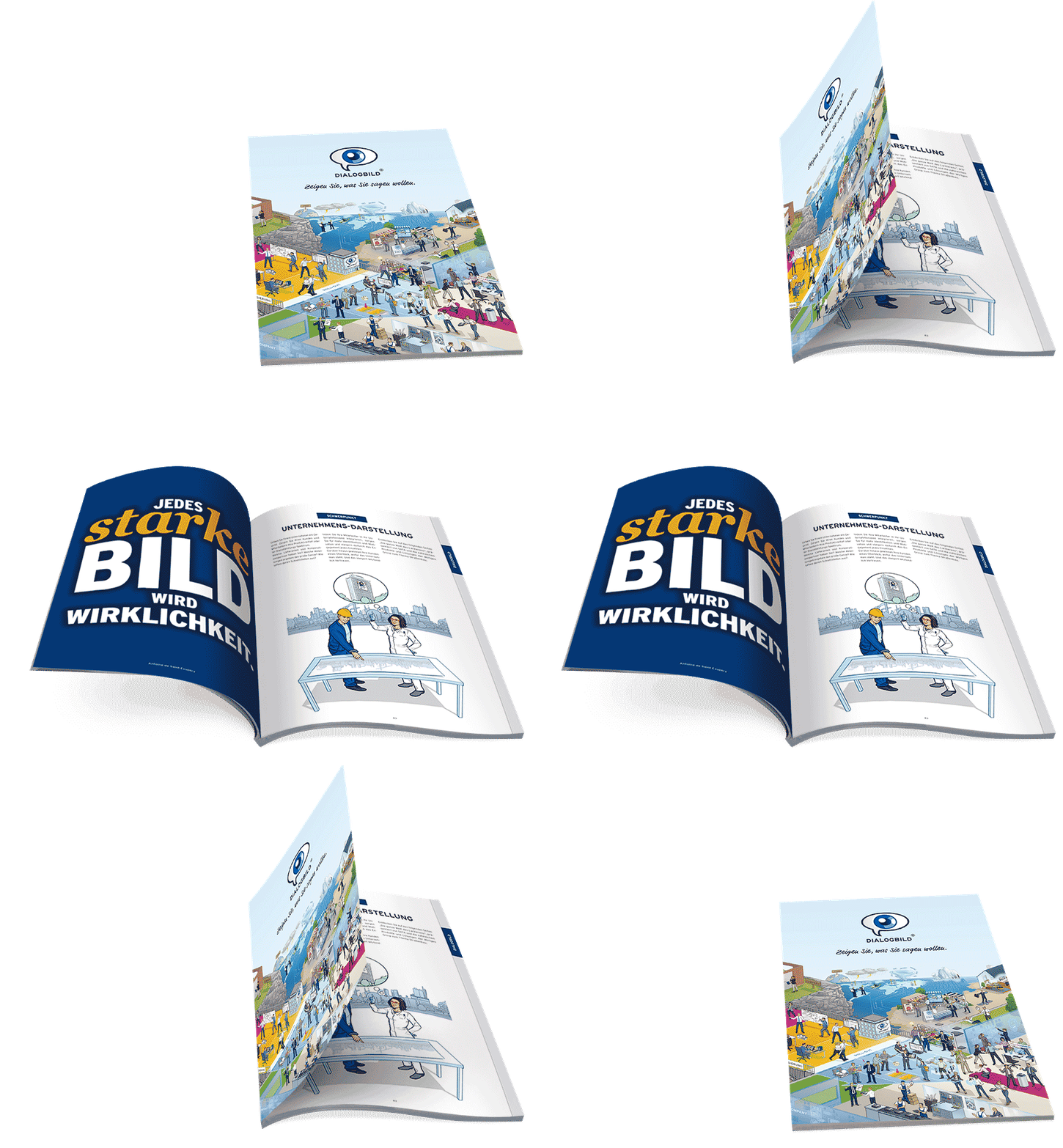
Mission statement development: The ultimate guide for businesses
Imagine your company is a ship on the high seas. Without a compass or a fixed destination, it drifts along, reacting only to the waves and wind, while the crew is unsure which direction to row in. In the modern business world, developing a mission statement is precisely that compass. It sets the direction, creates meaning and ensures that everyone involved is pulling in the same direction. But how can you create an authentic mission statement that is more than just a nice piece of text in your annual report?
In this guide, you will learn everything you need to know about the structured mission statement process, how to formulate an effective corporate mission statement and why visual support for this process makes all the difference when it comes to acceptance within your team.
1. Introduction to mission statement development
What is a mission statement?
A mission statement is a written and often visual summary of a company's identity. Mission statement development serves to answer three key questions: Who are we? What do we want to achieve? And what principles do we act according to? It forms the foundation of corporate identity and is the guiding star for all strategic decisions.
The role of a mission statement in companies
A corporate mission statement is much more than a marketing tool. It serves as a guide for employees and managers. In times of flat hierarchies and agile working, it replaces rigid instructions with shared values. Externally, it communicates the trustworthiness and stability of the brand to customers, partners and applicants.
Advantages of developing a mission statement
Creating a well-founded mission statement offers numerous advantages:
- Identification: Employees find meaning in their work and feel a sense of belonging.
- Decision-making aid: In complex situations, the mission statement serves as a touchstone for the right course of action.
- Efficiency: A shared understanding of the vision and mission reduces friction in communication.
- Employer branding: A mission statement that is put into practice attracts talent that fits in with the company's culture.
2. The components of an effective mission statement
A strong corporate mission statement traditionally consists of three pillars that must be closely interlinked.
Vision: The long-term goals
The vision describes a desirable state in the future. It is the ‘North Star’.
-
Example: ‘We want to make the mobility of the future climate-neutral.’
Mission: The purpose of the company
The mission describes the company's purpose in the here and now. What do we do for our customers every day?
- Example: ‘We develop innovative drive technologies for a sustainable world.’
Values: The Principles That Guide Us
Values form the moral backbone. In developing your values, you define how you want to interact with each other and with customers. Without clear values, vision and mission often remain empty phrases.
3. The mission statement process: step by step
Developing a mission statement is not a sprint, but a strategic process. If you want to create a mission statement, you should proceed methodically.
Step 1: Analyse the current situation
Before you start formulating, you need to understand where you stand. What defines your company today? What unwritten rules already exist in the culture? An honest assessment is the basis for authenticity.
Step 2: Involving stakeholders
A mission statement that is imposed from the top down almost always fails due to a lack of acceptance. It is crucial to involve employees from different levels and areas in the mission statement process. Workshops, surveys and focus groups help to gain a broad range of opinions.
Step 3: Formulating the vision, mission and values
This is where the essence is condensed. The language should be clear, active and inspiring. Avoid buzzwords and generic phrases that could apply to any company.
4. Challenges in developing a mission statement
The path to a finished corporate mission statement is often fraught with obstacles.
Resistance to change
People love their habits. A new mission statement often signals a cultural change, which can trigger fear. Transparency helps here: explain the ‘why’ behind the development of the mission statement.
Unclear communication
If the mission statement process takes place in an ivory tower, employees will feel overlooked. Actively communicate every milestone.
Lack of employee involvement
If the team feels that they are only being consulted as a formality, their commitment will decline. Genuine participation is key if you want to develop a sustainable mission statement.
5. Examples of successful corporate mission statements
Best practice examples
Companies such as Patagonia and Microsoft have managed to define their identity so clearly that they serve as role models worldwide. Patagonia, for example, puts environmental protection above all else – a value that is evident in everything it does.
Analysis of success factors
What are these companies doing right?
- Credibility: Their mission statement matches their actions.
- Simplicity: Every employee can summarise the core message in one sentence.
- Visualisation: They use powerful images to bring their vision and mission to life.
6. The role of values in developing a mission statement
Values are the ‘how’ of your success. Developing values is about defining behaviours that shape everyday life. If ‘honesty’ is a value, it must also prevail in difficult customer feedback discussions.
A living corporate mission statement only comes into being when values are translated into concrete instructions for action. In internal communication, metaphors and visual anchors help to make these often abstract concepts tangible for everyone.
7. Implementation and communication of the mission statement
The most critical moment in the development of a mission statement is the day after its publication.
Strategies for internal communication
Use all channels: intranet, town hall meetings and, above all, dialogue. A picture says more than a thousand words – especially when it comes to illustrating complex connections between vision and daily work.
Employee training and engagement
Integrate the mission statement into onboarding processes and employee appraisals. Workshops help to transfer the mission statement to the employee's own area of work.
Continuous evaluation
A mission statement is not set in stone. Review it regularly: Are we still living these values? Does the vision still fit the market reality? An agile mission statement process leaves room for adjustments.
8. Conclusion and next steps
Developing a mission statement is an investment in the future of your company. By creating an authentic mission statement, you create clarity, motivate your employees and strengthen your brand.
Summary of the most important points:
- A mission statement combines vision and mission with concrete values.
- Participation is more important than perfect prose.
- Visualisation helps to anchor the mission statement in people's minds.
Your next steps:
- Put together a project team from different hierarchical levels.
- Start with a cultural inventory.
- Use visual aids to make the process more transparent.
Download our free worksheet on mission statement development to get the process off to a professional start today.
Tip from DIALOGBILD: We can help you to visually implement your strategic messages. A mission statement that can be seen is understood more quickly and becomes more deeply ingrained. Contact us for a no-obligation initial consultation!
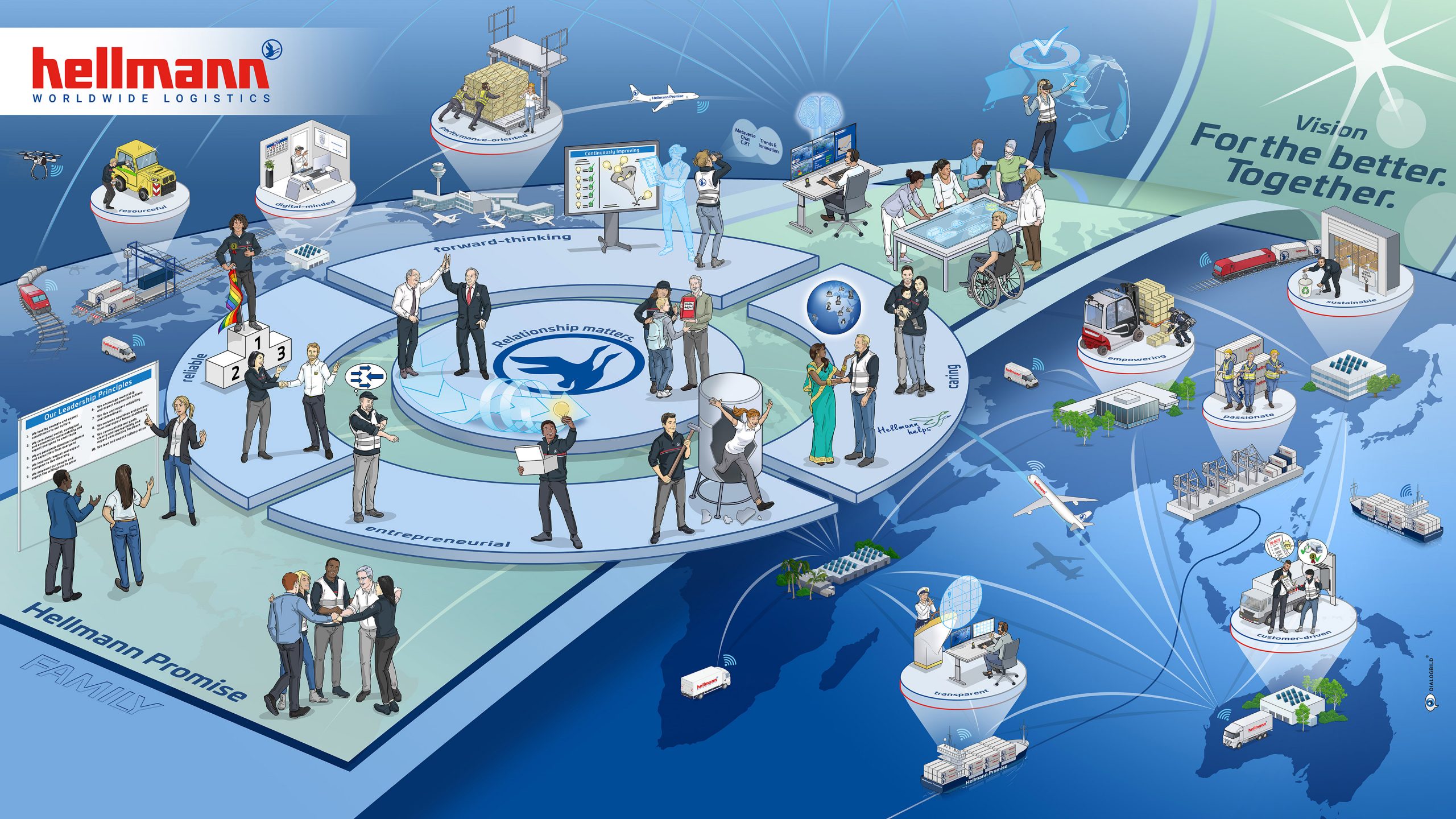
HELLMANN PROMISE
For more than 150 years, the family-owned company Hellmann Worldwide Logistics has successfully delivered top performance across a broad range of services - freight forwarding services by rail, truck, air and sea freight are complemented by CEP services, contract logistics and industry and IT solutions. What began with the transport of goods by horse and cart has evolved over the decades with technical innovations into state-of-the-art solutions.
To enable Hellmann Worldwide Logistics to meet the challenges of tomorrow, interdisciplinary work is already underway today on new visions. In order to position the company for sustainable success in times of constant change, a new corporate culture was defined, including a vision, mission and values. This globally valid culture, which connects all 14,000 employees, was to be conveyed in the dialog image and at the same time provided with a basic clarity.
TRANSFORMATION PLANT HANOVER
Process optimization, strategy, cultural work and good communication are key to the VW Nutzfahrzeuge plant management Hanover in leading the way to a successful future. In the past, strategy and transformation processes were often accompanied by powerpoint "battles".There were numerous charts that tried to make it as comprehensible as possible what goals the company wanted to achieve and how it planed to get there.
Now the company wants to go other ways and has developed a vision for the future together with Goldpark and DIALOGBILD. On the one hand, the picture emerged in an intensive process, on the other hand, the discussion about the things that are important to the board in the picture led to a common understanding and also made it possible for different perspectives to be discussed and brought together.
This helps the Hannover plant to communicate its way into the the future with a common voice.
Thanks to the close cooperation between Goldpark and DIALOGBILD, the dialog picture was used for all events, informations and formats that relate to the transformation as well as to reflect the developments in the transformation process.
THE AUDI PRODUCTION SYSTEM
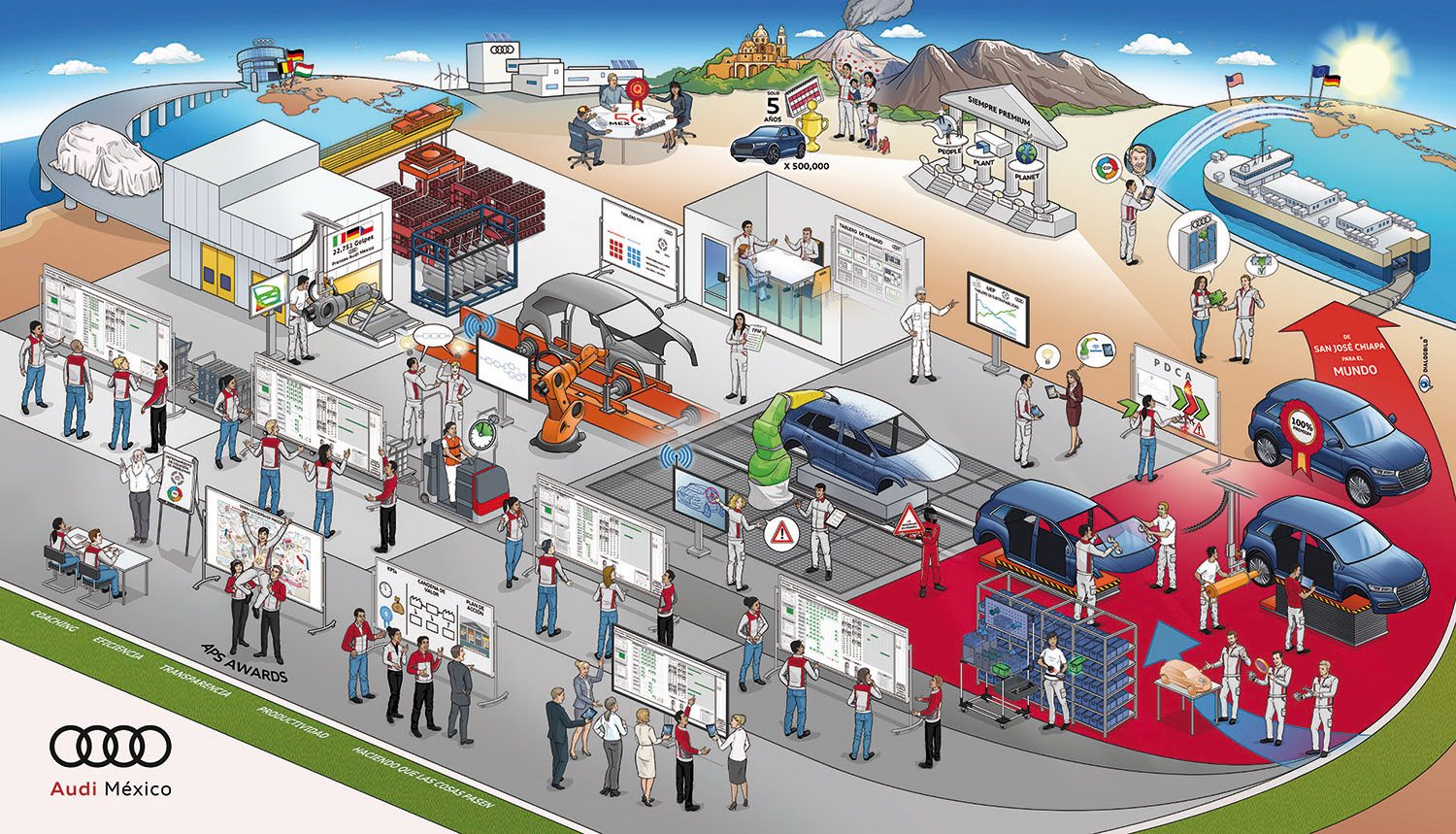
AUDI AG stands for sporty vehicles, high-quality workmanship and progressive design. The Audi Group is one of the most successful manufacturers of cars in the premium segment. At its production sites worldwide, Audi stands for "Advancement through technology". Highly qualified employees use innovative logistics processes, modern manufacturing technologies and efficient production systems to set uniform standards within the Audi production system. Each production site meets the highest standards of quality, efficiency and environmental compatibility.
Audi opened the 12th plant in the Audi production network in San José Chiapa, Mexico, on September 30, 2016. After only a short time, the fledgling Mexican Audi plant was already one of the country's most attractive employers. 5,200 people work together here, producing the Audi Q5 premium SUV on an area of 430 hectares. 156,650 locally produced Audi Q5s rolled off the production line here in 2019. At 2,400 meters above sea level, the most modern production facility in the Audi world is also the company's highest-altitude site. The plant has an annual production capacity of 150,000 Audi Q5 models.
E2E SUPPLY CHAIN EXCELLENCE
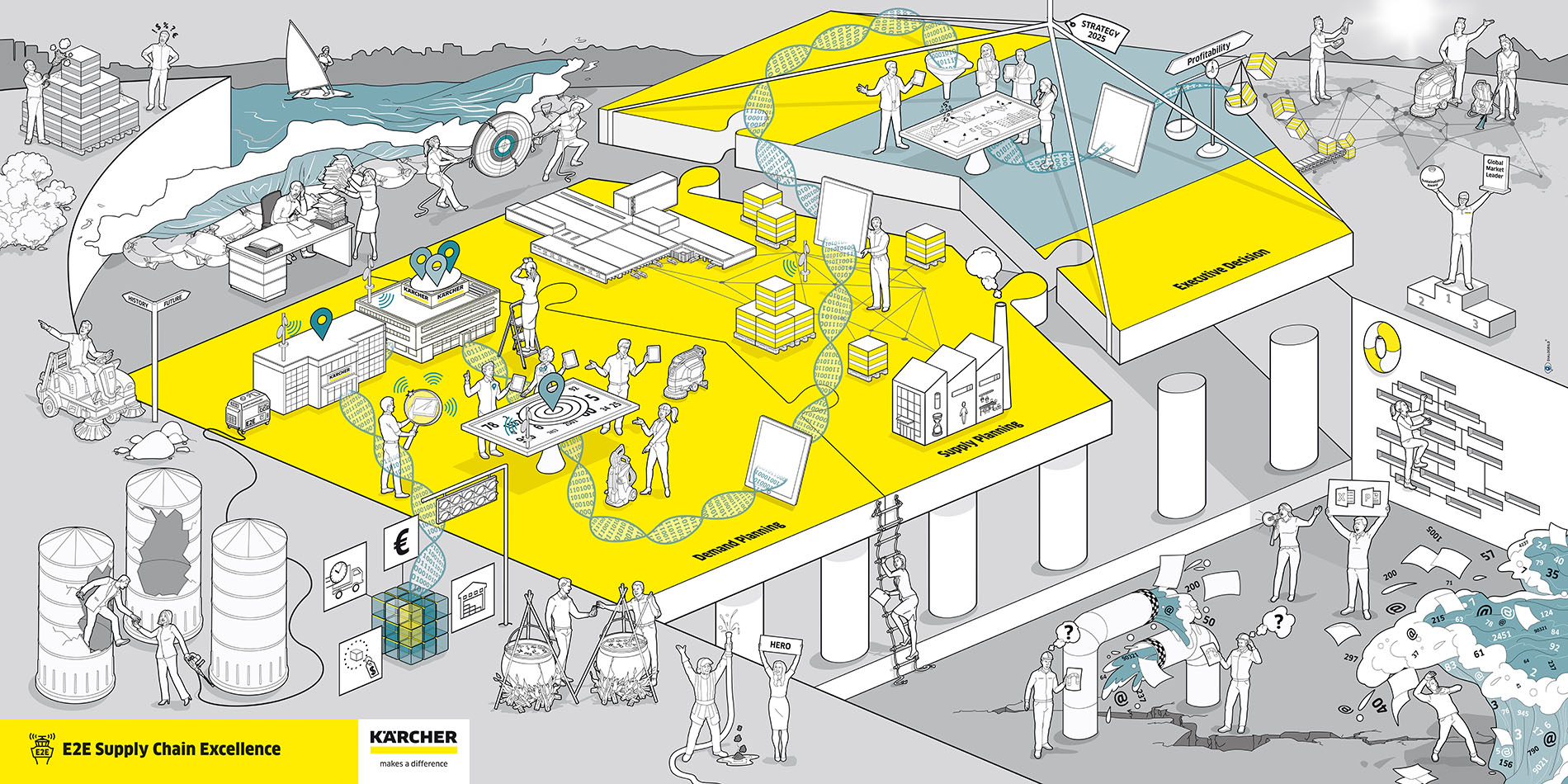
Alfred Kärcher SE & Co. KG is a family-owned company headquartered in Winnenden, Baden-Württemberg. The world market leader for cleaning technology employs more than 13,500 people worldwide. The company is particularly renowned for its high-pressure cleaners.
In order to remain the world market leader in the future and to be able to supply customers optimally, Kärcher is constantly working on the optimization of its own supply chain management. The current strategy-relevant “End-to-End Supply Chain Excellence” project involves changes in processes, roles and responsibilities that will affect around 6,000 employees worldwide. In order to guarantee a uniform understanding of all project participants, Kärcher developed the dialog picture of the “E2E Supply Chain Excellence” change project, which was developed by DIALOGBILD accordingly.
FACTORY OF THE FUTURE
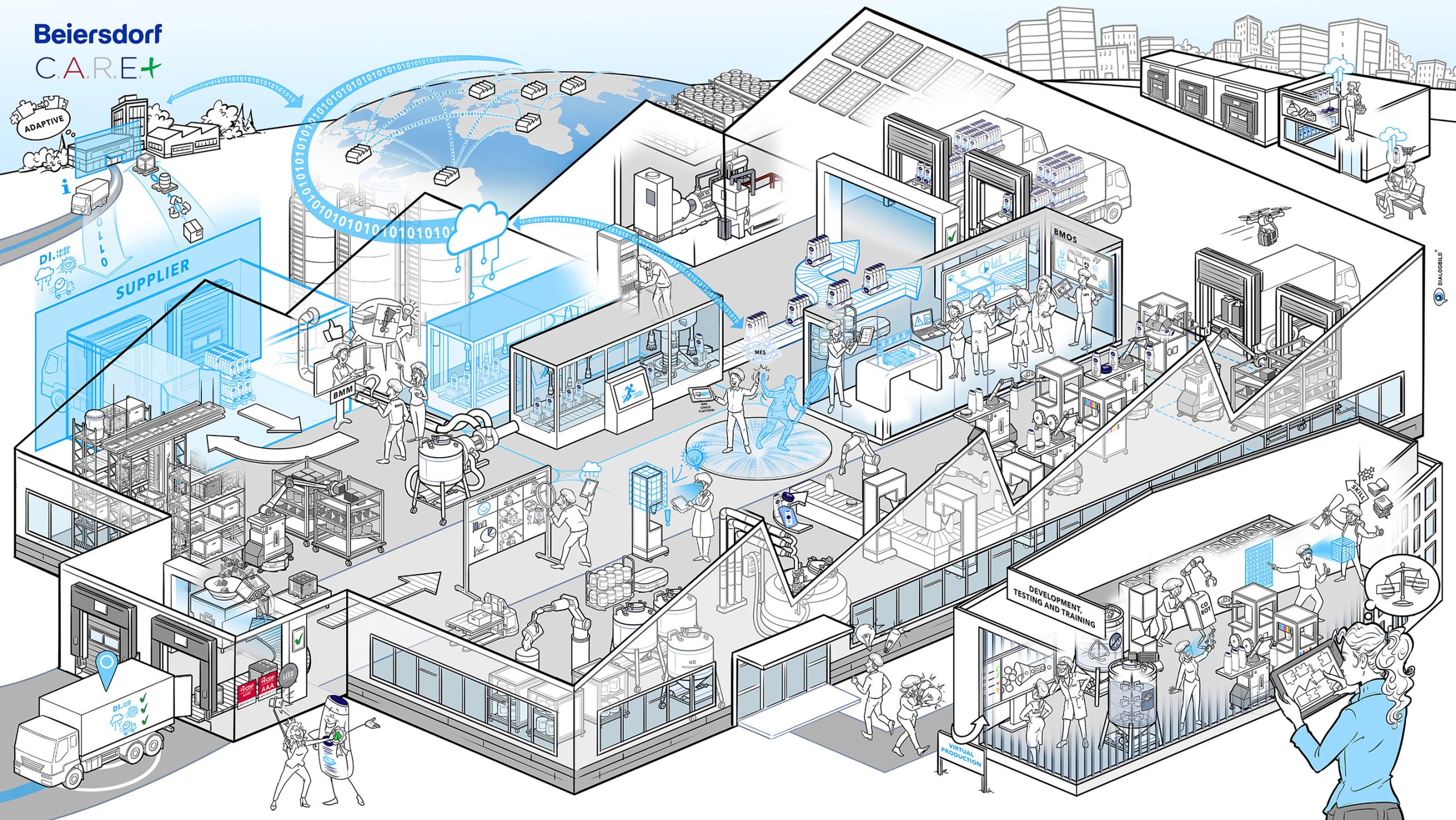
Beiersdorf Digital Supply Chain Vision
For over 140 years the Beiersdorf AG has been standing for innovative, high-quality skin and body care, as well as leading skin research. The company convinces customers worldwide with its internationally leading brands and their consumer-needs oriented product portfolio. The supply chain, with its resilient and modern production network, significantly adds to this success.
CHIESI LEADERSHIP
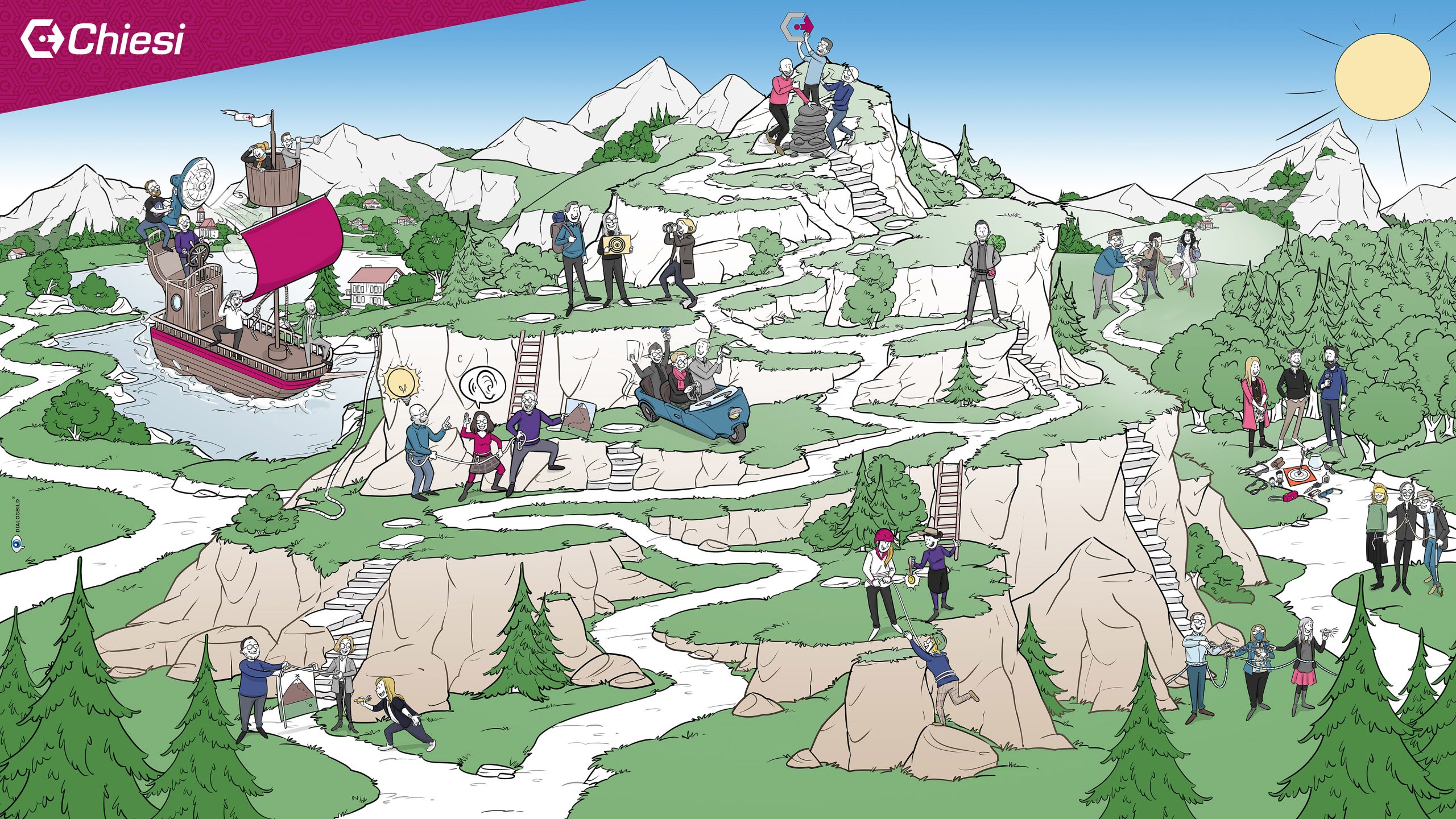
The Chiesi Group, with headquarters in Parma, is a research oriented, international pharma and health company, which dedicates itself to three therapeutic areas: AIR, products and services in connection with respiratory illnesses. RARE, the treatment of patients with rare and very rare illnesses and CARE, products and services for specialist support and self-medication.
DIALOGBILD developed a dialog picture for the topic Chiesi leadership, according to which the topics such as Situational Leadership, Coaching Mindset and Psychological Safety were strikingly put on display. Furthermore, we created a game, including portrait-game pieces, workbook and feedback kit based on the picture for an employee event.
STRATEGY MAP: INTERCONNECTED INTO THE FUTURE
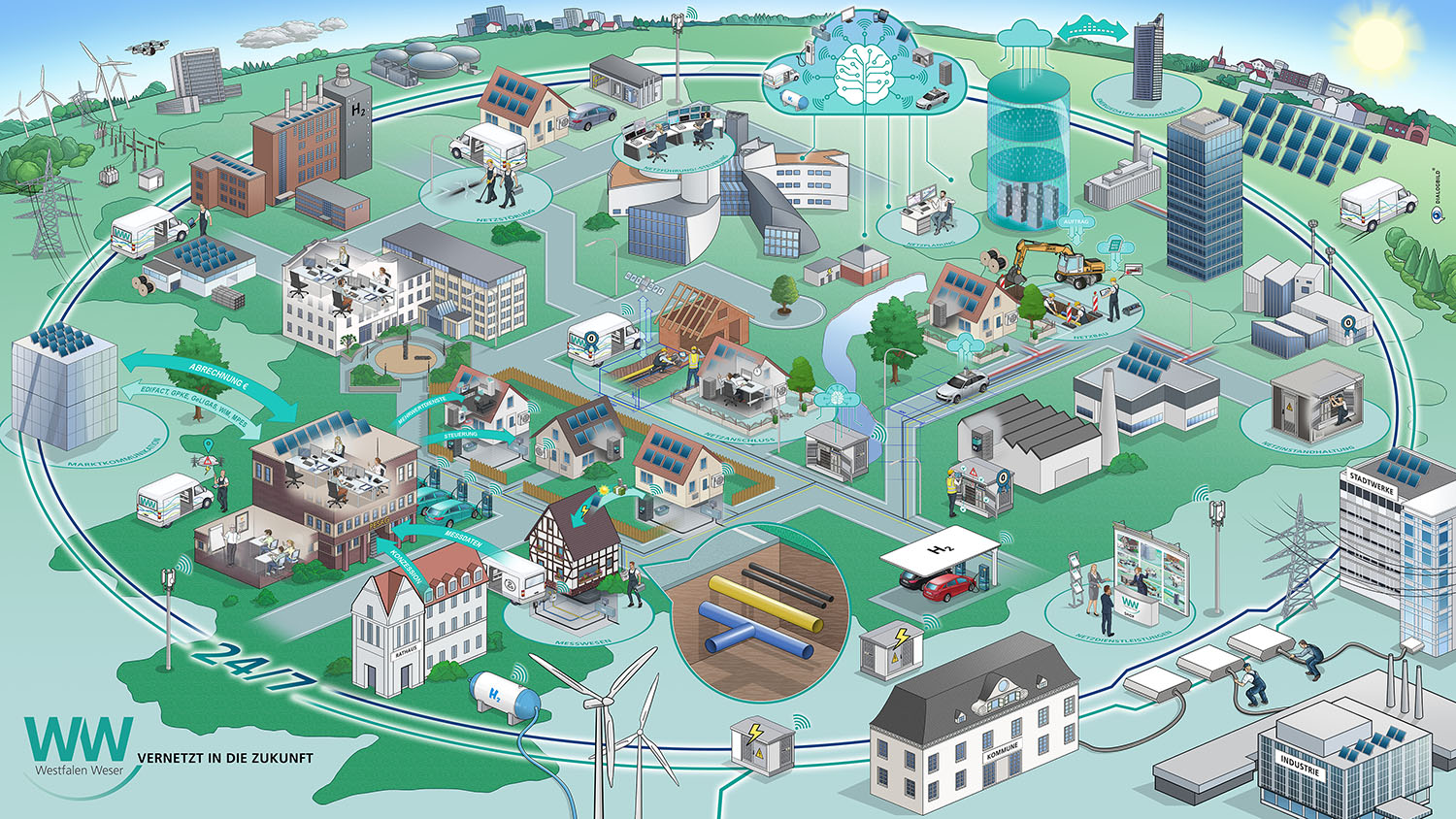
As a municipal infrastructure service provider, Westfalen Weser takes care of the provision of electricity, natural gas and water networks, which are constantly becoming faster, safer and more sustainable with increasing digitalization. Behind the success of the supply are efficiency and reliability, managed by a system of state-of-the-art network technology and competent employees.
In addition, Westfalen Weser is already working on innovative ideas for tomorrow's sustainable energy solutions in order to shape the energy transition together with municipalities and companies.
THE HAHN GROUP - TRADITIONALLY INNOVATIVE!
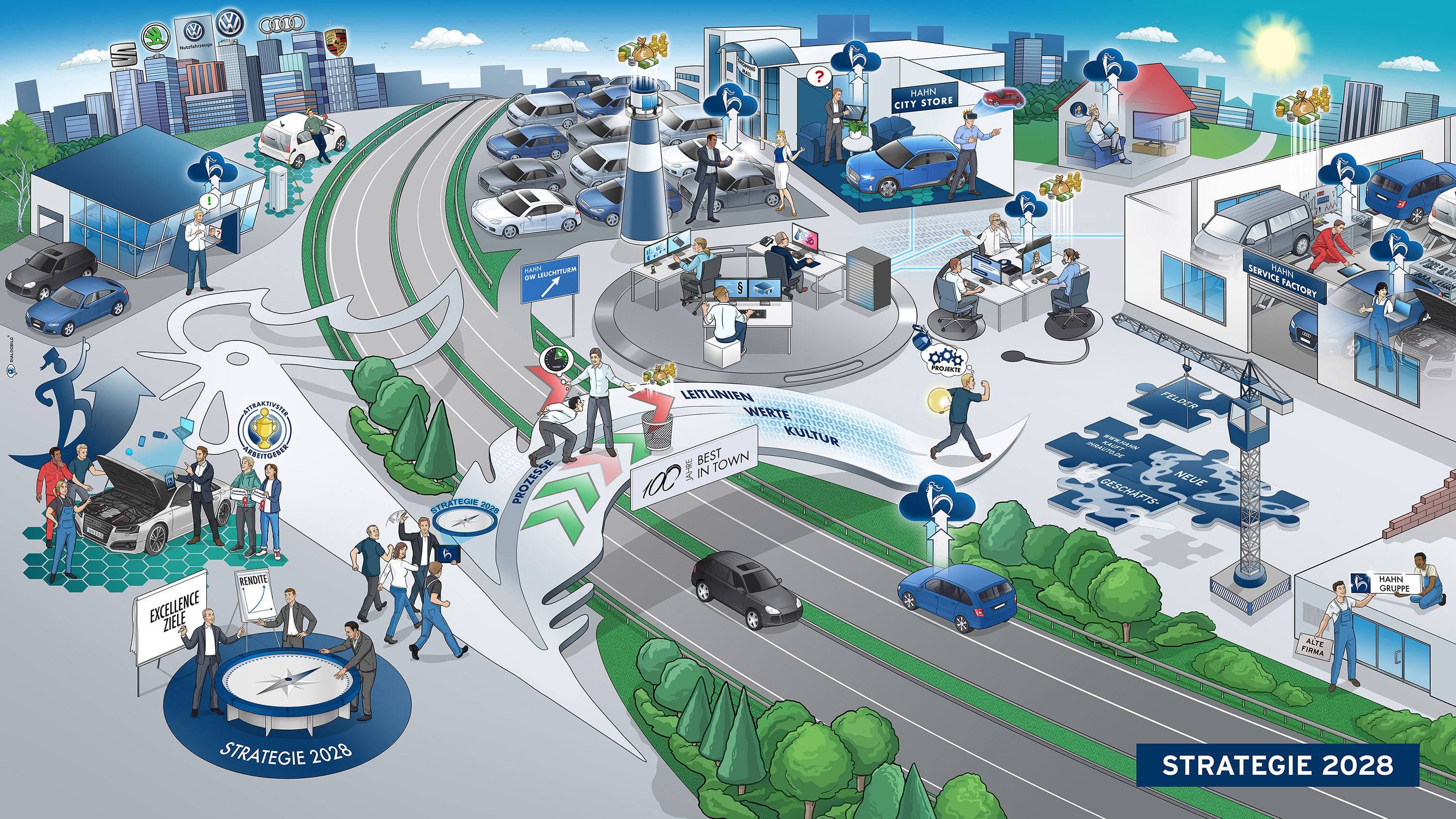
The Hahn Group is one of the largest automobile trading companies in Germany. With around 2,000 employees and 35 plants of the Volkswagen, Volkswagen Commercial Vehicles, Audi, Porsche, Skoda and Seat brands in the Stuttgart metropolitan region, Hahn has enjoyed a strong market position for 100 years and is a reliable partner for customers, employees and business partners.
The automotive industry is undergoing the greatest upheaval in its history. The Hahn family of entrepreneurs has always implemented innovative ideas and broken new ground, making the company an extremely successful enterprise. In 2018, the management developed a long-term strategy that, in addition to economic factors, also includes topics such as digitisation and new business models. The great challenge that drew our attention to DIALOGBILD was to make this 150-page paper understandable to all employees in a simple form.
MISSION STATEMENT: OUR GUIDING PRINCIPLES
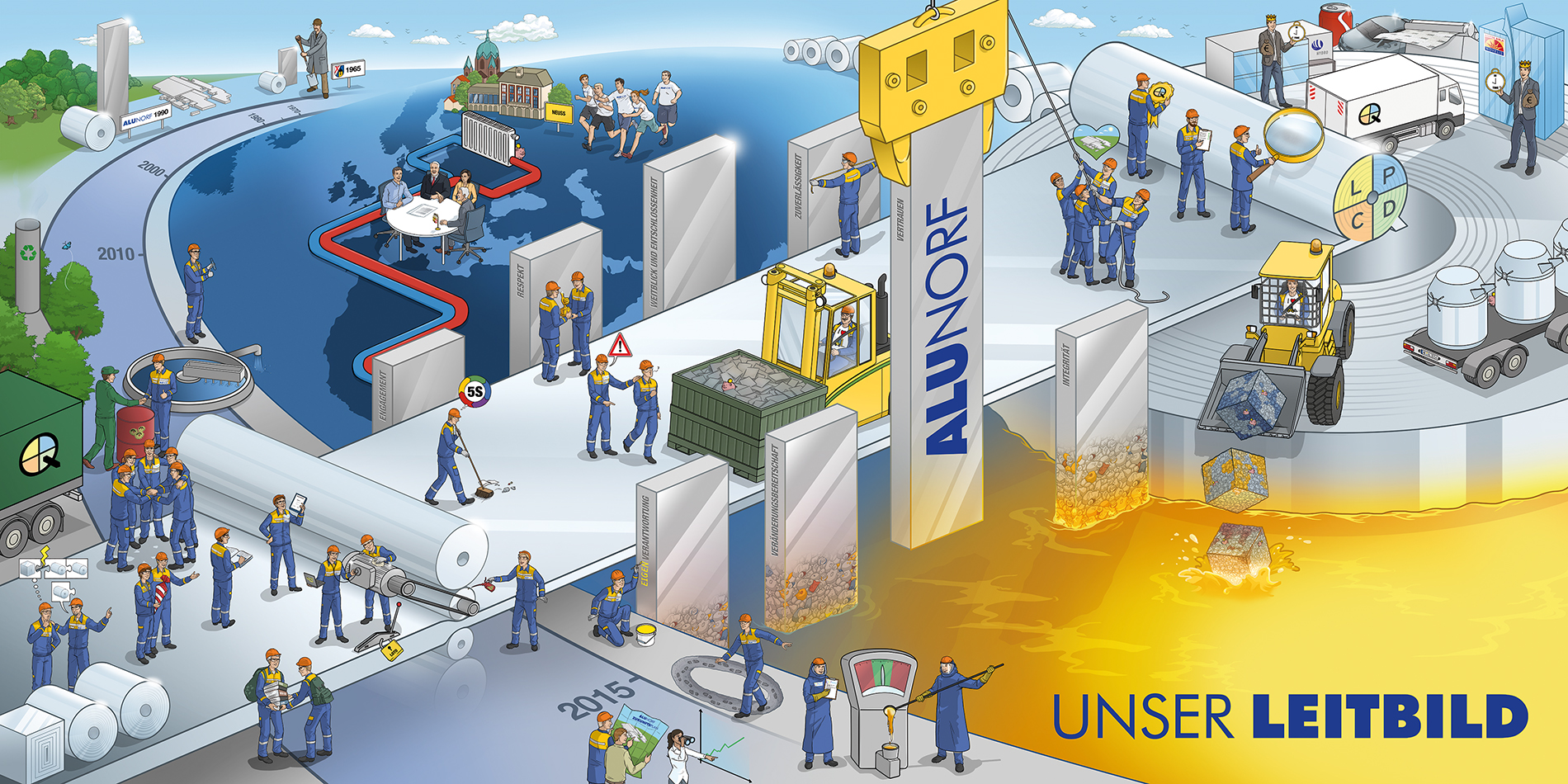
Melting and casting, rolling and cutting: Aluminium Norf operates the world's largest aluminium rolling and smelting plant in Neuss, employing over 2,200 people. In this exceptional work environment, the demands placed on employees and managers are high and particularly diverse: Working with the multi-ton, molten aluminium ingots requires not only the utmost precision and teamwork, but above all, in-depth knowledge of the equipment, processes, and safety precautions. Furthermore, environmental standards, quality and customer requirements, and, of course, the company's values play a crucial role in daily operations.
All of these topics are part of the Aluminium Norf mission statement, which has been visualized as a dialog picture.
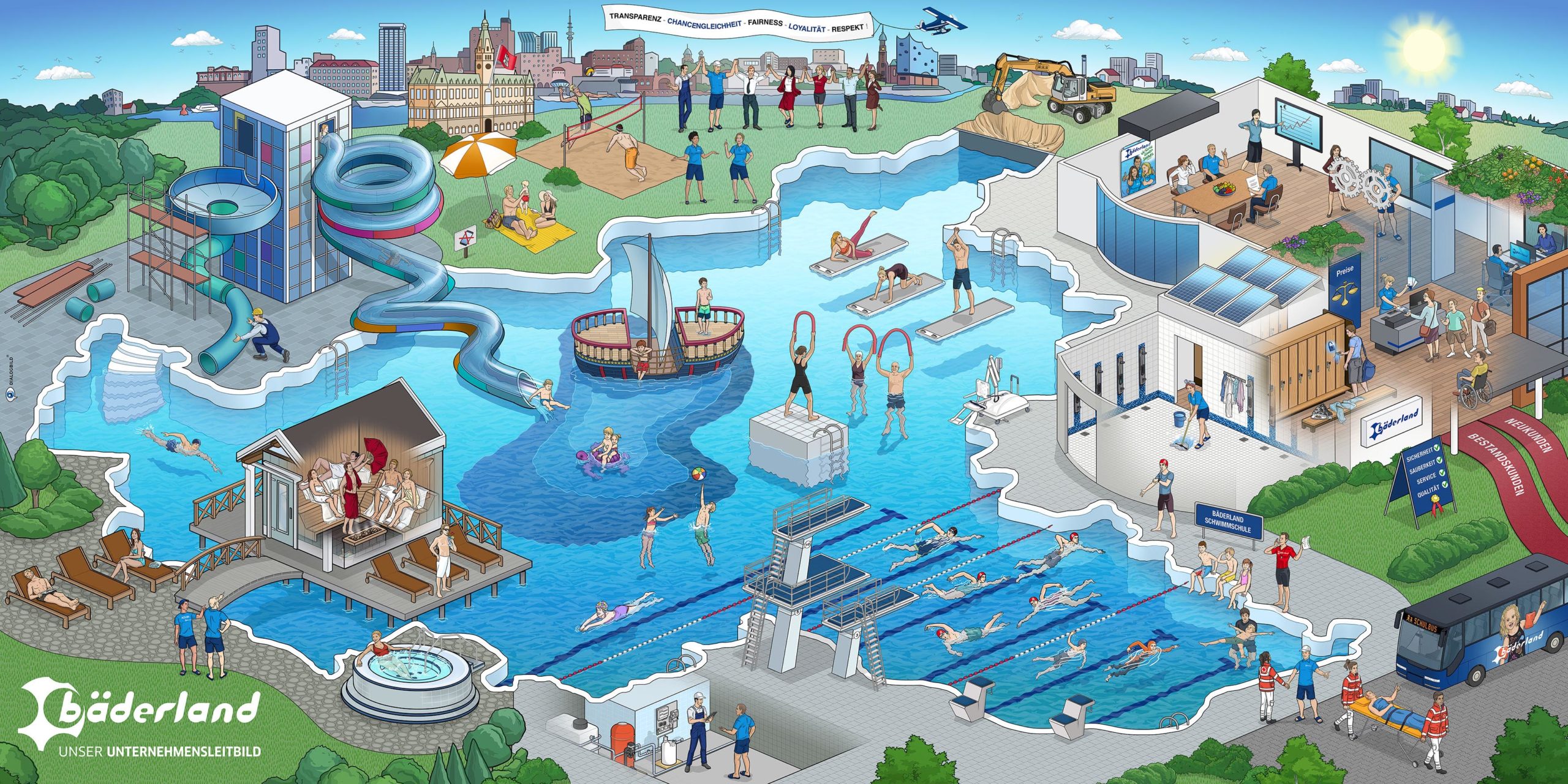
OUR MISSION STATEMENT
Bäderland's corporate mission statement and corporate goals in a dialogue picture
Bäderland is the urban swimming pool operator in Hamburg with a broad offer of services in the fields swimming, fitness, wellness and relaxation. With 26 indoor and outdoor pools, Bäderland is Germany‘s largest and Europe‘s second largest swimming pool operator. To communicate the newly revised company mission and the future company goals to the employees and to create a common understand, Bäderland decided on the development of a dialog picture. ...
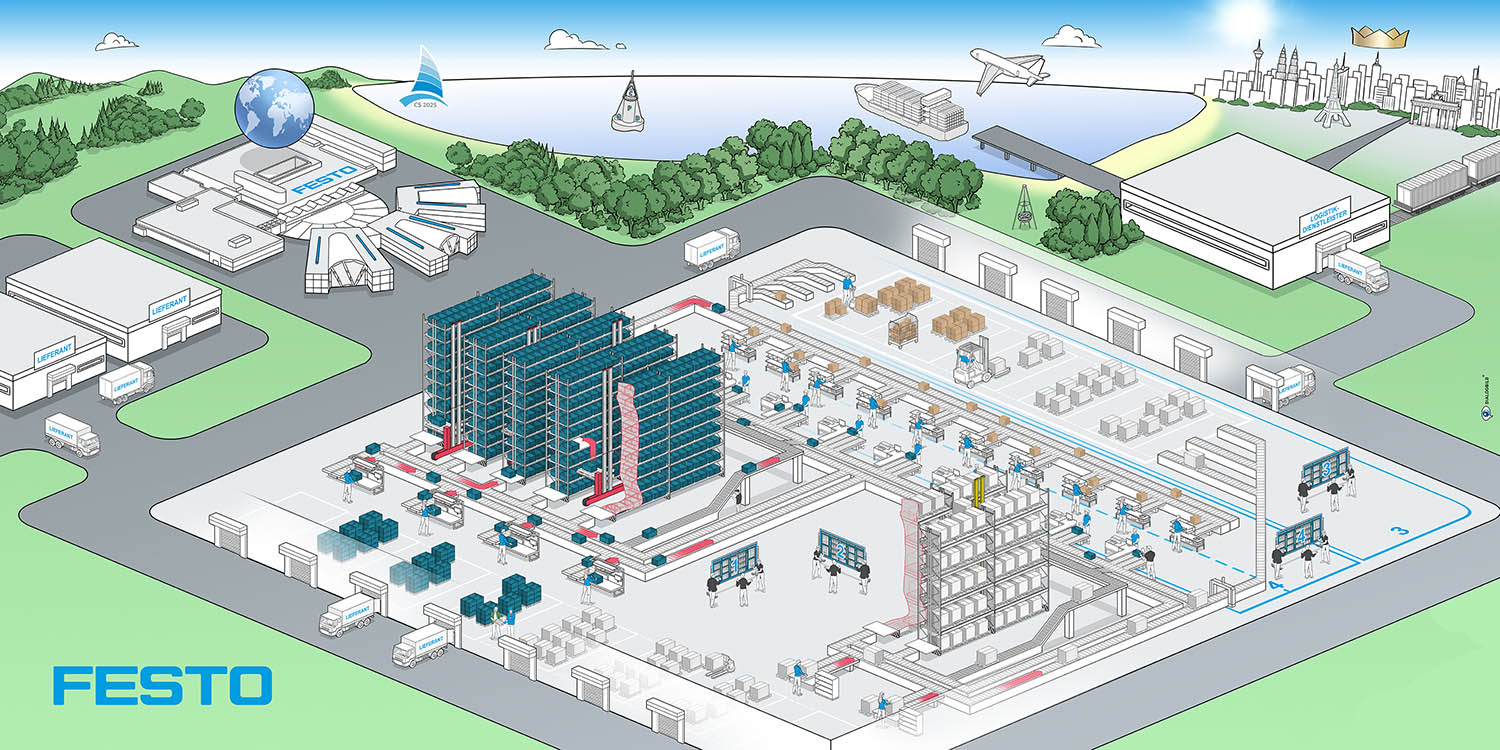
CORPORATE MISSION STATEMENT LOGISTICS
The Festo Group provides answers to questions in the field of automation technology. The success of these answers is demonstrated by the 300,000 customers worldwide from over 35 industries in 176 countries. If one of the approximately 33,000 catalog products is not suitable, Festo will develop customized customer solutions: Individual, innovative and proactive.
In order to drive forward its own internal development within OPEX, Festo initiated the collaboration with DIALOGBILD. The goal was to communicate to employees at first glance where their own work area is and which topics also interact across the board.
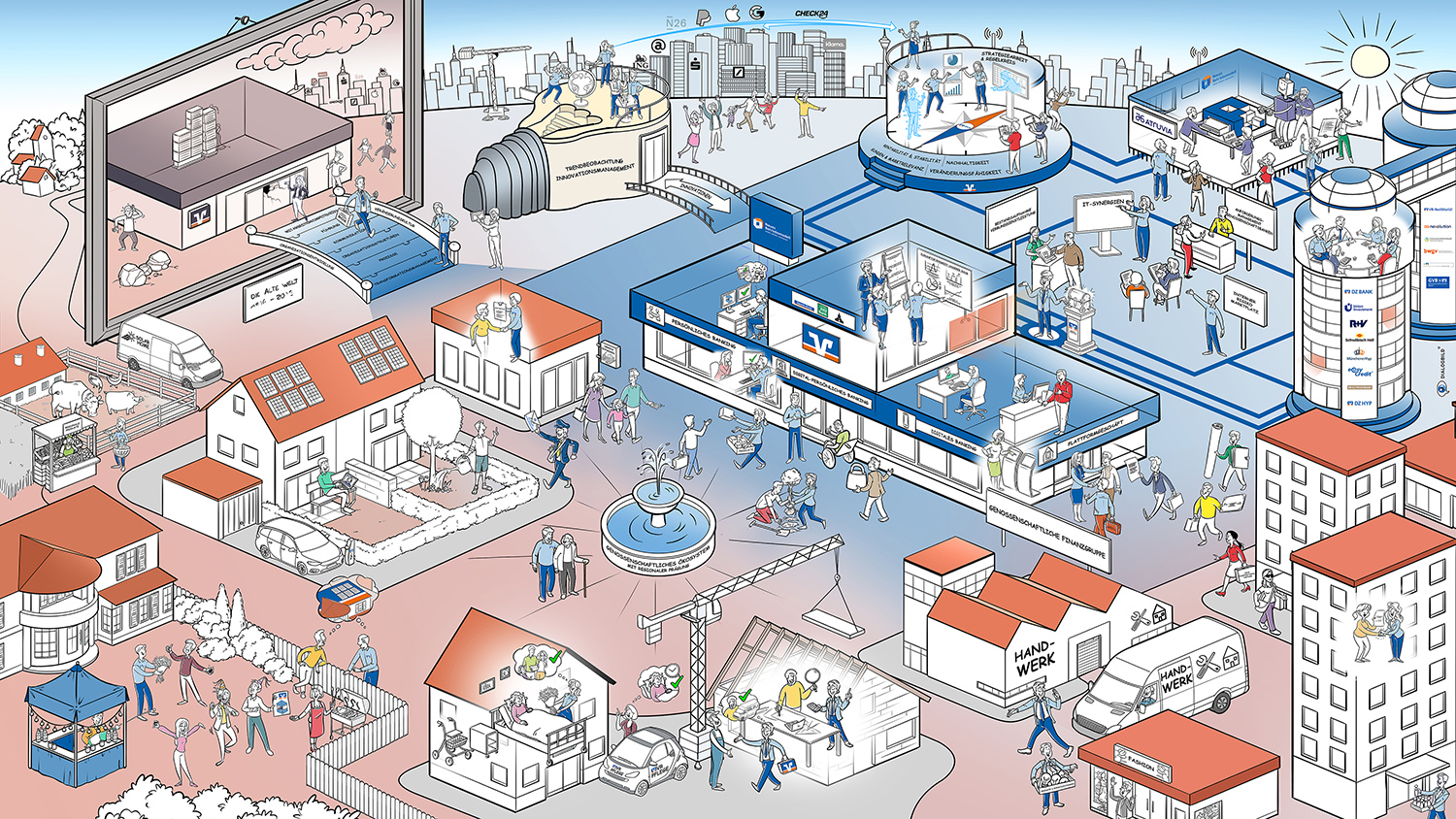
STRATEGY AGENDA
FUTURE-ORIENTED DESIGN OF COOPERATIVE BANKING
The Federal Association of German Cooperative Banks (BVR) is the umbrella organization for the cooperative banking sector. The BVR coordinates and develops the joint strategy within the cooperative financial group.
This strategy development process led to the creation of the strategy agenda. The underlying reason is that the banking world has never been undergoing such radical change as it is currently experiencing. Accelerated digitalization is leading to new paradigms, new customer behavior, and different customer expectations.
Customers want to access services anywhere, tailored to their individual needs, with a high level of service and convenience. Companies that offer precisely this are increasingly dominating the digital customer gateway.
Frequently asked questions (FAQ) about mission statement development
What is the difference between vision, mission and values?
These three terms form the core of mission statement development, but they have different functions:
- Vision: Describes the ideal state in the future (‘Where do we want to go?’).
- Mission: Explains the actual purpose and daily task (‘Why do we exist?’).
- Values: Define the moral guidelines and the nature of cooperation (‘How do we act?’).
Why does my company need a mission statement?
A corporate mission statement serves as a strategic compass. It helps to make decisions faster, increase employee identification and present a distinctive brand to the outside world. Without a mission statement, communication and strategy often lack a common thread.
How long does a typical mission statement process take?
The duration of the mission statement development process depends heavily on the size of the company. As a rule, you should expect it to take 3 to 6 months. A good process requires time for analysis, employee involvement (participation), and final formulation and visualisation.
Who should be involved in creating the mission statement?
A mission statement that is only imposed by management in a top-down manner often fails to gain acceptance. For a successful mission statement process, we recommend a mixture: the strategic direction comes from management, but employees from all departments and hierarchical levels should be involved in workshops.
How does a mission statement come to life in everyday life?
That is the biggest challenge. A mission statement must not disappear into a drawer. It comes to life through:
- Role modelling: Managers must exemplify the values.
- Visualisation: A dialog picture or vision board makes abstract sentences tangible.
- Integration: The values should be reflected in processes such as onboarding or employee appraisals.
Can an existing mission statement be adapted?
Yes, absolutely. A mission statement is not a rigid document. If the market, technology or corporate culture undergoes massive change, it makes sense to review it. This is referred to as mission statement evolution, to ensure that the vision still fits the reality.
How does DIALOGBILD help with mission statement development?
At DIALOGBILD, we support you in translating the often text-heavy results of mission statement development into a visual language. A visual mission statement is understood much more quickly and remains anchored in the minds of the workforce in the long term. We accompany you from the first sketch to the finished roll-out concept.
Get info package